
Water spots on ceramic-coated cars can permanently damage your vehicle’s protective layer when left untreated. These ugly marks are actually mineral deposits that stay behind after water dries on the surface. Hard water, minerals, and other impurities in the water cause these deposits.
These stubborn spots create more than just appearance problems. Your professional ceramic coating becomes very hard after curing, and only abrasive polishing can remove it. Using the wrong removal methods might make things even worse. A recent BMW 328 showed us how quickly these spots can build up. The car sat next to a sprinkler for just a few days and collected many water spots, even with its fresh ceramic coating.
Let us show you the best way to handle water spots on your ceramic coating. Our step-by-step approach starts with gentle treatments before moving to stronger options. You can bring back your car’s perfect finish without damaging its ceramic coating. Our proven methods will help you tackle both new watermarks and tough etched spots with confidence. Keep your ceramic coating spotless and streak-free—book a professional maintenance wash with Car Detox today!
How to Identify and Assess Water Spots on Ceramic Coating
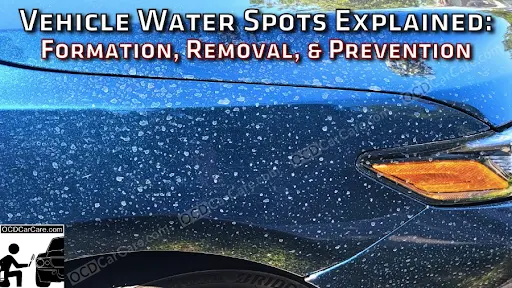
Spotting water spots early on your ceramic-coated vehicle is vital to protect the coating’s integrity and your car’s appearance. Let me show you how to spot and review these pesky mineral deposits.
Visual signs of water spots
Water spots on ceramic coatings show up as white or cloudy marks that stay even after regular washing. These spots are easy to notice, especially on darker-colored vehicles. They create a dull patch that breaks up the glossy finish. You might see small circular deposits at first on horizontal surfaces like the hood and roof, where water collects.
You should know about three different types of water spots:
- Type I (Superficial): Light spots from evaporated clean water with minimal damage potential
- Type II (Mineral-rich): More stubborn spots from hard water that can potentially etch the surface
- Type III: Spots appearing faded or dull, especially on single-stage paints
Touch test: smooth vs etched
A gentle hand across the surface tells you a lot about how bad the water spots are. Ceramic coatings should feel remarkably slick and smooth. The surface texture changes when water spots appear.
Superficial spots might still feel smooth with slight resistance. The etched spots feel rough or “grabby” as your fingertips move over them. This roughness shows that minerals have started to eat into the protective coating.
When to act quickly
Water spots become harder to remove the longer they stay on your car. Heat makes the damage worse—sunlight warms water droplets on your vehicle and causes the porous paint beneath the coating to swell and open up. The minerals can then sink deeper and create those stubborn etched spots.
Your ceramic-coated car needs immediate drying after rain or washing to stay protected. The horizontal panels need extra care since they get more sun and hold bigger water pools.
Note that ceramic coatings make cleaning easier but don’t completely prevent water spots—they just make them easier to handle.
Testing Different Water Spot Removal Methods
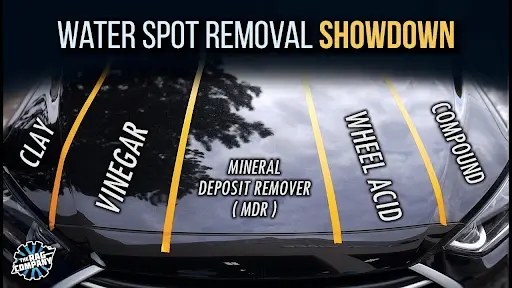
The right removal method makes a vital difference once you spot water marks. My tests on ceramic-coated vehicles have shown what really works without hurting the protective coating.
Using vinegar: pros and cons
A mixture of equal parts distilled white vinegar and water makes a budget-friendly spot remover. The acid works great to dissolve calcium deposits and handles fresh, surface-level water spots well. Despite that, vinegar’s 2.5 pH level could harm your coating. A single use won’t usually cause damage, but long exposure might reduce your coating’s protection. On top of that, it leaves a strong smell, so you’ll need good airflow when you use it.
Trying clay bars and towels
Clay bars can tackle tough water spots, but they’re quite rough. The rubbing action will likely take off some of your ceramic coating. You’ll need proper lubrication—either special clay lube or soapy water—to avoid scratches. Most detailers skip this method on coated cars unless they have no other choice.
Applying Optimum MDR and letting it dwell
Optimum Mineral Deposit Remover (MDR) takes a more targeted approach. This gentle gel breaks down water-based contaminants without scratching or polishing the surface. The best results come when you put MDR on a clean microfiber towel or foam applicator, work it into the spots for 30-60 seconds, then wipe it away. The product blends acids and cleaners to remove contaminants while keeping your ceramic coating safe.
Using GTechniq W9 for etched spots
GTechniq W9 tackles water spots at the molecular level with three different actions. The product dissolves mineral buildup, neutralizes hard water ions, and breaks down tough silica scale. The manufacturer says W9 won’t harm your coating at all. Just apply it to your microfiber towel, work small sections at a time, and buff right away.
Polishing with Rupes Uno Advance
Rupes Uno Advance might be your last resort for deeply etched spots that chemicals can’t fix. This thin polish handles water spots and minor surface flaws. While polishing does remove a tiny bit of material, Rupes Uno leaves much less dust than regular compounds. Your car’s water-beading ability stays strong thanks to its slick finish.
What Works Best: Product Comparisons and Results
Finding the best way to remove water spots from ceramic coatings isn’t hard when you know what works. Let’s get into the treatments that actually deliver results.
Effectiveness of each method
Our tests show GTechniq W9 leads the pack with its triple-action formula. It dissolves mineral contaminants, neutralizes metal ions, and breaks down silica scale. Glidecoat Water Spot Remover works quickly on both light and heavy spots. Light spots need 3-5 minutes, while heavy spots take 5-10 minutes to clear up. Chemical Guys Heavy Duty Water Spot Remover uses a mild acidic gel that neutralizes alkaline water stains, but you’ll need to handle it with extra care.
Impact on ceramic coating integrity
GTechniq W9 won’t harm your ceramic coating – it’s completely safe to use. Glidecoat also makes its formula safe for ceramic coatings. Other products might say they’re coating-friendly, but they don’t have the special formulas these top options do. Regular use of these other products could damage your coating over time.
Safety and ease of use
Each product has its own way of working. Glidecoat keeps it simple with a spray-wipe-wait-wipe process. GTechniq W9 needs to go on a microfiber towel first, and you should stay away from direct sunlight when using it. Watch your timing carefully – don’t leave Glidecoat on for more than 10 minutes, and Chemical Guys should only stay on for 30 seconds. Don’t let water spots dull your shine! Car Detox’s specialized care keeps your coating glossy and protected all year round.
Maintaining a Spot-Free Ceramic Coating
You can prevent water spots on ceramic-coated vehicles much more easily than removing them. A good maintenance routine will preserve your coating’s hydrophobic properties and extend its lifespan.
Routine washing and drying tips
Daily drivers need regular maintenance washes, about once a week. The two-bucket method with grit guards works best to keep dirt from getting back on the surface and wearing down your coating. Your best time to wash is early morning or evening, since quick water evaporation can cause spotting.
Water should never air-dry on ceramic coatings – dry your car right after washing. High-quality microfiber drying towels with at least 800 GSM or a forced air dryer give you a touchless approach. A detail spray during drying adds extra protection and helps prevent water spots.
Using ceramic-safe soaps and sprays
Your primary choice should be pH-neutral shampoos made specifically for ceramic-coated vehicles. These gentle cleansers protect your coating’s properties. Stay away from soaps with wax or gloss enhancers – they leave residue that reduces hydrophobicity.
Ceramic maintenance sprays like Ceramic Refresh work great between washes to restore hydrophobic properties. These SiO2-infused products give you up to 6 months of extra protection while making your car glossier. The coating needs these sprays every few months to stay fresh.
When to reapply or top up your coating
Your ceramic coating typically needs reapplication every 1-2 years, based on environmental exposure and how well you maintain it. A professional should inspect your coating yearly to catch early signs of wear. Watch for reduced water beading, less surface slickness, and dirt sticking more easily – these signs tell you it’s time to reapply.
Conclusion
If you’ve got a ceramic coating on your car, you already know it makes life a whole lot easier. No more constant waxing or fighting with stubborn dirt. The car just stays cleaner and shinier with way less work. Vinegar’s acidic, and if you use it a lot, it’ll slowly wear down your coating. A much safer move is to grab a proper product like GTechniq W9 or Glidecoat Water Spot Remover. Those are made for ceramic coatings, so they get the job done without eating away your protection.
That said, it’s always easier to prevent spots than to fix them. After washing or a rain, don’t just let the car air dry. Get a clean microfiber towel or a blower and dry it right away. Try to wash early in the morning or later in the evening — that way, the sun’s not baking water onto your paint. Also, throw on a ceramic booster spray every few months. It keeps the surface slick and helps water roll off faster.
Water spots might sound like a small thing, but if you’ve spent money on a good coating, it’s worth a little extra care. Once you get into the habit, it’s really not much work. And when you see your car shining clean with that deep gloss, you’ll know it’s worth it. So next time you spot those faint white marks, don’t stress — just clean them off quickly with the right stuff. You’ll keep that showroom look way longer. Protect your car’s shine and restore its brilliance with Car Detox—book your detailing service today!
FAQs
Use something made for coated cars, like GTechniq W9 or Glidecoat. Spray it on a microfiber towel, gently rub the area, let it sit for a few seconds, and wipe it off. If it’s a tough spot, you can try a fine polish like Rupes Uno Advance, but go easy — too much polishing can thin your coating
You can, but I wouldn’t recommend it long-term. Vinegar can help with quick, mild spots, but it’s really acidic. Over time, it’ll start breaking down the coating. Stick to ceramic-safe products — they’re made for this.
Dry your car right after washing or after rain. Don’t let water sit and bake in the sun. Use good microfiber towels or a blower, and wash when it’s cooler out. You can also use a ceramic maintenance spray every few months — it helps keep that slick, water-repelling finish
Usually, every 1–2 years, depending on where you live and how you take care of the car. If you notice less water beading or the surface feels rougher, it’s time for a refresh. Getting it checked once a year by a pro is a solid move.
Go with a pH-neutral car shampoo. It’s gentle on the coating and doesn’t mess with the hydrophobic finish. Skip soaps with wax or gloss additives — those leave residue that dulls the surface. Simple and clean always works best.
Our Popular Services
Car Detailing Services | Ceramic Coating Services | Pet Hair Removal Services | Mobile Auto Detail Services Happy Valley | Car Detailing Services in Tualatin
Find Us On Map
Car Detox – Auto Detailing Services
Book An Appointment