
That musty, sour smell hits you right when you open your truck door after a few days. You might wonder how to get mold out of car seats. Bad news – that distinctive odor probably means you have mold, and it’s not just an unwelcome smell.
Mold in car seats is one of the most important problems that can wreck your interior and harm your health if you ignore it. Your car’s warm, moist spaces create perfect conditions for mold to grow. Getting rid of mold from car interiors becomes extra tough when it seeps deep into seat foam. This can lead to permanent damage if you don’t deal with it quickly. Leather car seats face an even bigger risk since their porous surface soaks up moisture and creates the perfect breeding ground for mold.
Time makes everything worse. Mold particles float through the air and spread quickly across your car’s interior. This piece will teach you the quickest way to remove mold from both fabric and leather car seats yourself. You’ll also learn how to stop mold from coming back once you’ve cleaned it out. Masking odors isn’t enough. Car Detox eliminates mold odors at the source for a truly fresh, breathable interior.
DIY Methods to Remove Mold from Car Seats
You don’t need professional help to get rid of mold in your car seats. Many household items can kill these unwanted spores if you use them the right way. Let me share some proven DIY methods that work to remove mold from car seats.
Using white vinegar for surface mold
White vinegar kills mold effectively because of its mild acidity. Mix one part water with four parts distilled white vinegar in a spray bottle to create a cleaning solution. You can use pure vinegar for tough spots. The solution needs to sit on the moldy areas for about 20 minutes before you scrub gently with a soft brush. This waiting period lets the vinegar kill the mold spores completely. A wet-dry vacuum helps remove the dead mold afterward.
How baking soda helps absorb moisture and odor
Baking soda does an amazing job with moisture and smell. Just sprinkle plenty of it on the affected areas and wait about 20 minutes. The powder pulls out the moisture that mold needs to grow. Baking soda also gets rid of bad smells, which makes it twice as useful. You can boost results by mixing baking soda with white vinegar into a cleaning paste.
Clove oil is a natural antifungal.
Clove oil stands out because its natural antifungal properties kill mold at the root. Mix a quarter teaspoon of clove oil with one liter of water. Vacuum the area first, then apply this mixture to moldy spots without using much of either. Important safety note: Don’t let clove oil touch your skin directly, as it might irritate it. Bad cases might need a paste made from clove oil and baking soda – apply it with a toothbrush and wipe it off once dry.
When to use commercial mold removers
Think over specialty products if mold keeps coming back. Cleaners made specifically for car interiors can tackle stubborn mold. In spite of that, be careful since many have harsh chemicals. Read the instructions carefully and make sure the product works safely on your seat material, especially with vinyl and leather.
How to remove mold from leather car seats safely
Leather needs gentle handling during mold removal. Start by vacuuming loose spores. Mix equal amounts of water and isopropyl alcohol in a spray bottle. Use a microfiber cloth to apply this mixture instead of spraying the seats directly – this prevents too much wetness. The leather needs conditioning after cleaning to stay soft and prevent cracks.
When to Call a Professional for Mold Removal
DIY efforts won’t always solve mold problems. You should know the right time to call experts to save money and protect your health.
Signs that mold has spread beyond the surface
Mold becomes a serious issue once it spreads beyond what you can see. Black, green, or white stains in splash-like patterns throughout your car’s interior point to an advanced infestation. Mold that comes back after you clean it multiple times shows a deeper problem. The spores can float through the air and quickly settle into carpets, door panels, and headliners. They can even get into your seat foam.
Health symptoms caused by mold exposure
Mold creates more than just appearance problems – it’s dangerous to your health. Your exposure to mold spores in confined car spaces can trigger sneezing, watery eyes, and asthma attacks. People with breathing issues or weak immune systems might struggle to breathe or get lung infections. Long-term exposure can lead to ongoing breathing problems and sinus infections. You might even experience brain-related symptoms like dizziness, headaches, and memory loss.
Persistent odors even after cleaning
A musty smell that stays after you clean really well usually means mold has gotten into the foam or padding under your seats. Experts say you’ll often smell it coming from foam, padding, or HVAC parts before you see any mold. If you try to remove it the wrong way, you could push the contamination deeper into materials. Professional cleaners can check hidden spots and use the quickest way to clean areas that DIY methods just can’t reach.
How to Prevent Mold Regrowth in Your Car
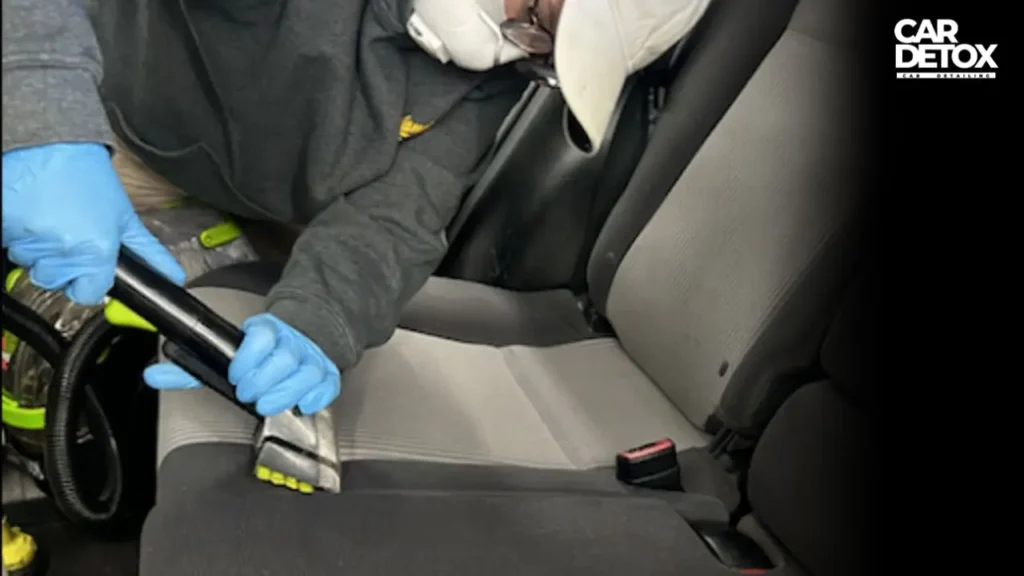
Your car seats need ongoing maintenance to stop mold from coming back after cleaning. Managing moisture is vital to keep your interior mold-free.
Minimize moisture with proper ventilation.
Good airflow helps prevent moisture buildup. You can leave your windows slightly open when parked in safe spots so humid air escapes. Fresh air intake works better than the recirculation mode to ventilate your cabin. Your car’s interior moisture evaporates naturally when you park in sunny areas. The AC removes extra humidity from the air, so run it occasionally even in cool weather.
Avoid eating or leaving wet items inside.
Mold thrives on food crumbs and spills. Clean up any spills right away, even if you have to sit on a damp spot for the rest of your trip. Wet gym clothes or gear shouldn’t stay in your car as they create perfect conditions for mold. Make sure your windows and sunroof stay closed in rainy weather. Regular checks of door seals and weather stripping help you spot potential water leaks.
Disinfect high-touch areas regularly.
Monthly interior cleaning stops dirt and dust from building up. You should clean high-touch areas like steering wheels, door handles, and gear shifts more often, especially during cold and flu season. A clean cabin air filter keeps air moving properly and stops mold from growing in your HVAC system.
Use dehumidifiers or moisture absorbers.
Silica gel packets under seats or in cup holders trap excess moisture effectively. Reusable car dehumidifiers control moisture long-term without frequent changes. Baking soda works as a budget-friendly option – just leave an open box overnight to absorb moisture and neutralize odors. Natural dehumidifiers and odor eliminators like activated charcoal bags do the job well, too.
Caring for Leather and Fabric Seats After Cleaning
Your seats need proper aftercare to stop mold from coming back after cleaning. Both leather and fabric seats require specific care to stay in good shape.
Conditioning leather to prevent cracking
Leather seats need conditioning right after you remove mold. A quality leather conditioner applied every 3-6 months will keep the material soft and prevent cracks. Take a quarter-sized amount on a lint-free cloth and spread it in thin, even layers. Let the conditioner soak in overnight if you can, then buff it gently with a clean cloth to remove any excess. This step puts back natural moisture that cleaning products might strip away.
How to deodorize seats after mold removal
Bad smells often stick around even after you’ve cleaned away visible mold. You can fix this by sprinkling baking soda all over fabric seats. Let it sit for 15-30 minutes and vacuum it up well to get rid of odors. Tough smells might need a spray of 70% isopropyl alcohol to kill remaining mold particles. If nothing else works, you might want to rent an ozone machine – it works wonders on stubborn musty smells.
Tips for long-term seat maintenance
Clean seats need regular attention to stay in shape:
- Wipe down leather monthly, even if it looks clean
- Keep humidity under 60% with dehumidifiers or moisture absorbers
- Use your car’s AC/heater regularly to move air around and cut down on moisture
- Book professional deep cleaning twice a year to get a full sanitization
Quality leather is a vital investment that needs regular cleaning and conditioning to look good and stay mold-free.
Conclusion
Quick action and the right approach are essential to eliminate mold from your car seats. This piece covers several budget-friendly DIY methods that work well. White vinegar solutions, baking soda treatments, and natural remedies like clove oil can help. But severe cases might need professional help, especially if mold has spread deep into seat materials or causes health issues.The best defense against future mold is prevention. You can substantially reduce your risk by controlling moisture with proper ventilation, using dehumidifiers, and cleaning spills right away. Regular care of leather and fabric seats is a vital part of keeping your car’s interior free from mold and healthy. If persistent smells won’t go away, schedule an odor-neutralizing interior service with Car Detox for lasting results.