
Have you ever opened your car door and been hit with that unmistakable musty smell? You’re not alone if you’re trying to figure out how to get the mold smell out of car interiors.
The truth is that colonies of fungus create this unpleasant smell in your car’s cabin by releasing reproductive spores into the air. These tiny organisms love to grow when humidity rises above 50 percent. Mold makes itself at home in porous materials like leather, foam, felt, and paper, while mildew prefers non-porous surfaces such as vinyl and plastic. Your car’s smell problem can get worse if you leave wet clothes or towels in the backseat.
Cars in areas with high humidity or lots of rain face a bigger challenge staying dry inside, even with the windows up. Moisture likes to hang around and settle into fabrics, filters, and vents without any visible water spills. The good news is that you can solve this problem with the right approach. A degreaser cleaner followed by an enzyme-based cleaner often does the trick. Proper maintenance protects your investment. Car Detox offers ceramic-safe detailing services to keep your coating performing at its best.
How to Tell If Your Car Smells Musty
That unpleasant smell in your car isn’t just about comfort – it might signal problems you need to address right away. You need to spot and fix mold smell in your car to keep your vehicle running well and stay healthy.
Common signs of mildew smell in a car
Your nose knows best – that musty, earthy, or stale smell hits you as soon as you open your car door. The smell comes from volatile organic compounds (VOCs) that mold and mildew release when they grow in damp spots.
Your eyes can spot trouble, too. Watch out for fuzzy white or gray patches, green streaks, black, or even pink slime around vents, inside glove boxes, or near window corners. Poor airflow from your AC might mean debris, moisture, or mold has clogged the system.
Your allergies might get worse inside your car than anywhere else – mold could be the reason.
Health risks of mold exposure
Mold doesn’t just make your car smell bad – it can make you sick. Mold spores float through your car’s confined space and cause problems when you breathe them in.
Most people react with allergic reactions like sneezing, stuffy or runny nose, itchy or watery eyes, and skin rashes. People with breathing problems or weak immune systems might struggle to breathe or get lung infections.
Scientists have found that breathing mold for a long time can cause or worsen several serious health issues:
- Breathing problems and infections
- New or worse asthma
- Hypersensitivity pneumonitis (causing shortness of breath, cough, muscle aches, fever, and extreme tiredness)
- Allergic rhinitis
- Eczema
Mold exposure isn’t just a temporary problem – it can cause lasting breathing issues and serious health problems.
When to take action
You should tackle mold problems as soon as you smell that musty odor. Mold starts growing in just 24-48 hours when conditions work in its favor.
Act fast if you notice:
- Musty smells that won’t go away, especially after rain
- Visible mold anywhere inside
- Allergies that start or get worse in your car
- Chest tightness after just five minutes in the car
Yes, it is vital to deal with mold growth quickly to protect your health and prevent structural damage to your vehicle’s interior. Never ignore these warning signs – they need your immediate attention.
Deep Cleaning to Remove Mold Smell
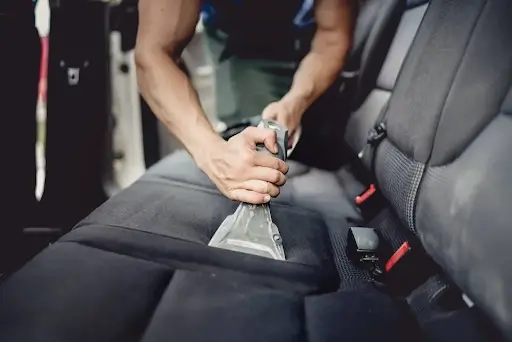
A stubborn mold odor needs a full picture and systematic approach to eliminate. You’ve spotted the problem, and now it’s time to roll up your sleeves and tackle it head-on. Let me show you the right way to remove that mold smell from your car permanently.
Vacuum and clean all surfaces
Your safety comes first, so put on protective gear—gloves, a mask, and maybe even goggles—to protect yourself from irritating mold spores. A vacuum cleaner with a HEPA filter will capture loose spores before you start scrubbing. This specialized filter catches particles as small as 0.3 microns.
Focus your attention on:
- Seams and crevices where spores hide
- Under and between seats
- Carpets and floor mats
- Hidden corners and door edges
The vacuum bag should be emptied outside your home to avoid spreading contaminants.
Use steam cleaning for carpets and seats.
Steam cleaning works wonders because mold dies in high heat. The best results come from:
- Pre-treating fabrics with enzyme cleaners or Folex breaks down stubborn residue
- Direct steam application to affected areas lets heat penetrate deep into fibers
- A microfiber towel wrapped around the steamer head lifts emulsified dirt
- Pure hot water with a splash of white vinegar completes the extraction
Lightning Fast Stain Extractor penetrates fibers effectively to remove residue from heavily contaminated fabrics.
Apply odor-neutralizing sprays
Strong fragrances only mask odors. You need products that attack smells at their source. These options work well:
- White vinegar solution (1:1 with water) kills about 82% of mold species
- Baking soda absorbs moisture and eliminates odors
- Enzyme-based cleaners break down organic material
Clean microfiber towels remove residue from surfaces after application.
Let the car air out in the sunlight.
Proper drying is vital—mold returns with just a bit of humidity. Your next steps after cleaning:
- Park your car in direct sunlight with all doors and windows open
- Fresh air should circulate for at least 15-30 minutes
- Fans or a dehumidifier speed up the drying process
- Moisture absorbers like baking soda under seats work well overnight
This final step will give a mold-free car that stays clean long after you finish.
Essential Tools and Products to Use
Your battle against mold odors in your vehicle starts with the right cleaning supplies. These tools will help you achieve lasting results.
Enzyme cleaners vs. regular cleaners
Regular cleaners use harsh chemicals, but enzyme cleaners work differently. They use biological compounds that break down the organic matter that mold feeds on. These formulas target the mold’s food source instead of just hiding the smell. Enzyme cleaners work great on hard surfaces and fabrics without causing damage. They’re also safer and eco-friendly.
Microfiber towels and detailing brushes
High-quality microfiber towels come with ultra-fine split fibers that make them super soft and absorbent. You’ll need different types for different jobs – plush ones to buff, waffle weave to dry, and low-pile to apply products. Detailing brushes help you reach tight spots where mold spores hide. Keep your microfiber towels in good shape by washing them separately. Skip the fabric softeners and bleach.
Cabin air filter replacement
Your contaminated filter keeps pushing mold spores through your vehicle. Replacing it isn’t hard – you usually just need to drop the glove box to reach the filter housing. A premium carbon filter might be worth the upgrade since it helps control odors better.
Moisture absorbers and odor eliminators
Moisture-absorbing products with high-concentration calcium chloride help stop mold from coming back. These products can drop humidity from 75% to 55%, making it tough for mold to grow. Activated charcoal packets work great as a chemical-free way to absorb stubborn odors.
Long-Term Tips to Keep a Car Smelling Fresh
Mold prevention needs constant alertness even after the original cleaning. We focused on proactive maintenance to avoid dealing with that unpleasant musty odor repeatedly.
Check for leaks after rain.
Heavy rainfall prompts me to get into my car’s interior for signs of dampness. Water often sneaks in through worn seals, cracked windows, or leaking sunroofs. Your sunroof can be a major problem – it has drainage tubes that clog easily with debris. Quick action is essential when you spot a leak. A simple fix like replacing faulty weather strips and clearing sunroof drains stops water from creating perfect conditions for mold.
Keep windows closed in humid weather.
Most people think opening windows helps, but keeping them closed during humid weather actually prevents mold better. Running your AC system periodically (even in winter) helps dry out the interior air and stops moisture buildup. Clean up spills right away – waiting until you get home is never a good idea.
Use sunshades and park in dry areas.
Direct sunlight with sunshades works best for parking. Natural sunlight stops mold growth, and sunshades help maintain a steady interior temperature. You should pick well-ventilated, dry parking spots instead of damp areas where humidity builds up.
Regularly clean and inspect the interior
Quick weekly wipe-downs should be part of your car care routine. Use appropriate products that clean and protect surfaces. Regular checks under seats and trunk corners help spot hidden moisture before it becomes a problem.
Conclusion
Mold smell in your car needs immediate action and regular maintenance. In this piece, you’ll learn that mold is more than an unpleasant nuisance – it’s a potential health risk that needs quick attention.Our complete approach, from thorough hoovering to steam cleaning and using specialized enzyme cleaners, targets the root cause instead of just hiding symptoms. Preserve your ceramic coating’s shine and durability—consult Car Detox for professional aftercare support.