
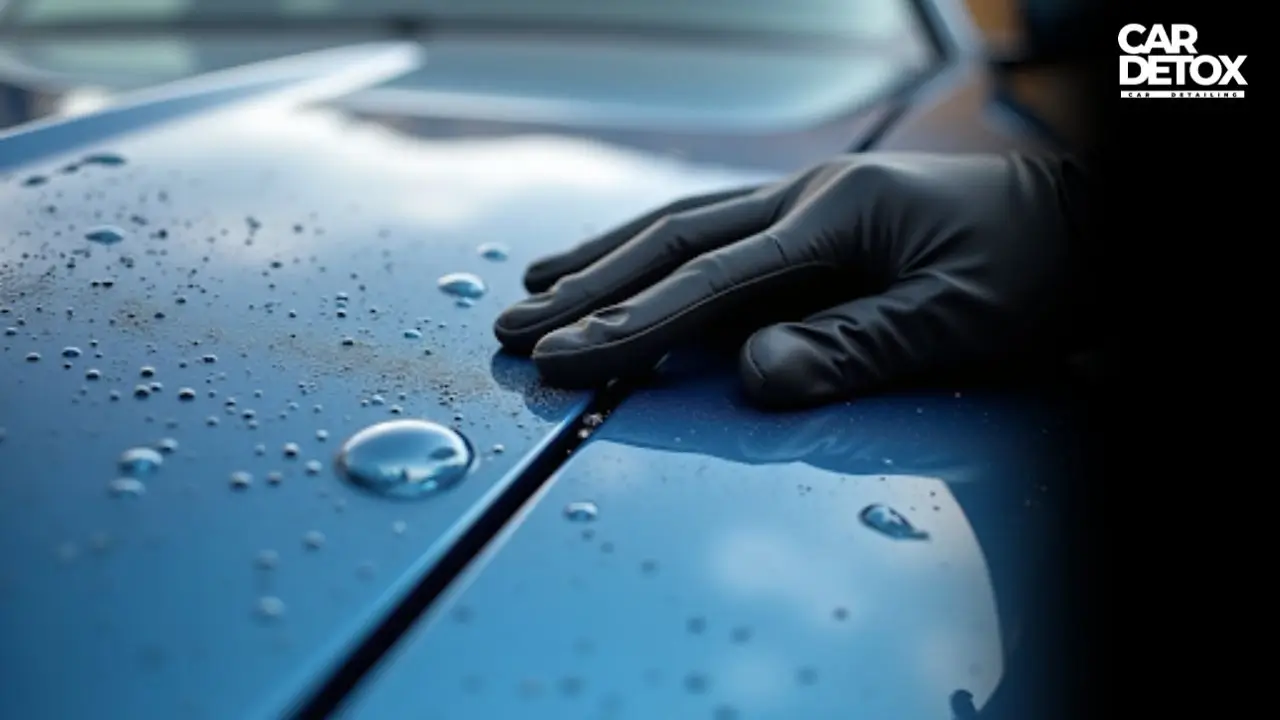
Does your ceramic coating feel rough like sandpaper as you run your hand across it? This is normal, and you can fix it completely.
The ceramic coating should give you glass-like smoothness that repels everything at the time of application. Your car paint feels rough because the clear coat is porous. These contaminants don't hide under the coating—they settle on top and create that gritty texture. The coating's smooth finish deteriorates if you don't maintain it properly.
Chemical decontamination removes 80-95% of roughness from coated cars. A ceramic coating creates a protective shield that fights dirt, water, and other contaminants with proper application and care. Quality coatings last 2 to 5 years. The coating's lifespan depends on your maintenance routine. If you're dealing with rough ceramic coating in Tigard, Tualatin, Portland, or nearby areas, you're not alone — this is one of the most common maintenance concerns we see at Car Detox.
What Causes Ceramic Coating to Feel Rough
Your ceramic coating won't stay perfectly smooth forever. Your car fights external elements every day that create a sandpaper-like texture, even with advanced protection. If you're dealing with rough ceramic coating in Tigard, Tualatin, Portland, or nearby areas, you're not alone — this is one of the most common maintenance concerns we see at Car Detox.
Environmental exposure during driving
Your vehicle's environment affects how the ceramic coating performs. Each location brings its own challenges to the coating. Industrial areas expose cars to heavy metals that embed in the paint. Cars in urban areas face acidic rain from power plants and oil refineries. This rain dries into minerals that cut into the paint surface.
High-speed highway driving creates fewer dust problems but sets up perfect conditions for bug strikes. These bugs splatter and leave acidic residue on your vehicle. The protective layer suffers damage if you don't clean it quickly.
Build-up of bugs, tar, and road film
Bugs do more than look ugly—they actively damage your ceramic coating. Bug bodies release acidic compounds that eat into your paint when they hit. Summer heat speeds up this damage substantially.
Tar's aggressive chemicals stick to paint and start breaking down the coating. Both bugs and tar create sticky bonds that become harder to remove over time. Your car's front bumper, hood, side mirrors, windshield, and radiator grille take the most damage.
Why does my car paint feel rough?
Detailers call that gritty, sandpaper feel "embedded contaminants". Your car's clear coat has pores that trap iron particles, industrial fallout, rail dust, and brake dust. These contaminants build up from many sources as you drive—they kick up on freeways, come from nearby rail yards, or even your car's brakes.
Regular washing removes about 80% of debris, but the remaining 20% sticks to your clear coat like glue. The rough feeling comes from tiny dirt particles bonded to your clear coat that normal washing can't remove.
Your car's hood and roof collect more contamination than the doors because of their flat surface. This issue is extremely common for drivers searching for "ceramic coating maintenance near me" or "ceramic coating repair Tigard / Tualatin" due to local environmental exposure.
How to Check If Your Coating Needs Fixing
Want to know if your ceramic coating needs some attention? These simple tests will show you exactly when it's time to bring back your coating's performance.
Run your hand across the paint.
The touch test is the quickest way to check your coating's condition. Just make sure your hands are clean, then run your fingertips across your car's dry, clean surface. A coating that works properly should feel silky smooth without any friction. Any roughness or resistance you feel means your coating has picked up contamination or started breaking down.
You can get a better feel by trying the "plastic bag test" - put your hand in a clean plastic bag and slide it across the surface. The plastic makes it easier to spot problems since it works like a touch magnifier. The coating needs attention if you feel any graininess or tiny bumps that show contaminants stuck in the coating.
Look for loss of water beading.
Your coating's health shows up clearly in how water behaves on it. A coating in good shape repels water strongly, creating tight, round beads that just roll right off. The protective properties are starting to fail if you see water that flattens out or pools instead of beading up.
Here's how to do this test:
- Spray clean water on different parts of your car
- Watch how the water acts on each surface
- Look at how different panels compare
Your coating is losing its water-repelling power if the water spreads out instead of forming clear beads.
Check for dullness or a sticky feel.
A coating that's in good shape creates a mirror-like shine with vibrant reflections. That glossy look starts to fade as the coating wears down. Of course, a dull appearance even after a good wash usually means the protective layer isn't doing its job anymore.
On top of that, pay attention to how dirt sticks to your car. A good coating keeps contaminants from sticking, which means your car stays cleaner between washes. Your coating has probably worn out if you need to scrub harder to get rid of everyday dirt or if bugs and tar seem to stick like glue. This extra stickiness and harder cleaning tell you it's time for fresh protection.
Fixing the Roughness: Step-by-Step Process
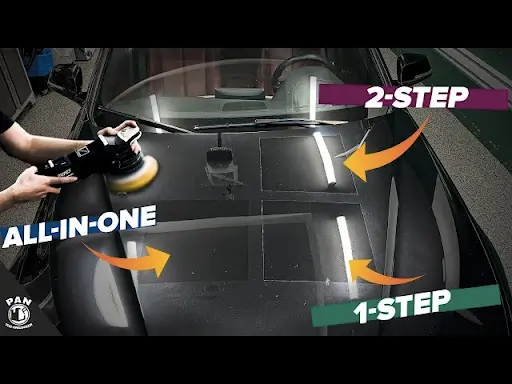
Let's get that smooth finish back on your rough ceramic coating. This process will protect your coating's integrity while restoring its shine.
1. Foam wash to loosen surface grime
Start by pre-rinsing your vehicle with a pH-neutral foam shampoo. This vital step loosens surface contaminants without damaging the coating. A foam cannon helps you coat the vehicle evenly. Let it sit for 3-5 minutes before rinsing. You'll remove about 80% of loose debris and create a clean base for deeper cleaning.
2. Apply chemical decon products
Chemical decontamination works best on coated surfaces. Use an iron remover like CarPro Iron X or Meguiar's Iron Decon to break down metal particles. A dedicated tar remover helps with tar spots and road oils. Each product needs 5-7 minutes to work properly. This chemical process handles most contamination without touching the coating surface.
3. Clay only if necessary
Check the surface after chemical decon. The finest grade clay with plenty of lubrication works best if rough spots remain. Clay the surface only when needed since it can cause micro-marring. Use light pressure and straight-line motions on small areas. Stop as soon as the surface feels smooth.
4. Polish to remove micro-marring
Claying means you'll need to polish. Pick a non-cutting finishing polish with a soft foam pad. Work on small sections with overlapping passes and light pressure. This step fixes micro-marring but keeps your coating intact. A fine polish brings back the shine without removing the protective layer.
5. Apply a ceramic topper for protection
The final touch is a ceramic coating topper like Feynlab Overcoat V3 to boost water repellency. This adds 3-6 months of protection and improves water beading. Spray it on a clean microfiber, spread it evenly, and buff to a shine. These toppers bond with your existing coating and restore its self-cleaning properties quickly.
How to Prevent Roughness in the Future
Your ceramic coating's smoothness depends on regular care. A good maintenance routine prevents rough patches from developing and saves you from costly restoration work later. Regular professional ceramic coating maintenance in Tigard, Tualatin, and Portland helps extend coating lifespan and maintain hydrophobic performance year-round.
Wash regularly with safe products.
You should wash your car every 2-4 weeks to remove contaminants before they stick permanently to your coating. A pH-neutral shampoo made specifically for ceramic coatings works best. These special products clean your car well and protect the coating at the same time.
The two-bucket method is the quickest way to wash your car - one bucket for soap and another to rinse your wash mitt. This approach keeps dirt from getting back onto your paint. Wash in straight lines instead of circles to avoid tiny scratches. The best approach is to start at the top and move down since dirt naturally collects on lower panels.
Use ceramic boosters every few months.
A ceramic booster spray helps refresh your coating's water-repelling properties every 3-6 months. These products bring back the water beading effect and improve protection between washes. Make sure your car is really clean and dry before you apply the booster. There's another reason to use an iron remover first - it helps the booster work better.
Avoid automatic car washes.
Harsh brushes and strong chemicals in automatic car washes will damage your ceramic coating over time. In fact, a 2025 survey showed that all but one of these coatings needed reapplication in half their expected lifespan when owners used automatic washes. Touchless washes are your best option when you can't wash by hand. Remember to use a ceramic booster after touchless washes to keep the protection strong.
Conclusion
Your ceramic coating needs regular care and the right techniques to stay smooth. Environmental factors, road debris, and poor maintenance can make your perfect coating feel like sandpaper. Quick action will protect your car's protective layer from permanent damage.
Chemical decontamination is the safest way to remove contaminants without damaging your coating. You'll know at the time to use clay bars and how to apply them properly to protect your paint surface from micro-marring. Don’t replace your ceramic coating before having it professionally inspected. Most rough coatings can be restored in a single service visit. Book a ceramic coating inspection with CarDetox, and we’ll determine whether your coating needs restoration or replacement — saving you hundreds of dollars.
FAQs
A ceramic-coated car should feel smooth, but it can become rough due to bonded contaminants forming high spots on the surface. This is often caused by environmental exposure, build-up of bugs, tar, and road film, which accumulate over time and aren't removed by regular washing.
You can check your coating's condition by running your hand across the paint (it should feel silky smooth), observing water beading (tight spherical beads indicate good condition), and looking for dullness or a sticky feel. If you notice any of these issues, your coating may need attention.
The process involves a foam wash to loosen surface grime, applying chemical decontamination products, clay bar treatment if necessary, polishing to remove micro-marring, and finally applying a ceramic topper for protection. This should restore the smooth finish and protective properties of your coating.
Yes, you can polish a ceramic coating to remove swirls, stains, or high spots. However, it's important to use a non-cutting finishing polish with a soft foam pad to avoid damaging the coating. Only polish when necessary, as it can thin the protective layer.
To maintain your coating's smoothness, wash your car regularly using pH-neutral shampoos specifically formulated for ceramic coatings. Apply ceramic booster sprays every 3-6 months to refresh the hydrophobic properties. Avoid automatic car washes, as they can degrade the coating with harsh brushes and chemicals.




Revive your ride anytime, anywhere
Schedule AppointmentQuestions? Call us now!