

Did you know that the average dog sheds around 365 pounds of hair? A lot of that dog hair in car interiors ends up during rides.
As a fellow pet parent, I've spent countless hours battling those stubborn fur strands stuck in my upholstery. The fight against dog hair doesn't need to be a losing battle. Your vehicle's interior can stay clean with several budget-friendly ways to protect car seats from dogs. Standard car accessories might help, but pet-specific car seat covers offer unique features that handle our four-legged friends' challenges better.
Let me share some practical solutions in this piece to keep your car clean and fur-free. You'll learn about choosing the right car dog hair protector and simple habits that prevent dog hair from taking over your car's surfaces. These tips will help protect your car from dog hair while you continue enjoying those precious rides with your canine companion. Pet hair buildup can damage upholstery over time. Car Detox offers professional pet hair removal to keep your interior clean and comfortable.
Understand Why Dog Hair Sticks to Car Seats
Your dog's hair seems to stick like magic to your car's interior. Let's explore the science behind this frustrating issue and how you can tackle it better.
How shedding varies by breed and season
Dogs leave different amounts of fur in your vehicle. Double-coated breeds like German Shepherds, Huskies, and Golden Retrievers shed substantially more than single-coated breeds such as Boxers or Poodles. These double-coated dogs go through dramatic "blowouts" where fur falls out in clumps, especially during seasonal changes.
Most dogs follow natural shedding patterns that align with daylight and temperature changes. Dogs shed their heavier winter coats in spring to prepare for warmer weather. Fall triggers the shedding of lighter summer fur to make room for thicker winter protection. Indoor pets might shed throughout the year instead of seasonally due to artificial heating and lighting.
Your dog's age, health, and diet affect their shedding amount. Even short-haired breeds that look "low-shedding" can leave surprising amounts of fur in your vehicle.
Why car upholstery attracts and holds hair
Dog hair's tendency to weave itself into car seats has a scientific explanation. The physical properties of both the hair and your car's interior materials play key roles.
Dog fur differs from human hair because it has microscopic scales that work like tiny barbs or Velcro hooks. These overlapping scales create a cuticle layer that catches and embeds in fabric fibers. Once these barbed hairs get stuck in upholstery, they become tough to remove.
Static charge makes dog hair cling to synthetic fabrics in car interiors. This invisible force creates a strong bond between the hair and your car's seats, carpets, and other surfaces.
Car upholstery creates perfect conditions for trapping dog hair because:
- The woven textures create countless tiny crevices for hair to lodge into
- Movement and pressure twist the scaled hair deeper into fibers
- Dry car environments increase static cling
- Hair breaks down into finer strands that penetrate deeper with time
This explains why a quick vacuum rarely solves the problem completely.
Best Tools to Remove Dog Hair from Car Seats
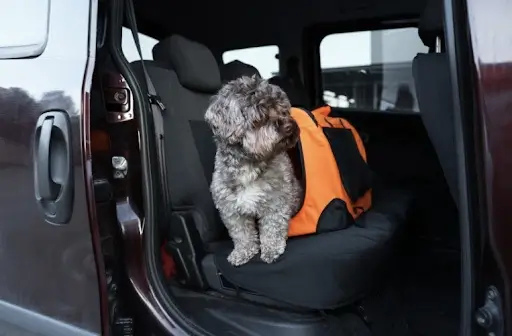
Now that we know why dog hair sticks so badly to car upholstery, let's look at the best tools to get rid of that fur from your car's interior.
Rubber gloves and squeegees
Rubber gloves are surprisingly good at removing stubborn dog hair. A slightly damp pair of household rubber gloves creates the perfect fur-gathering surface. Just put them on and run your hands over the seats with short, well-thought-out strokes - the hair will stick to the rubber quickly. You can rinse the gloves or pull off the clumps with your other hand when they get full.
Squeegees have found a new purpose beyond cleaning windows. Their rubber edges are great at gathering dog hair into neat piles. A firm grip on the handle and downward pulls with the rubber blade will do the trick. Remember to clean the squeegee when hair builds up.
Lint rollers and tape tricks
Lint rollers give quick results for basic cleanup. The sticky surface grabs pet hair without hurting the fabric. They work best on flat surfaces but might not reach deep crevices.
Packing or strapping tape packs even more sticking power. Just wrap it around your hand with the sticky side out and press against the seats. This trick helps you reach tight spots where rollers can't go.
Vacuum attachments for upholstery
Regular vacuums often can't handle packed-in fur, so special pet hair attachments make a huge difference. Look for vacuums that come with motorized brush heads or upholstery tools made for getting pet hair out of fabric.
The Fur-eel attachment uses polymeric silicone bristles that grab tough pet hair and make vacuum cleanup easier.
Using fabric softener spray
Fabric softener helps break the static bond between fur and upholstery. Mix one part fabric softener with three parts water in a spray bottle, give your seats a light spray, and wipe them with a dry cloth. This mix not only frees stuck hair but leaves your car smelling clean, too.
How to Protect Car Seats from Dogs
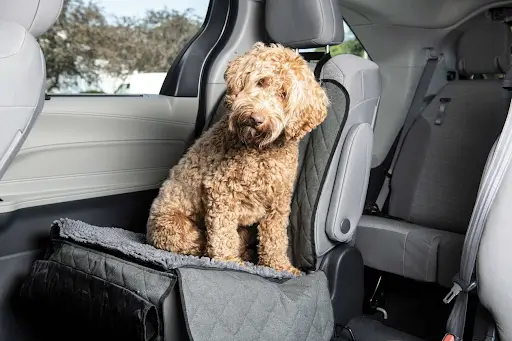
Quality dog seat protection is your best defense against furry hitchhikers in your vehicle's interior. Pet hair management becomes much easier with prevention rather than constant cleaning.
Choosing the right dog seat cover
Your dog's preferred riding spot determines the ideal car seat protector. Dogs riding in the front passenger seat need bucket seat covers that wrap snugly around the entire seat. A door-to-door coverage works best for backseat travelers to protect the entire bench. Your seat measurements matter for a proper fit. Most standard bench seats measure 55 inches wide, though larger vehicles might need extended options.
Bench vs. hammock vs. cargo liners
Simple bench covers protect while keeping normal seating available. These covers come with seatbelt openings and four attachment points. A hammock-style design creates a U-shaped barrier between front and back seats with six to eight attachment points. This setup keeps dogs from sliding off or climbing into the front seat. Dogs traveling in the trunk area need cargo liners with fold-out bumper protection to keep the rear clean.
Installation tips for full coverage
A secure installation requires several steps:
- Even the attachment of all straps around the headrests
- Deep insertion of seat anchors into seat crevices
- Proper lineup of seatbelt openings
- Full coverage of door panels by side flaps
Waterproof and non-slip materials to look for
Top-quality covers include:
- Multi-layer waterproof fabrics (TPU or PVC coating)
- Heavy-duty materials like Oxford fabric or polyester
- Rubberized backing to prevent movement
- Reinforced stitching along seams
- Piped edges that catch liquid and dirt
Long-Term Strategies to Prevent Dog Hair in the Car
A proactive approach works best to prevent dog hair from piling up in your car. These habits will save you hours of cleaning time later.
Grooming your dog before rides
Regular brushing serves as your first line of defense against shedding. Low-shedding breeds need brushing once or twice weekly, while heavy shedders need daily attention. Your dog needs outdoor grooming before car trips - this simple habit cuts down fur transfer to your vehicle significantly. A professional grooming session every 6-8 weeks helps, since well-groomed coats shed less.
Using pet-specific seat covers
Quality covers made for pets work better than standard seat protectors. The best covers come with multiple attachment points that connect to headrests and seat anchors. Dogs stay safer in hammock-style designs that keep them from falling into footwells and block front-seat access. Your best protection comes from waterproof materials with reinforced stitching and non-slip backing.
Keeping a cleaning kit in your car
Your kit should include lint rollers, pet wipes, a microfiber cloth, and a small grooming brush. The glove compartment makes an ideal spot to store these essentials. Quick access to these tools lets you tackle small messes right away before they turn into bigger headaches.
Training your dog to stay in one area
A seatbelt harness helps teach your dog to stay put in one spot. This safety measure reduces scattered fur and makes driving safer. Your cleanup becomes much easier when you create a dedicated "dog zone" instead of dealing with fur throughout the car.
Conclusion
You don't need to end up with a fur-covered car interior when taking your dog for rides. The fight against dog hair becomes easier with both cleanup methods and ways to prevent the mess. A good brushing before car trips will definitely make a difference in reducing shed hair. Quality seat covers designed for pets are your best defense against fur getting everywhere. These covers, whether bench-style or hammock designs, protect your seats from stubborn pet hair. Love your pets—but protect your seats. Let Car Detox restore your car’s interior with expert pet hair removal services.



Revive your ride anytime, anywhere
Schedule AppointmentQuestions? Call us now!