
Your vehicle’s life can be substantially extended by engine bay cleaning that takes less than an hour.
Most people overlook this significant maintenance task. A clean engine bay does more than just look impressive – it helps you spot issues before they turn into serious damage. Modern engine bay designs resist moisture, which makes the cleaning process safer and simpler than you might think.
The best part? Your engine bay can be cleaned and protected in just 20 minutes. This maintenance task boosts your resale value and makes future engine work much easier.
This piece reveals engine bay cleaning secrets that mechanics rarely share. You’ll learn the safest ways to clean engine components and determine the right cleaning schedule based on your driving conditions. Get safe, professional engine bay cleaning with Car Detox — same-day detailing near you!
What Mechanics Don’t Tell You About Engine Bay Cleaning
Car owners often skip cleaning their engine bay because they see it as too complex or risky. Mechanics understand that regular engine bay maintenance helps vehicles last longer, but they rarely tell their customers about this service.
Why most people skip it—and why you shouldn’t
Most drivers feel intimidated about cleaning their engine bay. They worry that water might damage electronic parts, or they’re unsure where to start. Some car owners think engine cleanliness only improves appearance.
This couldn’t be more wrong. A clean engine bay makes routine maintenance easier. You can spot oil leaks quickly against a clean surface. Built-up grime acts like insulation and makes components run hotter than they should. The cleaning process also protects hoses, wires, and plastic parts that break down faster under layers of dirt and oil.
Hidden risks of a dirty engine bay
Your engine bay’s condition can affect your vehicle’s performance and safety in several ways:
- Dirt traps heat and reduces cooling efficiency
- Rubber hoses, belts, and electrical connections wear out faster
- Grime hides leaks and mechanical problems
- Oil and fuel residues near heat sources create fire risks
- Buyers check engine bays carefully, which affects resale value
Dirt and oil become harder to remove as they bake onto surfaces. A simple maintenance task turns into a big project if you wait too long.
How mechanics clean it differently
Mechanics use specialized tools and methods that go beyond DIY solutions. They have steam cleaners that cut through grease without using much water. Some use compressed air that dries components fast and completely.
These professionals know which parts can handle water and which need protection. They cover sensitive areas with plastic bags or special wraps instead of avoiding water entirely. Their professional-grade degreasers work better than what you find in stores.
Mechanics can lift vehicles to reach under the engine bay. This gives them better access to spots where road grime and oil collect.
Choosing the Right Tools and Products
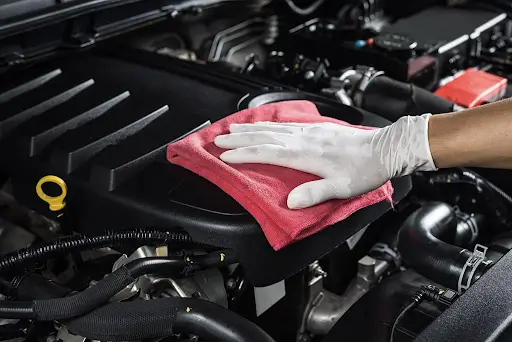
The right cleaning products can make the difference between safely refreshing your engine bay and damaging sensitive components. Professional detailers choose products developed for automotive applications that comply with strict environmental regulations.
Best degreasers and brushes for engine cleaning
pH-balanced degreasers designed for automotive use deliver the best results to clean engine bays. Top options include:
- Chemical Guys Orange Degreaser – A citrus-based formula that safely cuts through grease on plastics and rubber surfaces
- Meguiar’s Super Degreaser – Professional-grade option that leaves no residue
- Simple Green Pro HD – Developed for aircraft aluminum, making it non-corrosive to metal components
The right brushes are just as crucial for safe and thorough cleaning. Soft detail brushes work best on sensitive components, while medium-bristle utility brushes handle textured plastics and hoses well. Long-handle or angled brushes help you reach hidden areas without strain. Stiff wire brushes should be avoided as they scratch plastics and painted surfaces.
When to use protectants and conditioners
A clean engine bay needs protectants to preserve components and maintain freshness. Products labeled “safe for rubber and plastic” protect best against heat and environmental exposure. Your engine bay should be completely dry before applying protectants, ideally 24-48 hours after cleaning.
Matte finish dressing made for engine components works better than tire shine products that often leave greasy residues attracting dust. Use protectants on much of either to prevent product buildup or dripping onto hot engine parts during operation.
Avoiding harmful products like WD-40 or dish so contrast to this, household products can damage engine components severely. Dish soap strips protective coatings and contains sodium chloride (salt) that promotes corrosion. The surfactants in dish soap might remove grease, but can strip wax protection and cause rusting in unprotected areas.
WD-40 serves as a water displacer, not a lubricant. Despite its multi-purpose marketing, it leaves a gummy residue that attracts dust and dirt. It also evaporates quickly and can wash out proper lubricants, leaving components vulnerable.
Automotive-specific cleaners are a great way to get the right balance of cleaning power without damaging sensitive engine parts. Check out more at automotive-specific cleaners.
Safe Cleaning Without a Pressure Washer
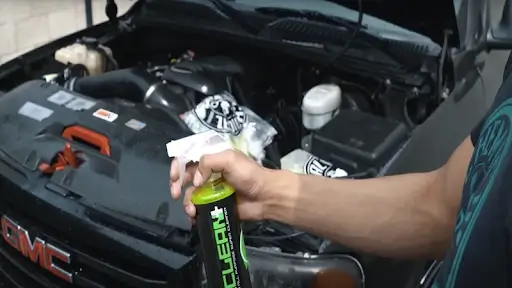
Most people think professional engine bay cleaning requires pressure washers, but that’s not true. You can get professional results without risking water damage. Many experts prefer a “Cosmetic Engine Detail” – a waterless approach that protects sensitive electronics.
Manual cleaning with a cloth and a toothbrush
Let your engine cool down before you start. A microfiber towel dampened with a suitable cleaner works great for light cleaning – just wipe surfaces gently. Tough spots need extra attention. An old toothbrush is perfect for breaking up built-up grime on textured surfaces. Clean and dry small sections right away so dirt doesn’t settle back on clean areas.
Using spray bottles and a vacuum for debris
Start by clearing loose debris like leaves and dirt. A shop vacuum with a blower function makes this task much easier. Next, prepare your spray bottles with the right cleaners – one for water, another for degreaser, and maybe one with soapy water for final cleaning. This method gives you better control over moisture while breaking down grime effectively.
How to clean tight spots without water damage
Foam applicators or small paintbrushes help you apply cleaners with precision around electrical components. Keep a clean microfiber towel ready to wipe immediately after. Pipe cleaners and specialized detailing brushes are a great way to get into narrow spaces. Patience beats water volume – let degreasers sit briefly and use gentle agitation instead of harsh scrubbing.
Long-Term Engine Bay Care Tips
Regular engine bay maintenance helps your vehicle last longer than most owners expect. My years of experience with different vehicles have helped me create a practical maintenance schedule that works for most drivers.
How often to clean based on driving conditions
Your driving environment determines how often you should clean:
- Standard conditions with clean roads: Every 12 months works well
- City driving or moderate dust exposure: Every 6-9 months prevents buildup
- Severe conditions (coastal areas, dusty roads, off-roading): Every 3-6 months, stop corrosion
- Older vehicles or high-mileage cars: You need more frequent cleaning, as they collect more grime
Most professional detailers agree that a 6-12 month interval creates the right balance between maintenance and practicality for average drivers.
Signs your engine bay needs attention
Your calendar reminder shouldn’t be the only trigger. Watch out for these signs:
- Grease buildup on valve covers or the engine block
- Lower fuel efficiency or rough idling
- Strange smells from under the hood
- Grime that makes leak detection difficult
- Visible oil stains or fluid accumulation
Engine bays collect grime fast — and most people are afraid to touch them. Our experts know how to clean them the right way, without risking sensors or wiring. Schedule your Car Detox service today in Tigard, Tualatin, or Sherwood — and see what a proper engine detail near you really looks like
DIY vs. engine bay cleaning service: what to know
Professional services cost between $25-$300 based on service level. DIY cleaning needs $40-$75 for supplies and takes 2-3 hours of your time.
You should choose professional cleaning if your vehicle has warranty coverage, modern electronics (2010 or newer), or if you prefer convenience over cost. DIY works best if you have mechanical knowledge or an older vehicle with basic components.
Pricing Disclaimer: Price availability is subject to change without notice. We reserve the right to modify prices at any time.
Conclusion
Engine bay cleaning is one of the most overlooked yet valuable tasks you can do for your vehicle. This piece shows how this simple job takes little time and gives you major benefits. A clean engine bay helps you spot problems before they become expensive repairs.
Many vehicle owners avoid this maintenance task because they believe water and engines don’t mix. But modern vehicles come with moisture resistance built in, which makes the process much safer than most people think. You don’t need fancy equipment or expensive services to get great results.
The right cleaning products make all the difference. Use automotive-specific degreasers instead of household products that could damage sensitive parts. Soft detail brushes will help you clean thoroughly without scratching or damaging surfaces. At Car Detox, we clean your engine bay safely — no shortcuts, no damage, just spotless results. Book your professional engine bay cleaning today and keep your car running cleaner, cooler, and better.
Our Popular Services
Car Detailing Services | Ceramic Coating Services | Pet Hair Removal Services | Mobile Auto Detail Services Happy Valley | Car Detailing Services in Tualatin
Find Us On Map
Car Detox – Auto Detailing Services
Book An Appointment