
Few smells are as stubborn or as unsettling as gasoline inside your car. It clings to carpet and upholstery, it rides the air vents through the whole cabin, and it can linger for days after the spill that caused it. Beyond being unpleasant, a strong fuel odor can cause headaches and nausea on longer drives, so it is worth taking seriously.
The good news is that most gasoline smells can be removed completely with the right approach. This guide walks through why fuel odor is so persistent, how to treat it step by step, and when a lingering smell is a sign of something that needs professional attention.
Why does gasoline smell linger in a car for so long?
Gasoline is made up of volatile compounds that evaporate slowly and bond easily to soft, porous materials. When fuel spills on carpet, floor mats, or seat fabric, it soaks deep into the fibers rather than sitting on the surface, which is why a quick wipe almost never fixes it. The smell you notice days later is the fuel still evaporating out of those materials.
Your ventilation system makes it worse. Once fuel vapor enters the cabin, the air conditioning and heater pull it through the vents and cabin air filter, spreading the odor everywhere and giving it new places to settle. This is also why a spill in the trunk can somehow end up smelling just as strong in the front seats. Removing the odor means treating the source material and the air system, not just masking the smell with a freshener.
Is a gasoline smell in your car dangerous?
A faint fuel smell right after filling up or carrying a gas can is usually harmless and fades on its own. A strong or persistent gasoline smell is different and deserves caution. Gasoline vapor is flammable, and breathing it in an enclosed cabin for long periods can cause headaches, dizziness, and nausea.
Safety comes first, so take a few precautions before you start cleaning. Work with the doors open and in a well-ventilated area, never near an open flame, a lit cigarette, or anything that could spark. If you smell fuel but never spilled any, the odor may be coming from the vehicle itself rather than a spill, and that points to a mechanical issue covered later in this guide. When in doubt, ventilate first and treat the cleaning as the second step.
How do you get a gasoline smell out of your car step by step?
The most reliable way to remove fuel odor is to work from the source outward. Start by soaking up any remaining liquid, then neutralize what has absorbed into the materials, and finish by clearing the air system. Rushing straight to a deodorizer skips the part that actually holds the smell.
Here is the order that works best:
● Blot up any wet fuel immediately with clean rags or paper towels, pressing down to lift liquid from deep in the fibers rather than rubbing it in
● Sprinkle baking soda generously over the affected carpet or upholstery and leave it for several hours or overnight to draw the fuel out
● Vacuum up the baking soda, then clean the area with a mix of warm water and a grease-cutting dish soap, since fuel is oil-based and needs a degreaser to break down
● Rinse lightly and blot dry, repeating the wash if any smell remains
● Place bowls of fresh baking soda, activated charcoal, or white vinegar in the car overnight to absorb lingering odor from the air
● Run the ventilation system and, if the smell persists, replace the cabin air filter, which traps and holds fuel vapor
For a spill that has soaked deep into padding under the carpet, surface cleaning may not reach all of it. That is the point where professional extraction makes the difference, which the next sections explain.
What household products remove gasoline smell from a car?
Several common items work well because they either absorb odor or cut through the oily residue that holds it. Baking soda is the workhorse, drawing fuel out of fabric when left to sit. A grease-cutting dish soap breaks down the oil-based residue that water alone cannot touch. White vinegar neutralizes odor in the air when left out in a bowl overnight, and activated charcoal absorbs lingering vapor without adding a competing scent.
The table below matches the common fuel-odor situations to what causes them and the fix that works, so you can match your approach to your specific problem.
| Situation | Likely cause | Best fix |
| Spill on carpet or mats | Fuel soaked into fibers | Blot, baking soda, degreaser wash |
| Smell only from the vents | Vapor in the air system | Run ventilation, replace cabin filter |
| Odor in the trunk | Spill or leaking gas can | Remove source, clean, air out |
| Smell with no spill | Possible fuel system leak | Inspect mechanically, do not just clean |
| Lingering after cleaning | Fuel in deep padding | Professional extraction or ozone |
A word of caution on what not to do. Avoid harsh solvents, bleach, or ammonia, which can damage upholstery and create dangerous fumes when they mix. Scented sprays and air fresheners only mask the smell for a few hours and do nothing to remove the fuel itself, so they are a temporary cover at best.
How do you get gasoline smell out of car seats and carpet?
Fabric seats and carpet are the hardest-hit surfaces because they absorb the most liquid. Treat them the same way you would any deep stain: lift the liquid first, then break down the residue, then draw out what remains. Blot aggressively with clean rags before anything else, since every bit of liquid you remove now is odor you will not have to neutralize later.
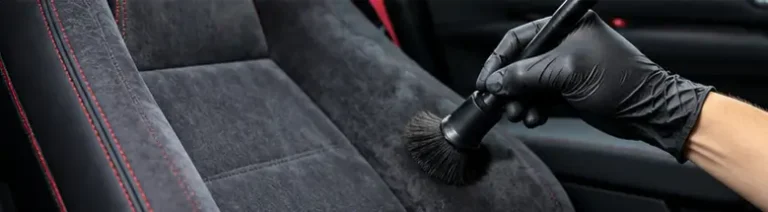
After blotting, work a warm water and degreasing dish soap solution into the fibers with a soft brush, then blot it back out rather than soaking the fabric. Follow with a baking soda treatment overnight and vacuum it up the next day. Leather and vinyl seats are easier because fuel sits closer to the surface, so a degreaser wipe-down usually clears them. Fabric that still smells after two full treatments has fuel trapped deeper than a home wash can reach, and that is where a professional interior detailing service with hot water extraction pulls contamination out of the padding that DIY methods leave behind.
How do you get a gasoline smell out of your car’s air vents?
When the smell seems to come from everywhere at once, the ventilation system is usually holding it. Fuel vapor gets pulled into the air intake and soaks into the cabin air filter, so the system recirculates the odor every time you turn on the fan. Cleaning the seats will not fix this if the filter is saturated.
Start by replacing the cabin air filter, which is an inexpensive part that often holds a surprising amount of trapped odor. Then run the fan on its highest setting with the windows open to flush the ducts with fresh air. For a smell that survives both steps, the fuel vapor has settled deep in the ventilation ducts, and that calls for a treatment that reaches the whole air system rather than just the surfaces you can touch.
When should you see a professional about a gasoline smell?
Most spill-related odors clear up with careful cleaning, but some situations are beyond a home fix and a few are genuinely urgent. If you smell gasoline but never spilled any, treat it as a possible fuel system issue rather than a cleaning problem. A leaking fuel line, injector, or cap can let vapor into the cabin, and no amount of detailing will solve a mechanical leak. Have the vehicle inspected before you drive it much further.
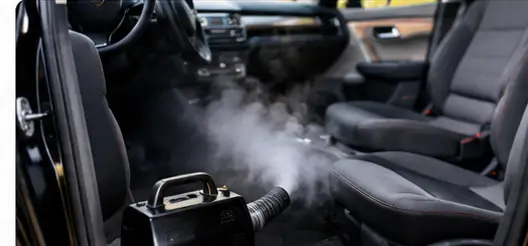
For spills that have soaked deep into carpet padding or saturated the ventilation system, professional treatment is the most reliable route. An ozone treatment breaks down odor molecules throughout the entire cabin, including the vents and hidden spaces a cloth cannot reach, and professional hot water extraction pulls fuel out of deep padding. If you have already cleaned thoroughly and the smell keeps coming back, the guide on why your car still smells after detailing explains what is usually hiding, and the dedicated smoke and odor removal service handles the toughest cases that home methods cannot finish.
How do you prevent gasoline smells in your car?
A little prevention saves a lot of cleaning. The most common cause of fuel odor is carrying gas cans, so transport them carefully whenever you can. Use an approved, sealed fuel container and keep it upright, ideally in the trunk or cargo area on a surface that will not absorb a spill. A simple plastic tray or liner under the can contains any drips before they reach your carpet.
Beyond gas cans, close your fuel cap fully after every fill-up until it clicks, since a loose cap is a frequent source of faint, recurring fuel smell. Address any spill the moment it happens rather than hoping it will air out, because fresh fuel is far easier to remove than fuel that has soaked in and dried. Regular interior cleaning also keeps your cabin air filter and upholstery in good shape, so odors have less to cling to in the first place.
Keep your car fresh with Car Detox
A gasoline smell does not have to be permanent. Most spills come out with prompt blotting, a degreaser wash, baking soda, and a fresh cabin filter, and careful handling of fuel containers prevents the problem from starting. When a smell has soaked deep into the carpet padding or taken over the air system, that is when professional help finishes the job for good.
Car Detox serves drivers across the Portland metro with deep interior cleaning and odor removal built for exactly these stubborn cases. If a fuel smell will not leave your car, reach out through the Car Detox contact page and the team will get your cabin clean and fresh again.