
Tesla Cybertruck owner faces the same reality within a few weeks of ownership: this isn’t a regular vehicle, and it doesn’t wash like a regular vehicle. The unpainted stainless steel exoskeleton that makes the Cybertruck visually distinctive also makes it uniquely challenging to maintain. Fingerprints show immediately. Water spots appear after every wash if not dried properly. Orange spots appear on panels that owners fear are rust but usually aren’t.
Tesla Cybertruck stainless steel care requires understanding the material and following specific procedures that differ significantly from washing a traditional painted car. The good news is that once you know the rules, keeping a Cybertruck looking sharp is straightforward. The bad news is that the wrong products or techniques can permanently damage the stainless finish in ways that are difficult and expensive to correct.
In our Tualatin shop, we handle Cybertruck detailing and Tesla ceramic coating for owners across Portland metro. This guide covers exactly what Cybertruck stainless steel is, why it develops those rust-like spots, which products to use and avoid, and how to protect your investment long-term.
What Makes the Cybertruck’s Stainless Steel Different From Regular Car Paint?
The Cybertruck’s body panels are made from 3mm-thick proprietary 30X cold-rolled stainless steel (also called 3-O-X lean alloy), a material Tesla developed specifically for this vehicle. Unlike every other production car on the road, the Cybertruck has no paint and no clear coat protecting the metal. What you see is the actual stainless steel surface itself. This design choice creates the truck’s distinctive look and eliminates paint chip and fade concerns, but it also means the metal is directly exposed to everything the vehicle encounters: water, road salt, brake dust, industrial contamination, tree sap, bird droppings, and fingerprints. All of these leave marks that traditional paint would resist because the clear coat provides a protective barrier the Cybertruck simply doesn’t have.
The material choice creates unique advantages. Cybertruck panels don’t chip, don’t fade in sunlight, don’t oxidize from UV exposure, and are dramatically harder than painted steel. A rock strike that would chip paint on a Ford F-150 usually leaves no visible damage on a Cybertruck. The panels essentially can’t rust through the way painted steel eventually does.
The tradeoffs are the surface care challenges. Fingerprints show on any polished stainless surface. Water minerals leave visible spots when they dry. Iron particles from brake dust and other environmental sources can stick to the surface and appear as rust-colored spots. Certain chemicals, especially those containing chlorine, can permanently damage the stainless finish.
Understanding this fundamental difference between the Cybertruck and traditional vehicles is the foundation of proper care. Techniques and products that work fine on painted cars can range from ineffective to actively harmful on Cybertruck stainless steel.
Why Does Cybertruck Stainless Steel Get Rust-Like Spots?
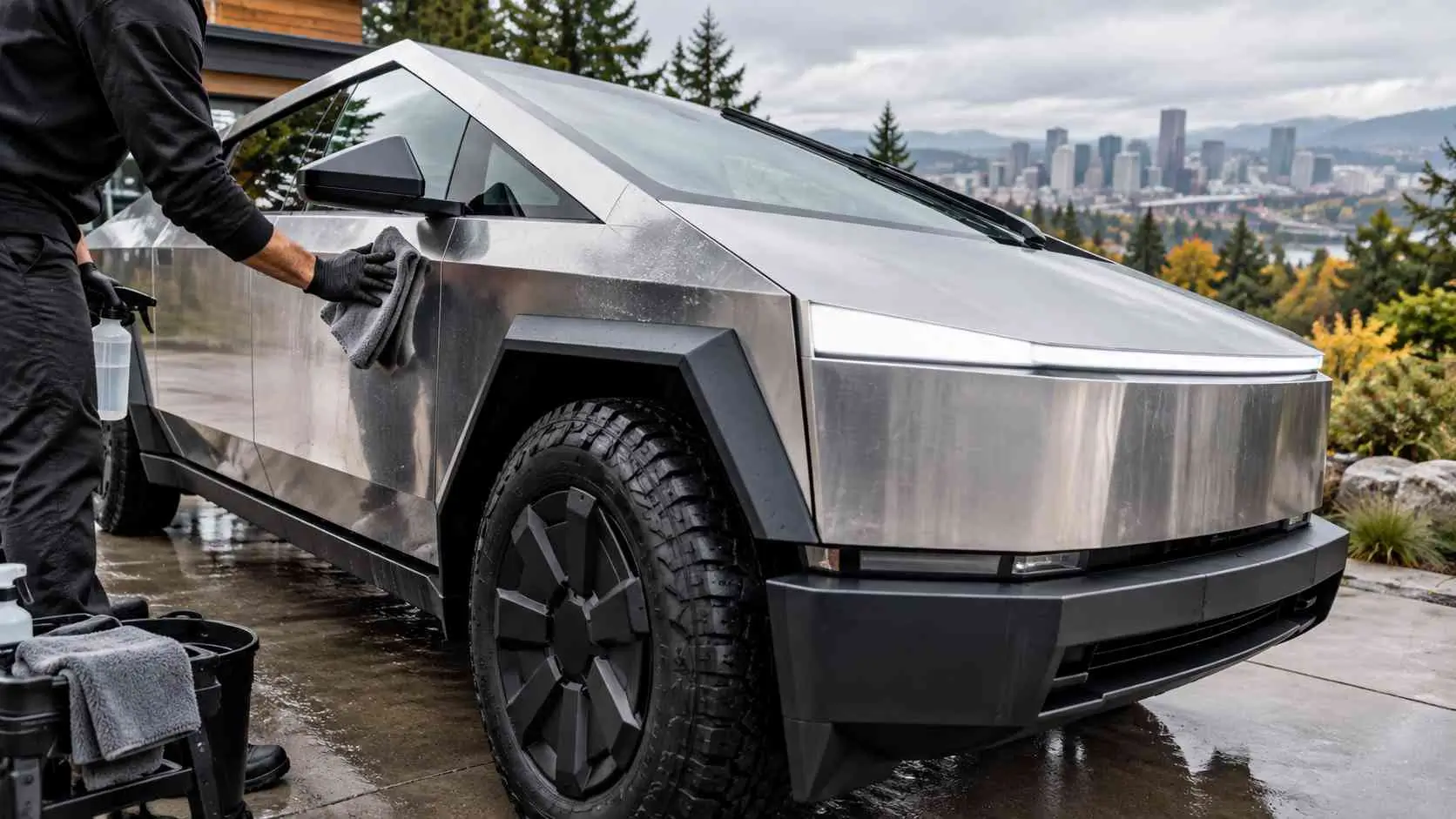
The orange or brown spots that appear on Cybertruck panels have become a widely-discussed concern among owners. Tesla’s own owner’s manual addresses this directly: these spots are usually not rust.
The actual cause is iron contamination from environmental sources. As a Cybertruck drives, its panels pick up microscopic iron particles from brake dust generated by other vehicles, rail dust near train tracks, industrial fallout from manufacturing areas, and construction debris. These iron particles land on the stainless surface and eventually begin to oxidize themselves. The rust is on the iron particle, not on the underlying stainless steel.
Portland metro drivers face several sources of iron contamination beyond typical urban brake dust. The industrial corridor along the Willamette River, active rail lines through downtown and along I-5, and construction activity across the region all contribute to airborne iron particulates that eventually settle on vehicle surfaces.
The Cybertruck’s larger panel surface area collects more contamination than smaller vehicles. What might be undetectable on a compact sedan becomes visible on the truck’s expansive flat panels because the entire surface is exposed at a viewing angle where any contamination stands out.
Left untreated, iron contamination can eventually cause actual corrosion pitting in the stainless steel surface, though this requires prolonged exposure without cleaning. Regular washing and prompt spot treatment prevent this progression entirely.
The good news is iron contamination removes cleanly with the right product. The bad news is standard car wash soap doesn’t touch it, which is why some owners wash their Cybertrucks regularly and still see the spots.
What Products Are Safe to Use on Cybertruck Stainless Steel?
Tesla provides specific product recommendations in the Cybertruck owner’s manual and DIY service guide. Following these recommendations is the safest approach because they’ve been tested against the specific stainless alloy Tesla uses.
Mild, pH-neutral car wash soap handles routine washing. Chloride-free formulations matter because chlorine can permanently damage stainless steel finishes. Look for soaps specifically labeled as chloride-free and safe for bare metal surfaces.
Isopropyl alcohol (IPA) wipes are Tesla’s first-line recommendation for iron contamination spots. IPA wipes dissolve most fresh iron contamination without any risk to the stainless surface. Keep a container of IPA wipes in the vehicle for quick spot treatment when contamination appears.
Citric acid cleaners specifically formulated for stainless steel are Tesla’s recommendation for stubborn iron contamination that IPA wipes can’t remove. Tesla explicitly names CitriSurf 77 as an approved product. Other citric acid stainless steel cleaners work similarly but should be verified as safe for automotive stainless before use.
Microfiber towels for washing and drying prevent scratching and iron transfer. Use only new microfiber towels or microfibers dedicated exclusively to Cybertruck cleaning. Never use towels that have touched painted surfaces because trace metal particles from that contact can transfer to the Cybertruck stainless.
Distilled water for the final rinse prevents water spots. Portland’s tap water has enough mineral content to leave visible spots on stainless steel, especially in areas where water pools during drying.
Iron removers designed for automotive paint (fallout removers) can work on Cybertruck stainless if they’re chloride-free and pH-neutral. Some paint iron removers contain aggressive chemicals not suited for bare stainless, so verify compatibility before use.
Wax and sealant products designed for stainless steel add temporary hydrophobic protection and make cleaning easier. These provide short-term benefits but require frequent reapplication.
What Products Should You Never Use on Cybertruck Stainless?
Certain products cause real, sometimes permanent damage to Cybertruck stainless steel. Avoiding these protects your vehicle from expensive corrective work.
Never use anything containing chlorine or bleach. Chlorine attacks the passive oxide layer that protects stainless steel from corrosion, causing pitting and permanent surface damage. This includes household bleach, chlorine-based bathroom cleaners, some pool chemicals, and some standard car wash soaps that don’t specify being chloride-free.
Never use wire brushes, steel wool, or any brush with metal bristles. Metal on metal contact leaves iron particles embedded in the stainless surface, which then rust and cause the very spots you’re trying to prevent.
Never use abrasive cleaning pads, scouring pads, or aggressive scrubbing tools. The stainless surface is hard, but the polished finish scratches when abraded aggressively.
Never use wash mitts or towels previously used on other vehicles. Any trace iron from painted vehicles, brake work, or other metal contact transfers directly to the Cybertruck stainless during washing and causes iron contamination spots.
Never use acidic cleaners not designed for stainless steel. General acidic cleaners (bathroom cleaners, some rust removers, muriatic acid) can etch or discolor stainless steel finishes.
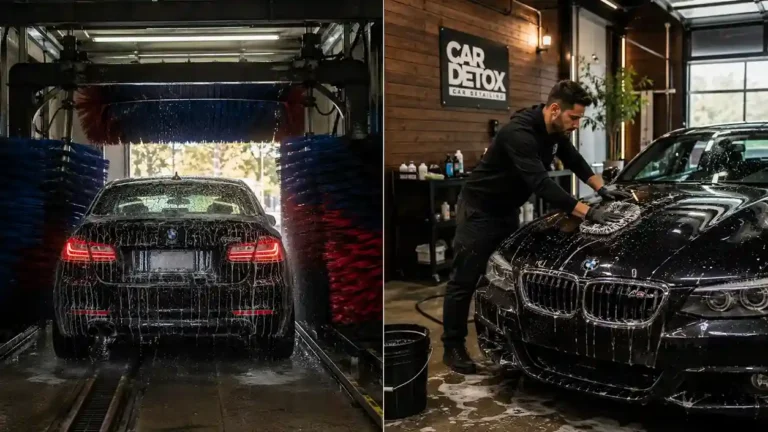
Never use automatic tunnel car washes with brushes. The brushes at automated wash facilities have touched thousands of other vehicles and carry iron contamination that transfers directly to the Cybertruck. Touchless automated washes are marginally better but still risk chemical exposure that isn’t verified as stainless-safe.
Never use pressure washers at close range on panel seams or wheel wells. The high-pressure water can drive contamination into seams where it accumulates and causes corrosion at bonded joints.
Never leave standing water on the vehicle. Water minerals leave permanent spots when they dry, and prolonged moisture contact can eventually contribute to corrosion in seam areas.
Ready to book professional Cybertruck detailing that uses only Tesla-approved products? Book ceramic coating service at Car Detox and we’ll set up a maintenance plan for your Cybertruck.
How Do You Wash a Tesla Cybertruck Step-by-Step?
The washing process is straightforward but requires attention to specific techniques that differ from washing painted vehicles. Total time runs 45 to 90 minutes depending on truck size and contamination level.
Start by parking the Cybertruck in shade. Direct sunlight causes soap and water to dry too quickly, leaving water spots and streak marks on the stainless surface. Early morning or late afternoon in covered areas works well.
Rinse the entire vehicle thoroughly with clean water to flush loose dirt, dust, and debris. Start from the top and work down, paying attention to wheel wells, panel seams, and areas where grime accumulates. This pre-rinse removes particles that would otherwise scratch the surface during washing.
Prepare your wash solution in a bucket using pH-neutral, chloride-free car wash soap and clean water. Use a dedicated bucket that has never held other cleaning solutions or been used for other purposes.
Use a new wash mitt or one dedicated exclusively to Cybertruck use. Grip the mitt lightly and wash in straight side-to-side motions, not circles. Circular motions can cause visible swirl patterns on the polished stainless surface.
Wash from top to bottom in sections. Roof first, then upper panels, then middle sections, then lower panels last. This prevents dirty water from running over already-cleaned areas.
Rinse each section thoroughly before moving to the next. Soap left on the stainless surface can etch or leave marks if allowed to dry.
For textured or seamed areas, use a soft microfiber brush rather than the wash mitt. The dedicated brush reaches into recessed areas without scratching the surrounding surface.
Final rinse the entire vehicle with distilled water if possible, or filtered water if distilled isn’t practical. The clean water rinse removes any final soap residue and reduces mineral spotting during drying.
Dry the vehicle immediately and completely with clean microfiber towels. This step is critical for stainless steel because water spots will form within minutes if the vehicle is left to air dry. Use multiple towels, working from top to bottom, and pay attention to seams and edges where water pools.
Inspect the vehicle for any missed spots, contamination, or areas that need additional attention. Address any iron contamination spots immediately with IPA wipes or citric acid cleaner while the vehicle is clean.
How Do You Remove Iron Contamination Spots From Cybertruck Stainless?
Tesla’s official DIY guide provides a specific two-step process for removing the orange or brown spots that appear on Cybertruck panels. Follow this process rather than experimenting with random products.
Start with the mild approach. Apply isopropyl alcohol (IPA) wipes to the affected area with light pressure. Rub gently in straight motions rather than circles. Many fresh iron contamination spots lift completely with IPA alone. If the spots disappear, follow with a clean microfiber to remove any residue and dry the area.
If IPA wipes don’t remove the spots, escalate to the citric acid method. This is Tesla’s official recommendation for stubborn iron contamination.
First, wash the vehicle following the step-by-step process above, then dry completely with clean microfibers.
Wear gloves throughout the citric acid application. Apply CitriSurf 77 (or an equivalent citric acid stainless steel cleaner) to a clean sponge or microfiber cloth. Saturate the affected area evenly.
Let the citric acid dwell on the surface for the time specified by the product instructions, typically 3 to 10 minutes depending on contamination severity.
Agitate gently with a soft brush or fresh microfiber while the cleaner is dwelling. Do not scrub aggressively; the citric acid does the chemical work of dissolving the iron particles.
Rinse the treated area thoroughly with clean water. Any citric acid residue left on the stainless surface can continue reacting and cause discoloration over time.
Dry completely with clean microfiber towels immediately after rinsing.
Inspect the results. Most iron contamination spots disappear completely with a single treatment. Severe or long-set spots may require a second application.
For contamination that persists after two citric acid treatments, professional service is the right next step. Our detailing package includes iron removal treatments for Cybertrucks using commercial-grade products and techniques.
How Often Should You Wash Your Cybertruck in Portland?
Frequency depends on driving patterns, storage conditions, and Portland-specific environmental factors. A tiered approach works for most owners.
Quick weekly rinsing removes loose contamination before it has time to bond to the stainless surface. Even a basic hose rinse and immediate towel dry prevents most iron accumulation. This takes 15 to 20 minutes and dramatically extends the time between full washes.
Bi-weekly complete washing addresses accumulated contamination during Portland’s wet months when brake dust and road grime accumulate faster. The full step-by-step wash process every two weeks maintains the vehicle in optimal condition for most driving patterns.
Monthly deep detailing includes complete washing plus iron contamination treatment. Check for iron spots and address them immediately when found. Preventing spot buildup is much easier than removing established contamination.
Quarterly comprehensive service goes beyond routine washing. This includes seam inspection, protectant reapplication (if using wax or sealant), and any restorative work on stubborn contamination areas.
Portland’s climate creates specific challenges. Winter road salt from mountain pass driving requires immediate rinsing when the vehicle returns from Mt. Hood or Government Camp trips. Salt exposure combined with moisture accelerates any corrosion risk significantly.
Summer pollen season (April through August) creates more surface contamination than dry months in other regions. Weekly rinsing during peak pollen prevents buildup that becomes stubborn to remove later.
Fall leaves and tree contamination require prompt attention because tree sap and organic material can etch stainless surfaces if left too long.
Winter garage storage helps but doesn’t eliminate the need for regular cleaning. Salt spray reaches vehicles even when they’re parked indoors if driven on treated roads.
For Cybertruck owners who don’t have time for weekly maintenance, our mobile car wash service brings professional stainless-safe washing directly to your location.
Should You Apply Ceramic Coating to a Cybertruck?
Ceramic coating is arguably the single best protection investment for Cybertruck stainless steel. The benefits are substantial and directly address most of the material’s care challenges.
Reduced water spotting is the immediate visible benefit. Ceramic coating creates a hydrophobic surface that causes water to bead and sheet off rather than pool and leave mineral spots when it dries. This reduces the drying time required after washing and dramatically improves appearance between washes.
Iron contamination resistance is the most valuable long-term benefit. Ceramic-coated surfaces resist iron particle bonding, meaning fewer rust-like spots develop and existing spots remove more easily during routine cleaning. This addresses the most common Cybertruck maintenance concern directly.
Fingerprint resistance improves noticeably. While ceramic coating doesn’t eliminate fingerprints entirely, it makes them dramatically easier to wipe off and reduces the frequency of visible marks.
Chemical protection is critical for a Cybertruck. The coating provides a barrier against acidic contamination like bird droppings, tree sap, industrial fallout, and road grime that would otherwise etch the stainless surface if left untreated.
UV and oxidation protection extends the life of the polished stainless finish. Even stainless steel benefits from UV protection during Portland’s summer months when direct sun exposure is intense.
Easier cleaning routines are the daily benefit. Ceramic-coated Cybertrucks require less time and effort per wash because contaminants don’t bond as aggressively to the surface.
Multi-year durability from professional ceramic coatings provides protection that outlasts multiple annual maintenance cycles. Consumer-grade waxes and sealants might last a few months; professional ceramic coating extends into years.
For Cybertruck owners considering ceramic coating, our Tesla-specific ceramic coating service applies premium coatings designed for stainless steel by technicians experienced with Cybertruck surfaces.
How Do You Handle Fingerprints and Daily Smudges?
Fingerprints on Cybertruck panels are the most common daily annoyance for owners. The polished stainless surface shows every touch, especially in bright light.
Isopropyl alcohol wipes are the fastest solution for individual fingerprints. Keep a container of IPA wipes in the vehicle for quick touch-ups on door handles, tailgate, and frequently-touched panel areas.
Microfiber towels dampened with distilled water handle general smudging. Wipe in straight motions rather than circles to avoid visible pattern marks.
Dedicated stainless steel cleaners designed for appliances can work if they’re pH-neutral and chloride-free. Verify product compatibility before regular use.
For heavily-touched areas like door handles and tailgate edges, ceramic coating provides the most sustainable long-term solution because it reduces fingerprint visibility and makes wiping much easier.
Some owners apply paint protection film (PPF) or vinyl wrap in a satin or matte finish specifically to eliminate fingerprints. This changes the vehicle’s aesthetic significantly but ends the fingerprint problem entirely.
Regular cleaning schedules keep fingerprint accumulation manageable. Panels wiped down weekly show fewer visible marks than panels left for months between cleaning sessions.
When Should You Book Professional Cybertruck Care?
Certain situations call for professional service rather than continued DIY attempts. Recognizing these triggers protects your vehicle from damage.
Established iron contamination that doesn’t respond to citric acid treatment needs professional attention. Continuing DIY attempts risks damaging the stainless surface through aggressive scrubbing or product misuse.
Panel damage from any cause benefits from professional assessment. Stainless steel is hard but can dent from significant impact. Our paintless dent repair service handles dents in Cybertruck panels.
Pre-application preparation before ceramic coating requires proper cleaning to ensure the coating bonds to a genuinely clean surface. Professional preparation includes iron removal, decontamination, and any needed polishing.
New Cybertruck delivery detailing addresses transport contamination and prepares the vehicle for ceramic coating or PPF application in its ideal condition.
Post-purchase deep cleaning on used Cybertrucks eliminates previous owner buildup and establishes a clean baseline for ongoing maintenance.
Annual maintenance detailing includes comprehensive inspection, contamination removal, ceramic coating touch-up if applicable, and any restorative work needed.
Pre-sale preparation before trading or selling maximizes resale value by presenting the vehicle in optimal condition. Used Cybertruck buyers specifically inspect stainless steel condition as part of their evaluation.
For any of these scenarios, Car Detox handles Cybertruck detailing with the appropriate products and Tesla-specific expertise.
What Mistakes Should Cybertruck Owners Avoid?
• Using standard car soap that contains chlorides. Chlorine damages the stainless steel finish permanently
• Washing with wash mitts previously used on other vehicles. Iron transfer from painted cars creates the very spots you’re trying to prevent
• Running the Cybertruck through automated tunnel car washes. Brushes deposit iron contamination from previous vehicles
• Letting the vehicle air-dry after washing. Water spots form within minutes and can become permanent
• Scrubbing rust-like spots aggressively. Chemical treatment works; aggressive scrubbing damages the surface
• Ignoring the manufacturer’s recommendation for citric acid cleaner. Random products may work or may cause damage
• Skipping the pre-rinse before washing. Loose particles create scratches during the wash mitt phase
• Using paper towels for drying. Paper leaves lint and micro-scratches on polished stainless
Frequently Asked Questions
Is the Tesla Cybertruck actually made of stainless steel? Yes. The body panels are 3mm-thick proprietary 30X cold-rolled stainless steel with no paint or clear coat protection.
Why does my Cybertruck have orange spots that look like rust? Those spots are usually iron contamination from brake dust, rail dust, or industrial fallout, not actual rust on the stainless steel itself.
How do I remove rust spots from my Cybertruck? Start with isopropyl alcohol (IPA) wipes. If that doesn’t work, use a citric acid stainless steel cleaner like CitriSurf 77 following Tesla’s official DIY guide.
Can I use regular car soap on my Cybertruck? Only if it’s pH-neutral and chloride-free. Standard soaps containing chlorine damage the stainless finish permanently.
Can I take my Cybertruck through a car wash? Avoid tunnel washes with brushes because they transfer iron contamination from other vehicles. Touchless washes are safer but still carry chemical risk.
Should I apply ceramic coating to my Cybertruck? Yes for most owners. Ceramic coating provides significant benefits for stainless steel including reduced water spotting, iron resistance, and easier cleaning.
Can Cybertruck panels rust through? Actual rust-through corrosion is extremely rare because the stainless steel is highly corrosion-resistant. Iron contamination on the surface is the more common issue.
How often should I wash my Cybertruck? Weekly rinsing for basic maintenance, bi-weekly complete washing during Portland’s wet months, and monthly deep detailing with iron treatment.
What should I do about fingerprints on my Cybertruck? IPA wipes handle individual fingerprints quickly. Ceramic coating reduces fingerprint visibility long-term.
Can I wax my Cybertruck? Yes, stainless-steel-safe waxes add temporary hydrophobic protection. However, waxes decay quickly and need frequent reapplication compared to ceramic coating.
Final Thoughts
Tesla Cybertruck stainless steel care comes down to understanding the material, using approved products, and maintaining a consistent cleaning routine. The vehicle is uniquely durable in some ways (no chipping paint, no fade, no clear coat scratches) and uniquely vulnerable in others (fingerprints, water spots, iron contamination, chlorine damage).
For Portland Cybertruck owners specifically, the combination of rainy weather, industrial contamination, and mountain pass salt exposure creates real maintenance challenges. Regular washing with the right products handles most issues, and ceramic coating provides the strongest long-term protection against the environmental factors that Portland climate throws at bare stainless steel.
To book professional Cybertruck detailing or ceramic coating, visit Car Detox at our Tualatin shop. We serve Cybertruck owners across Beaverton, Tigard, Lake Oswego, Sherwood, West Linn, and the broader Portland metro with Tesla-specific detailing expertise.