
Every electric vehicle owner discovers the frunk on day one and immediately treats it like a mini second trunk. Groceries go there. Gym bags go there. Muddy hiking boots after a Mt. Hood trip go there. Then six months in, the same owner opens the frunk one morning and realizes it looks nothing like the pristine space that came with the vehicle. Dirt, spills, mystery stains, and general grime have taken over.
How to clean an EV frunk properly matters more than most owners realize. Unlike a traditional trunk that sits over a rear cargo area, a frunk sits directly over sensitive electronic components, cooling systems, and in many cases, the vehicle’s main computer housing. The wrong cleaning approach can damage expensive systems that would make a professional detail cost look trivial by comparison.
In our Tualatin shop, we handle interior detailing for Teslas, Rivians, Ford F-150 Lightnings, and other EVs regularly, and frunk cleaning is one of the most commonly requested add-ons. This guide breaks down exactly how to clean your EV frunk safely at home, which products to use, and when to escalate to professional service.
What Exactly Is a Frunk and Why Does It Get Dirty?
A frunk is the front trunk storage compartment found on electric vehicles, made possible because EVs don’t have a traditional engine in the front. Frunks range from small storage cubbies on vehicles like the Tesla Model 3 to large 11-cubic-foot cargo spaces on the Ford F-150 Lightning. They get dirty faster than owners expect because they collect everyday cargo (groceries, bags, gear), track in outside debris every time they’re opened, and sit under a rain-exposed hood seal that eventually admits water and dust. Unlike a rear trunk, most frunks have limited built-in drainage, so spills and contamination stay trapped until cleaned.
The dirt sources are predictable once you notice them. Grocery bags leak juice and produce debris. Gym bags shed sweat and fabric fibers. Wet items dripping after outdoor activities leave water rings. Beach or lake gear tracks in sand. Winter gear brings road salt and slush. Kids and pets contribute their own contributions during family trips.
Beyond cargo, the frunk itself accumulates dust and pollen from outside air infiltration through the hood seal, especially during Portland’s 6-month pollen season. Even a well-sealed frunk collects fine particulates over time simply from ambient exposure.
The design tradeoff most EV makers accept is convenience over serviceability. Frunks are designed for easy access and quick loading, not for deep cleaning. That’s why even brand-new EV owners often need to develop a cleaning routine within the first year of ownership.
Which EVs Have a Frunk?
Frunks appear on most modern electric vehicles, though sizes vary dramatically across models. Understanding your specific vehicle’s frunk layout helps with cleaning approach and product selection.
Tesla vehicles all have frunks. The Model 3 offers a compact frunk suitable for a carry-on bag or small grocery load. The Model Y features a similar-sized frunk that many owners underuse. The Model S has a large frunk that competes with the rear trunk for daily storage utility. The Model X’s frunk is smaller than the S but still substantial. The new Cybertruck has a modest frunk with a sealed cover.
Rivian’s R1T and R1S both offer generous frunks, with the R1T’s front trunk being one of the largest in the industry. The Rivian gear tunnel between the cab and truck bed is a separate feature that also needs periodic cleaning attention.
Ford F-150 Lightning has an industry-leading 14.1-cubic-foot frunk with drain plugs, power outlets, and a load capacity of 400 pounds. It’s essentially a small trunk that happens to be at the front of the truck.
The Mustang Mach-E, Hyundai Ioniq 5 and 6, Kia EV6 and EV9, Chevy Blazer EV, Cadillac Lyriq, GMC Hummer EV, and Lucid Air all include frunks of varying sizes.
Some EVs don’t include frunks despite their electric powertrain. Most Volkswagen ID models, several Nissan Leaf configurations, and various affordable EVs skip the frunk because the front space is used for other components like heat pumps, cabin heaters, or additional battery cooling systems.
What Tools and Products Do You Need to Clean an EV Frunk?
The right tools make frunk cleaning both safe and effective. The wrong tools can damage electronics, weather seals, or the frunk liner itself.
A HEPA-filtered vacuum is the single most important tool. HEPA filtration matters because you’ll be removing fine dust, pollen, and debris in a small enclosed space, and standard vacuums can push those particles back into the air where they settle into electronics and cabin filters. A shop vac with a HEPA filter or a home vacuum with a HEPA-certified rating both work well.
Microfiber towels handle every wiping task. Have at least four on hand: one for initial wet wiping, one for cleaning solution application, one for rinse wiping, and one for final drying. Microfiber traps dust and dirt effectively without leaving lint or scratches on plastic surfaces.
pH-neutral all-purpose cleaner is the safe choice for cleaning solution. Products designed for automotive interiors work best because they’re formulated for the plastics and rubbers found in vehicles. Avoid household cleaners that contain ammonia, bleach, or aggressive solvents, as these can degrade rubber weather seals, damage plastic surfaces, or leave residue that affects sensor operation.
A soft-bristle detail brush helps with corners, seams, and textured plastic surfaces where towels can’t reach. Look for brushes specifically designed for automotive interiors, which have gentler bristles than household cleaning brushes.
Distilled water works better than tap water for any wet wiping because it doesn’t leave mineral deposits when it dries. Portland’s tap water has moderate mineral content that can leave visible spots on dark plastic surfaces.
Rubber protectant spray designed for automotive rubber and plastic extends the life of weather seals and frunk trim. This is optional for basic cleaning but helpful for annual deep detailing.
How Do You Clean an EV Frunk Step-by-Step?
The process works for most EV frunks with minor adjustments for specific vehicle designs. Total time runs 20 to 45 minutes depending on contamination level.
Start by removing all cargo, including any organizers, cargo liners, or accessories you’ve added to the frunk. Set them aside on a clean surface for separate cleaning.
Inspect the frunk for any obvious spills, damage, or areas needing extra attention. Note where you’ll need to focus cleaning effort. Check the weather seal around the hood opening for damage, debris, or degradation that might affect the seal’s function.
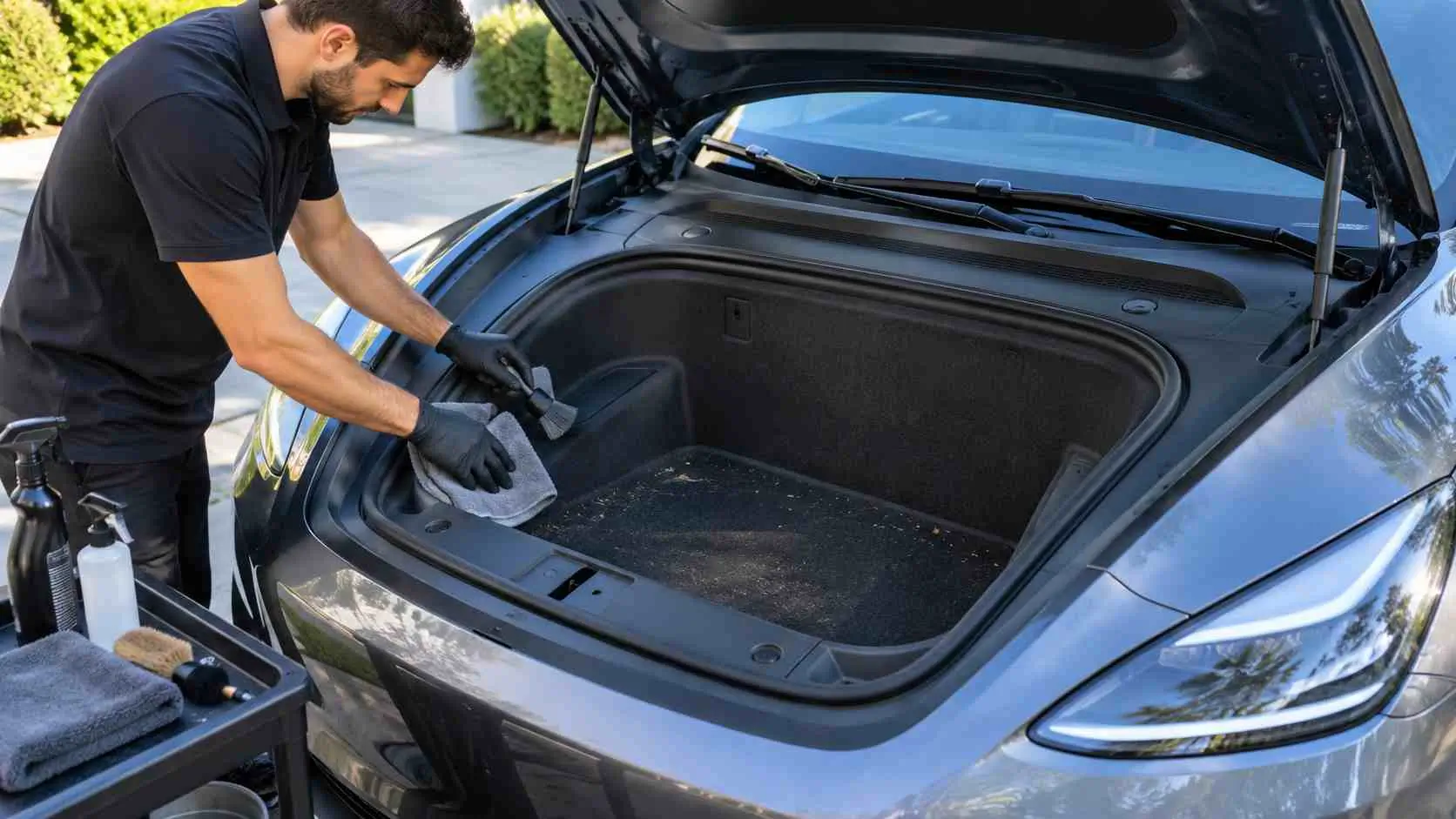
Vacuum the entire frunk thoroughly with the HEPA vacuum. Get into every corner, seam, and crevice. Pay special attention to the frunk liner’s edges, drain channels (if present), and any storage compartments or dividers. This removes loose debris that would otherwise create scratches during wet wiping.
Address any solid or dried contamination with a soft-bristle brush before applying liquid cleaners. Dried spills, food debris, or bonded contamination should be loosened dry rather than wet.
Prepare a light cleaning solution by diluting the pH-neutral cleaner according to the manufacturer’s directions. For most frunk cleaning, half strength or lighter works well because you’re not dealing with heavy grease.
Apply cleaning solution to a microfiber towel, not directly to the frunk surface. This is critical for EV frunks specifically because it prevents excess liquid from reaching electronic components, wiring harnesses, or ventilation openings that may be present.
Wipe surfaces methodically, working from top edges down to the frunk floor. Use a fresh section of towel as it becomes soiled. For textured plastics, work in the direction of the texture pattern rather than against it.
Clean the weather seal separately with a damp microfiber. Do not use cleaning solution on the seal itself, as some cleaners degrade rubber over time. Water and gentle wiping are sufficient for routine seal maintenance.
Wipe down the underside of the hood with a clean, damp microfiber. This area often gets neglected but affects the visible impression when the frunk is open.
Rinse-wipe with a clean microfiber dampened with distilled water to remove any cleaning solution residue. This step matters because leftover cleaner can attract dust and create a sticky feel over time.
Dry the entire frunk thoroughly with fresh dry microfibers. Even small amounts of trapped moisture can lead to musty odors or, in worst cases, corrosion on unprotected metal edges.
Reinstall cargo organizers, liners, or accessories only after everything is completely dry.
Dealing with a heavily contaminated frunk or want it done right the first time? Book interior detailing at Car Detox and add frunk cleaning to your service.
What Special Care Does a Tesla Frunk Need?
Tesla frunks have specific design elements that affect cleaning approach across the model lineup.
Tesla Model 3 and Model Y frunks have a soft carpet-like liner covering most surfaces. This liner absorbs spills and traps dirt, requiring more frequent vacuuming than hard-plastic frunks. For deep cleaning, the liner can typically be removed by pulling upward at the edges, allowing separate cleaning and drying before reinstallation. Never soak or machine-wash the liner because the backing can delaminate.
Tesla Model S and Model X frunks are larger with a mix of carpet-lined surfaces and hard plastic areas. The Model S frunk has drainage channels along the front edge that need periodic clearing to prevent water pooling during heavy rain.
Cybertruck frunks feature a sealed, weather-resistant design with drain plugs. The plugs should be checked periodically to ensure they haven’t been dislodged or damaged.
Across all Tesla models, the frunk area sits above the front trunk floor, which houses various electronic components including some cooling system elements. Always follow the “never spray directly” rule and use damp microfibers rather than spray bottles inside Tesla frunks specifically.
For Tesla owners considering paint and interior protection to reduce future maintenance, Tesla ceramic coating applied by Tesla-experienced technicians provides long-term protection that also makes routine frunk cleaning easier.
What About a Rivian Frunk and Gear Tunnel?
Rivian’s R1T and R1S offer some of the largest frunks in the EV market, along with the unique gear tunnel feature on the R1T that presents its own cleaning considerations.
The Rivian R1T frunk holds 11 cubic feet of cargo and includes drain plugs, integrated tie-downs, and a durable rubberized liner. The design is genuinely rugged, which means it tolerates more aggressive cleaning than a Tesla frunk. The drain plugs can be opened for rinse-and-drain cleaning, though you should still avoid direct high-pressure spray on the surrounding electronics.
The gear tunnel between the cab and truck bed on the R1T serves as additional storage and gets contaminated regularly during outdoor use. Vacuuming is essential because the tunnel collects mud, sand, grass, and outdoor debris from adventure gear. Wet cleaning with the drain plugs open works well because the tunnel is designed to handle water during exterior washing.
Rivian R1S frunks are similar to the R1T but slightly smaller and without the gear tunnel. The overall cleaning approach is nearly identical to the R1T frunk.
For Rivian owners, ceramic coating designed for Rivian vehicles provides paint and interior protection appropriate for the adventure-focused use pattern most Rivian owners have.
How Often Should You Clean Your EV Frunk?
Cleaning frequency depends on how you use your frunk and what conditions your vehicle sees. A tiered approach works for most EV owners.
Quick weekly cleaning covers the basics: remove loose debris, wipe down obvious spills, and check for any items that need immediate attention. This takes 2 to 5 minutes and prevents small contamination from becoming stubborn stains.
Monthly deeper cleaning follows the full step-by-step process outlined earlier. Complete vacuuming, surface wipe-down, and drying. For most EV owners in Portland metro, monthly service handles routine cleaning needs adequately.
Quarterly deep detailing addresses areas that monthly cleaning doesn’t fully reach. This includes removing carpet liners (Tesla), clearing drain channels, treating rubber seals with appropriate protectant, and any restorative work on stained or heavily contaminated surfaces.
Annual professional detailing catches accumulated wear that DIY cleaning can’t fully address. Professional-grade steam extraction, deep vacuum work, and expert eye for hidden contamination areas provide reset-level cleaning that keeps frunks in original condition long-term.
For families using the frunk daily, pet owners transporting animals, contractors using EVs for work, or outdoor enthusiasts loading dirty gear regularly, cleaning frequency should scale up accordingly.
What Should You NEVER Do When Cleaning an EV Frunk?
Certain cleaning practices that work fine on traditional vehicles create real risks when applied to EV frunks. Avoiding these mistakes protects both your vehicle and the electronics beneath the frunk floor.
Never spray water directly into the frunk. Even light spraying can drive moisture into wiring, computer housings, cooling system components, or ventilation openings. Always apply cleaners to towels rather than directly to surfaces.
Never use pressure washers or high-pressure water sources anywhere inside the frunk. The seals designed for exterior weather aren’t rated for concentrated pressurized water directed at close range.
Never use household cleaners containing ammonia, bleach, or aggressive solvents. These can degrade rubber weather seals, damage plastic surfaces, and leave residue that interferes with sensor operation.
Never scrub with abrasive brushes, steel wool, or aggressive scouring pads. Frunk surfaces are typically softer than traditional trunk materials and scratch easily.
Never leave standing water in the frunk after cleaning. Even small amounts of trapped moisture can lead to musty odors, mold growth (particularly in humid Portland climate), or corrosion on any unprotected metal edges.
Never ignore the weather seal condition. A damaged or degraded seal allows water infiltration during rain, which can cause interior damage far worse than surface contamination.
Never store wet items in the frunk without protection. Sports gear, swimsuits, hiking boots, and other wet cargo should go in waterproof bags rather than directly in the frunk.
When Should You Book Professional Frunk Cleaning?
DIY cleaning handles routine maintenance for most EV owners, but certain situations call for professional service.
Heavy contamination from spills, food debris, or organic material that has set into liners is typically beyond DIY equipment. Professional steam extraction and specialized cleaning products handle set-in stains that home methods can’t touch.
Odor issues that persist after cleaning suggest contamination has penetrated below the surface. Professional treatment reaches areas home cleaning can’t access.
Water damage from leaking cargo or infiltration through failed seals requires professional assessment and treatment. Improper drying can lead to mold, corrosion, or electronic issues.
Post-vacation deep clean makes sense after road trips, beach trips, camping expeditions, or any use pattern that leaves the frunk seriously contaminated with sand, mud, or outdoor debris.
Pre-sale detailing before trading or selling the vehicle should include professional frunk cleaning because used-EV buyers now specifically inspect frunks as part of their evaluation.
Annual maintenance detailing keeps EVs in like-new condition longer. Professional service catches contamination and wear before it becomes visible damage.
For any of these scenarios, Car Detox interior detailing handles EV frunk cleaning as part of complete interior service or as a standalone add-on.
What Mistakes Should You Avoid?
- Using paper towels instead of microfiber. Paper leaves lint and can scratch surfaces
- Cleaning with the hood closed or nearly closed. You need full lighting and access to see contamination properly
- Skipping the weather seal inspection. A degraded seal causes far more damage than any cleaning session
- Applying tire dressing or shine products inside the frunk. These products attract dust and create slippery surfaces
- Storing chemicals or automotive fluids in the frunk. Leaks in this space damage electronics directly
- Forgetting to clean under removable liners. Debris accumulates below liners and creates persistent odor issues
- Using shop rags with oil, grease, or previous cleaner residue. Fresh microfiber only for EV frunks
Frequently Asked Questions
How do I clean my Tesla frunk safely? Vacuum with HEPA filtration, apply pH-neutral cleaner to a microfiber towel (not directly to surfaces), wipe methodically, then dry thoroughly. Never spray water inside a Tesla frunk.
Can I use a hose to rinse my Rivian frunk? Rivian R1T frunks have drain plugs designed for rinse cleaning, but avoid high-pressure spray. Light rinsing with drain plugs open works for heavily contaminated frunks.
What products should I never use on an EV frunk? Avoid ammonia-based cleaners, bleach, aggressive solvents, abrasive brushes, and any product designed for household use that specifies avoiding electronics.
How often should I clean my EV frunk? Weekly quick maintenance, monthly deeper cleaning, quarterly deep detailing, and annual professional service for most EV owners.
Is frunk cleaning included in professional detailing? Yes. Car Detox includes frunk cleaning as part of complete interior detailing service or as a standalone add-on.
Can I put a cargo liner in my frunk? Yes. Waterproof cargo liners protect the frunk floor from spills and dirty cargo, making cleaning much easier.
What causes musty odor in an EV frunk? Trapped moisture, mold growth, or contamination that has soaked into liners. Professional treatment usually resolves persistent frunk odors.
Do all electric vehicles have frunks? Most do, but not all. Volkswagen ID models and some affordable EVs skip the frunk because the front space is used for other components.
Can water damage the electronics under my frunk? Yes. Never spray water directly into the frunk or use pressure washing. Always apply cleaners to towels instead of surfaces.
How do I remove a Tesla frunk liner? Most Tesla frunk liners lift out by pulling upward at the edges. Consult your owner’s manual for model-specific removal instructions.
Final Thoughts
How to clean an EV frunk safely comes down to the right tools, careful technique, and understanding what makes EV frunks different from traditional trunks. HEPA vacuum, microfiber towels, pH-neutral cleaner, and the “never spray directly” rule handle 95% of routine frunk cleaning without any risk to the electronics underneath.
For Tesla, Rivian, Ford F-150 Lightning, and other EV owners in Portland metro, monthly cleaning maintains the pristine appearance that came with the vehicle. For heavily contaminated frunks, persistent odors, or pre-sale detailing, professional service reaches areas DIY methods can’t fully address.
To book professional EV frunk cleaning as part of complete interior service, visit Car Detox interior detailing at our Tualatin shop. We serve Tesla, Rivian, and all major EV brands across Beaverton, Tigard, Lake Oswego, Sherwood, West Linn, and the broader Portland metro.