
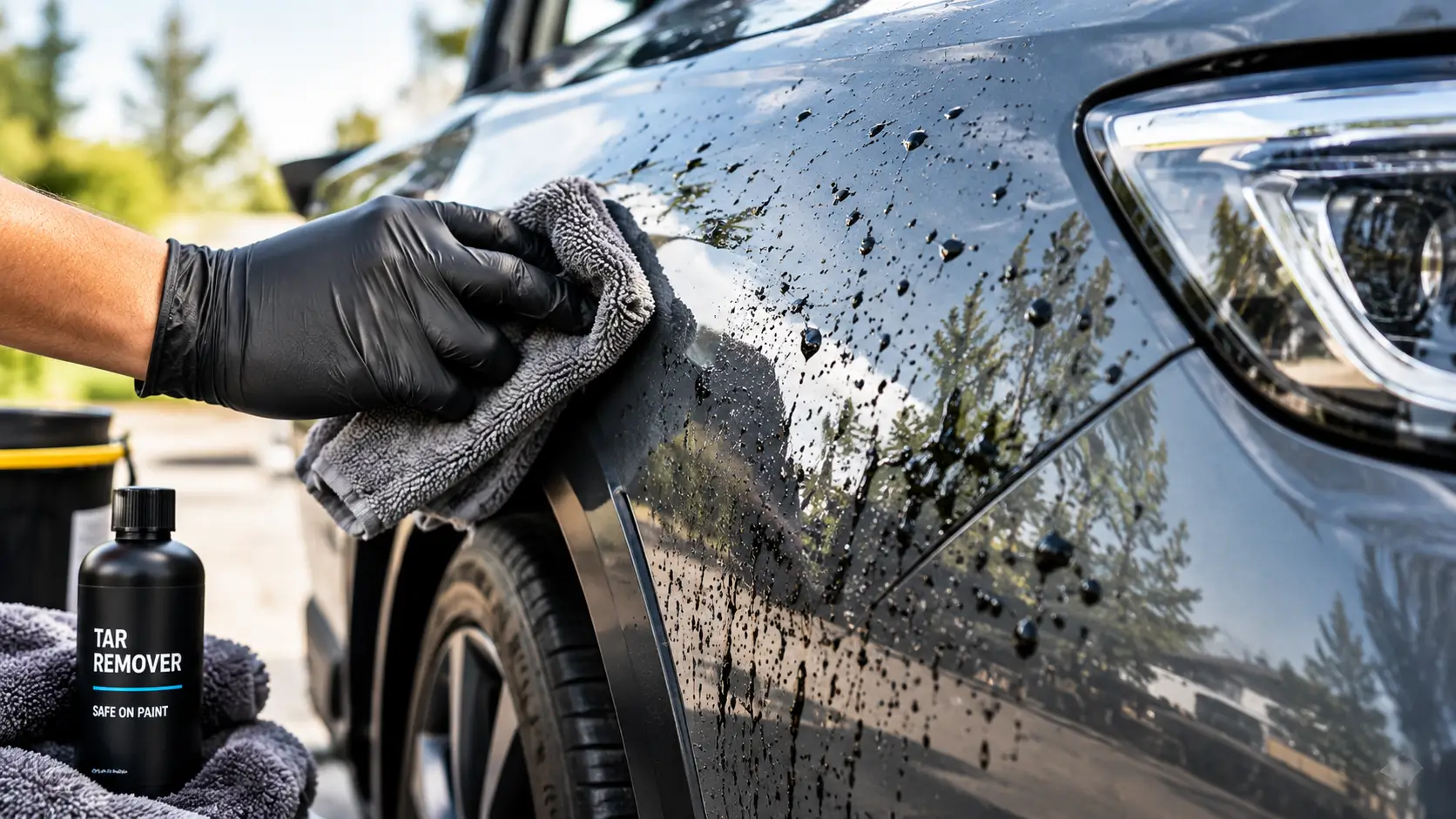
Those small black specks peppered across your lower doors, rocker panels, and rear bumper are almost always road tar. They show up after driving on freshly paved or chip-sealed roads, and they bond to your paint in a way that a normal wash will never budge. Scrubbing harder only risks scratching the finish, so the trick is to dissolve the tar rather than fight it.
This guide explains what road tar is, how to remove it from your paint without causing damage, and how to protect your finish so it stops sticking in the first place.
What causes tar spots on car paint?
Road tar comes from the asphalt and sealants used to pave and maintain roads. When those surfaces heat up in the sun or are freshly laid, tiny bits of the oily, sticky material flick up off the road and onto your vehicle as you drive. The lower panels, wheel wells, rocker panels, and rear bumper take the worst of it because they sit closest to the spray coming off your tires.
Tar is petroleum-based, which is exactly why soap and water cannot remove it. The sticky material bonds to your clear coat and, as it sits, it hardens and becomes even more stubborn. Fresh tar is far easier to remove than tar that has baked on for weeks, so the sooner you deal with it, the less work it takes. Left alone, heavy tar buildup can etch into the clear coat and cause lasting staining, which is why it is worth removing rather than ignoring.
Can you remove tar from car paint without damaging it?
Yes, as long as you dissolve the tar instead of scraping it. The single most important rule is to never scrub dried tar with an abrasive pad or a dry towel, because that drags the hardened specks across your clear coat and leaves scratches and swirl marks. The safe approach is always to soften the tar first, then wipe it away with gentle pressure.
The process also depends on starting with a clean panel and working in the right conditions. Wash the area first so loose grit does not scratch the paint while you work, and always work on a cool surface out of direct sunlight, since a hot panel makes products evaporate before they can do their job. With the tar softened and the panel clean and cool, the specks lift away with almost no effort, and your clear coat stays intact.
How do you remove tar spots from car paint step by step?
The reliable method is to soften, dwell, and wipe, then reset the protection you removed. Dedicated tar removers and bug-and-tar products are made for exactly this and are the safest choice, but the sequence matters as much as the product. Rushing the dwell time is the most common mistake.
Here is the order that works:
- Wash and dry the affected panels so no loose dirt is dragged across the paint
- Make sure the surface is cool to the touch and parked out of direct sun
- Apply a dedicated tar remover to the spots and let it dwell for the time on the label, usually a minute or two, so it can dissolve the tar
- Gently wipe the softened tar away with a clean microfiber cloth, turning to a fresh section as it picks up residue
- Repeat on any stubborn spots rather than scrubbing, since a second application is safer than extra pressure
- Wash the treated area again to remove any leftover product, since tar removers strip wax and need rinsing off
Because tar removers strip away any wax or sealant along with the tar, that cleaned paint is now unprotected. Resetting that protection is the final step, which the sections below cover.
What is the best product to remove tar from a car?
A dedicated automotive tar remover or a bug-and-tar remover is the best and safest option, because these are formulated to dissolve petroleum-based tar without harming automotive clear coat. They do the work with chemistry instead of abrasion, which is exactly what you want on paint. For a light scattering of fresh tar, a clay bar can also lift the specks during a normal wash.
Many people reach for household alternatives, and some can work in a pinch, but each carries a trade-off worth knowing. The table below compares the common options so you can choose based on what you have and how much tar you are dealing with.
| Method | Best for | Caution |
|---|---|---|
| Dedicated tar remover | Most tar, any amount | Strips wax, rewash and reprotect after |
| Bug and tar remover | Mixed bug and tar grime | Follow label dwell time, rinse well |
| Clay bar | Light, fresh tar specks | Use plenty of lubricant to avoid marring |
| WD-40 | Small spots in a pinch | Oily residue, must be washed off fully |
| Goo Gone automotive | Occasional light spots | Test first, rinse thoroughly after |
Two things to avoid entirely are harsh solvents like gasoline, paint thinner, or acetone, which strip and damage clear coat, and any abrasive scrubbing pad or steel wool. If you use WD-40 or a similar household product, treat it as a last resort and wash the area thoroughly afterward, since the oily film it leaves behind attracts dirt.
How do you remove tar from wheels and lower panels?
The wheels, wheel wells, and rocker panels collect the heaviest tar because they are closest to the spray off your tires. The good news is that these areas are more durable than your main body panels, so you have a little more room to work, though the dissolve-and-wipe principle still applies. Tar remover works here too, and a dedicated wheel cleaner handles the mix of tar and brake dust that builds up on rims.
Work one section at a time and give the product enough dwell time, since lower panels usually carry thicker, more baked-on buildup than the rest of the car. For textured plastic cladding and wheel wells, a soft detailing brush helps lift tar out of the texture without scratching. As always, rinse everything thoroughly when you are done so no product residue is left sitting on the surface.
How do you protect car paint from tar after removing it?
Removing tar strips your paint’s protection, so the cleaned finish needs a fresh protective layer right away. Applying a coat of wax or paint sealant after tar removal restores a barrier that makes the next round of tar far easier to remove, because the specks bond to the protective layer instead of directly to your clear coat. This single step saves you time on every future cleaning.
For longer-lasting defense, a ceramic coating creates a durable, slick surface that resists tar, road grime, and other contaminants for far longer than wax. It will not stop tar from landing on your car, but it makes removal dramatically easier and protects the clear coat underneath. A regular wash routine also keeps tar from accumulating, and a periodic clay bar treatment pulls out bonded contaminants before they have a chance to build up. For the strongest protection, the ceramic coating service gives your paint a long-term shield against exactly this kind of road contamination.
When should you have tar removed professionally?
Light tar is a manageable DIY job, but heavy or widespread buildup is a different story. If your entire lower body is coated in baked-on tar, or if the specks have been sitting long enough to stain the clear coat, a professional detail is the safer route. Removing a large amount of hardened tar by hand takes time and patience, and the risk of scratching climbs the more you work the paint.
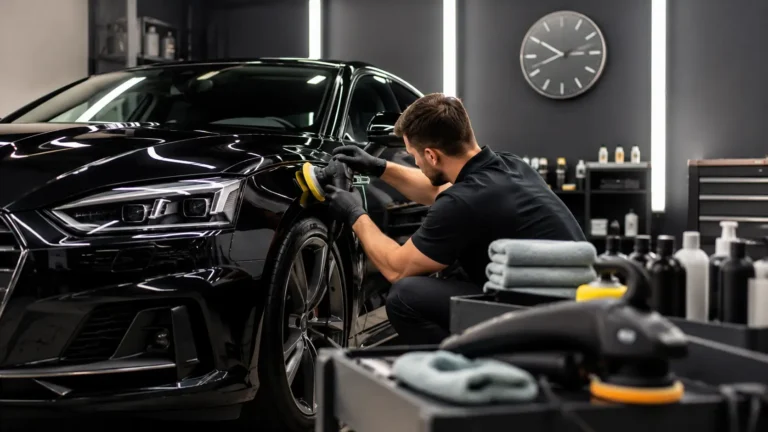
A professional also pairs tar removal with the steps that protect your investment. A full exterior detail typically includes a wash, clay bar decontamination, tar and contaminant removal, and a fresh protective layer, which leaves the paint genuinely clean rather than just tar-free. If you are dealing with other bonded contaminants at the same time, the guide on how to protect car paint from tree sap and bird droppings covers the related damage these leave behind, and Car Detox can handle all of it in one visit.
Keep your paint tar-free with Car Detox
Road tar is stubborn, but it does not have to damage your paint. The safe approach is simple: wash the panel, keep it cool, soften the tar with a dedicated remover, wipe it away gently, and reseal the paint with wax, sealant, or a ceramic coating. Acting while the tar is fresh and avoiding any abrasive scrubbing keeps your clear coat scratch-free.
When the buildup is heavy or you would rather leave it to a professional, Car Detox is ready to help. Reach out through the Car Detox contact page to book an exterior detail, and the team will remove the tar safely and protect your paint so the next round comes off even easier.