
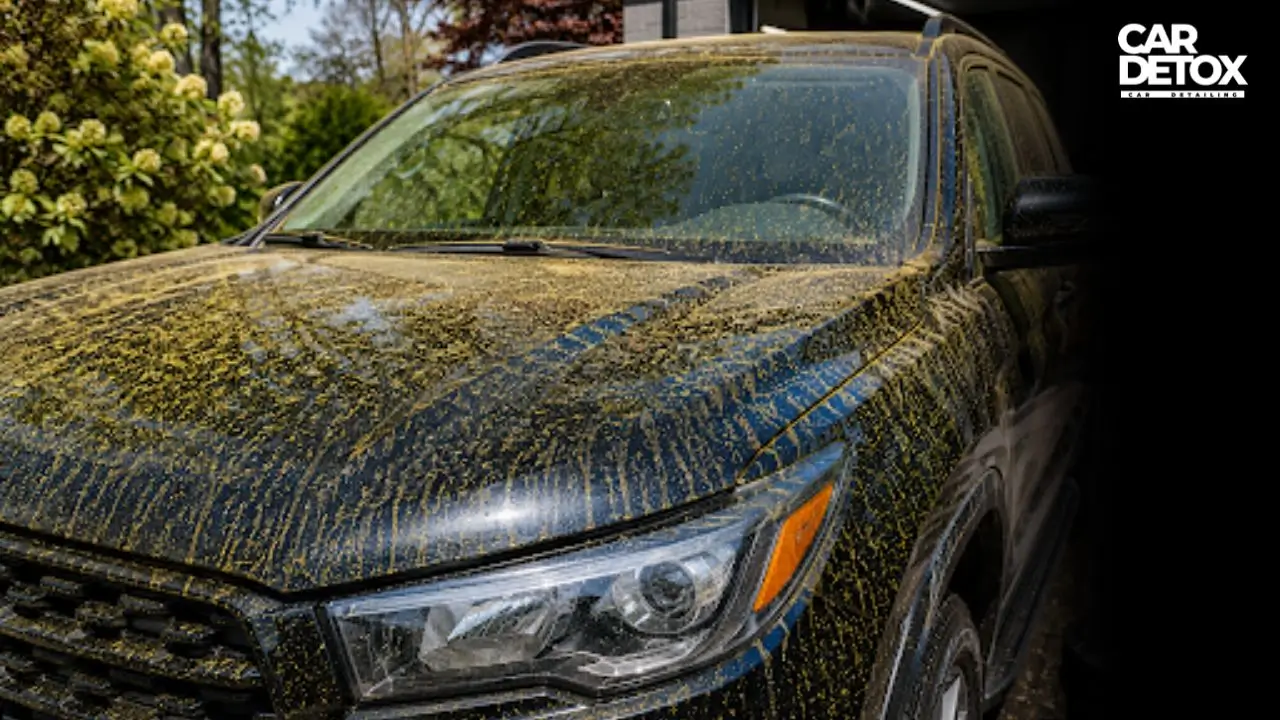
If you’ve parked outside in Portland between March and September, you’ve watched yellow dust accumulate on your hood within hours of cleaning. That yellow film isn’t harmless. Can pollen damage your car? Yes, in two distinct ways that compound over a season. Pollen grains have microscopic jagged hooks that act like sandpaper when you wipe them dry, and the natural acids inside pollen activate the moment water touches them, etching into your clear coat.
At Car Detox, we see pollen damage on roughly 1 in 4 vehicles that come in for spring detailing. Portland metro sits in the heart of the Willamette Valley, which produces about 70 percent of the United States’ cool-season grass seed. That means your car deals with two distinct pollen seasons every year, not one.
This guide explains exactly how pollen damages your car, why Portland is worse than most cities for it, and what to do about it before the damage becomes permanent.
Can Pollen Actually Damage Your Car’s Paint?
Yes, pollen can damage your car’s paint in two ways. Dry pollen has microscopic jagged hooks (50-70 micrometers across) that scratch clear coat when wiped with a cloth or hand. Wet pollen releases natural acids that etch into the clear coat and over time cause permanent staining, discoloration, and oxidation. Damage accelerates when pollen sits for days or weeks without removal.
Pollen is acidic. Most species have a pH similar to black coffee, which doesn’t sound aggressive until you remember that you don’t pour black coffee on your hood and leave it there for a month. When pollen lands on your car, it stays there until rain, dew, or humidity activates the acidity. From that moment, the corrosive process begins.
Each pollen grain is engineered by nature to stick. Spiny hooks on the surface latch onto anything they touch, which is great for pollination and terrible for paint. When you grab a microfiber and start wiping that yellow film off, those hooks drag across the clear coat at the microscopic level, creating swirl marks and dulling the finish over time. The damage isn’t dramatic in a single wipe, but it stacks up over a season of casual cleaning attempts.
The two damage modes work together. Pollen + dew creates etching. Etched paint loses some of its hydrophobic properties, which means more pollen sticks, more moisture lingers, and the cycle accelerates. By the time most owners notice dull spots or hazy paint, the clear coat has already taken months of cumulative damage.
Why Is Pollen Damage Worse in Portland and the Willamette Valley?
Most cities deal with one heavy pollen season. Portland metro deals with two, and they overlap for several months each year.
Spring tree pollen (March through June) comes from alder, birch, cedar, and Douglas fir. The Pacific Northwest’s evergreen forest density means heavy tree pollen drift across the entire metro area. Cars parked under Doug firs in driveways catch the worst of it, but even garaged vehicles see significant accumulation during the heaviest weeks.
Summer grass pollen (May through August) is where the Willamette Valley becomes uniquely problematic. Oregon produces roughly 70 percent of the United States’ cool-season grass seed, and the Valley is the production center. That economic strength means consistent, sustained grass pollen counts that often rank Portland among the worst grass pollen cities in the country. Allergy clinics across the metro report Willamette Valley grass pollen as the dominant trigger for spring and summer symptoms.
Fall ragweed (August through October) adds a third layer for owners of dark-colored vehicles or those parked outside. While ragweed counts are lower than tree or grass pollen, the late-season cumulative damage is real on paint that’s already taken months of abuse.
The net effect is that Portland drivers face roughly 6 months of pollen exposure annually, with significant overlap between species. A car that goes 3 to 4 weeks without washing during peak season can accumulate the equivalent of weeks of contamination on the surface.
How Does Pollen Damage Show Up on Your Car’s Finish?
The signs progress predictably from cosmetic to permanent over a single pollen season. In the early stages, you’ll see a faintly gritty texture when you run your hand across the hood, even after a quick rinse. The car looks dusty within hours of cleaning, which is the first signal that pollen is bonding to the clear coat.
After a few weeks of accumulated exposure, fine swirl marks and micro-scratches become visible on darker paint colors. These appear most clearly under direct sunlight or LED garage lighting. They’re caused by people brushing dry pollen off with their hands, sleeves, or cloths without washing first. White and silver cars hide these scratches better, but the damage is still happening.
By mid-summer, etching becomes visible. Look for faint spotting on horizontal surfaces (hood, roof, trunk) where pollen sits longest. These spots often appear cloudy or hazy rather than dirty, and they don’t wash off with normal cleaning. They’re chemical etching from pollen acid activated by morning dew.
Late-season damage includes localized clear coat dulling, color fading on specific panels exposed to the most pollen, and a general loss of gloss compared to areas that were protected (such as the panels under a parked-next-door SUV that shielded them). Dark colors like black, blue, and red show this earliest and most dramatically.
The worst cases come into our shop in late September with paint that needs single-step or even multi-stage paint correction to restore. A full paint correction and detail package at that point runs $400 to $800, compared to the $50 monthly cost of preventive washing.
Does Pollen Affect Your Car’s Interior?
Yes, and many drivers don’t realize this until allergy symptoms make it obvious. Pollen enters your cabin through three pathways: open windows during driving, the HVAC fresh air intake, and on clothing and shoes that bring it inside.
The cabin air filter is your first line of defense. A new filter traps 95 to 99 percent of incoming pollen particles. A filter that hasn’t been replaced in 18 to 24 months is already saturated, which means pollen passes through into the cabin every time you turn on the heat or air conditioning. Saturated filters also reduce HVAC airflow, which means weaker heat in winter and weaker cooling in summer.
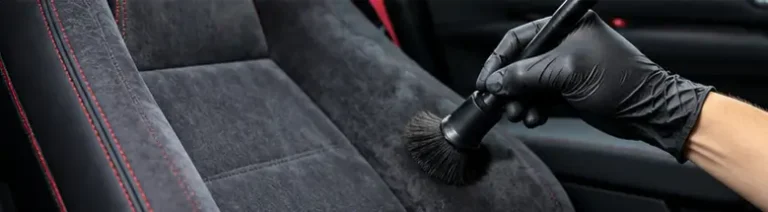
Beyond the filter, pollen accumulates on dashboards, vents, and upholstery. Cloth seats absorb pollen into fabric fibers where it’s nearly impossible to fully remove with standard cleaning. Vinyl and leather surfaces collect it in seams and stitching. The cumulative effect is a vehicle that triggers allergy symptoms even months after the worst pollen weeks have passed.
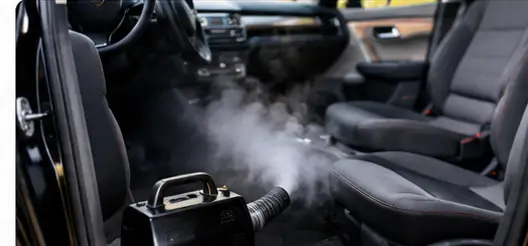
For allergy sufferers, this means professional interior detailing at the end of pollen season is a real quality-of-life upgrade. Steam cleaning lifts pollen out of fabric fibers, the cabin air filter gets replaced, and surface cleaning removes accumulated allergens from every touchable surface. Most clients with severe seasonal allergies notice the difference within 24 hours of a thorough cleaning.
There’s also a mold connection. Pollen mixed with moisture from PNW humidity, spilled drinks, or wet pet shakes creates ideal conditions for mold growth in carpets and upholstery. If your interior smells musty after pollen season, mold has likely started, and mold treatment becomes necessary alongside regular detailing.
How Should You Safely Remove Pollen from Your Car?
The biggest mistake is wiping dry pollen off with a cloth or your hand. Those jagged hooks scratch the clear coat at the microscopic level, and the damage adds up to visible swirl marks across an entire pollen season.
The right method starts with rinsing, not wiping. Use a strong stream of water from a hose or pressure washer to knock loose pollen off the paint before any cloth touches the surface. This single step prevents 90 percent of pollen-related scratching. After the rinse, use the two-bucket method: one bucket with car shampoo and water, one bucket with clean rinse water. Wash with a quality microfiber mitt, rinsing the mitt frequently in the clean bucket to avoid dragging trapped pollen across the paint.
Wash from top to bottom (roof, then hood and trunk, then upper sides, then lower panels, then wheels last). This sequence keeps the dirtiest panels for last so you’re not dragging wheel grit across the cleaner upper surfaces.
For dried-on pollen that has bonded to the clear coat (visible as faint yellow stains that don’t rinse off), a 50/50 mix of white vinegar and distilled water dissolves the bond without damaging paint. Spray it on, let it sit for 30 to 60 seconds, then wipe with a clean microfiber and rinse thoroughly. The mild acidity of vinegar neutralizes the pollen’s acidity, which sounds counterintuitive but works because the application time is short and the rinse is immediate.
Finish by drying with a clean microfiber drying towel. Air-drying leaves water spots that hold pollen for the next round. If you’ve already had to remove pollen this way 2 or 3 times in a month, you’re a candidate for a mobile car wash service on a recurring schedule, which removes the time burden and ensures proper technique each time.
Tired of fighting pollen every week? Book a professional detail or set up a recurring wash with Car Detox at our Tualatin shop.
Can Ceramic Coating Protect Your Car From Pollen?
Yes, and ceramic coating is the most effective single defense against pollen damage available. A properly applied nano-ceramic coating creates a hydrophobic, slick surface that does three things pollen doesn’t like.
First, the surface is too slick for pollen to bond strongly. Pollen still lands on the car, but it sits loosely on top of the ceramic layer rather than embedding into the clear coat. A quick rinse removes 80 to 90 percent of pollen that would otherwise need a full wash to dislodge.
Second, ceramic creates a barrier between pollen acid and the clear coat. Even when pollen activates with moisture, the acid contacts the ceramic surface (which is highly chemical-resistant) rather than the paint underneath. Etching damage essentially stops, even during heavy pollen weeks where uncoated cars take significant abuse.
Third, washing becomes dramatically faster. Most coated cars can be cleaned with a rinse and minimal soap wipe, compared to the full multi-bucket wash an uncoated car requires. During Portland’s 6-month pollen season, this time savings is significant.
For Portland truck and SUV owners, this benefit compounds because larger vehicles have more surface area exposed to pollen drift. Tesla and Rivian owners benefit even more because soft factory paint is especially vulnerable to pollen etching without protection. See our Tesla ceramic coating and Rivian ceramic coating service pages for vehicle-specific details.
A 2-year ceramic coating typically pays for itself in saved labor and avoided paint correction within a single pollen season. The 7-year tier is the right call for owners keeping the vehicle long-term.
How Often Should You Wash Your Car During Pollen Season?
The honest answer is every 7 to 10 days during peak pollen weeks (April through July in Portland metro). That sounds excessive, but it’s the only schedule that prevents cumulative damage from building up.
For uncoated vehicles, weekly washing is non-negotiable during heavy pollen weeks. Stretching to every 2 weeks results in visible damage by the end of the season. Stretching to monthly washing during pollen season is how cars come into our shop in September needing paint correction work.
For ceramic-coated vehicles, every 2 to 3 weeks is usually sufficient because pollen doesn’t bond to the slick coated surface. The reduced burden is one of the strongest practical arguments for ceramic during pollen season.
Most Portland drivers find that a detailing membership is the most cost-effective way to handle pollen season. Monthly detailing keeps the cabin allergen-free, the cabin air filter clean, and the exterior protected. For families with allergy sufferers, the quality-of-life impact alone justifies the cost.
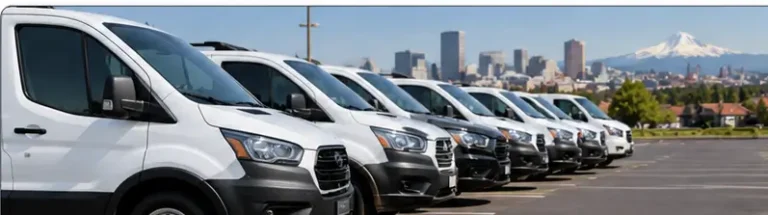
Mobile washing during pollen season is also worth considering. Many owners find that having a professional come to their location every 1 to 2 weeks during peak pollen months removes the time burden entirely. Our mobile car wash service covers Beaverton, Tigard, Lake Oswego, Sherwood, and the broader Portland metro.
What Mistakes Make Pollen Damage Worse?
- Wiping dry pollen off with a cloth or hand. Creates micro-scratches across the entire panel. Always rinse first
- Skipping the wash entirely and letting rain “clean” it. Rain activates the acid in pollen rather than removing it. The damage actually accelerates
- Using dish soap to remove heavy pollen. Strips wax and sealant, leaving paint more vulnerable to the next round of pollen
- Washing in direct sunlight. Water spots set immediately and trap pollen residue
- Forgetting the wheels and lower panels. Pollen accumulates heaviest there and grit tracks back up during driving
- Ignoring the cabin air filter. A saturated filter spreads pollen inside every time the HVAC runs
- Air-drying instead of using a microfiber drying towel. Water spots hold pollen for the next round
- Going through tunnel washes with brushes. Combines pollen damage with brush-induced swirl marks for compounded clear coat damage
When Should You Book a Professional Detail for Pollen Damage?
Three situations make professional service the right call rather than continued DIY.
The first is when you see visible damage that won’t wash off. Faint yellow staining, dull spots, or hazy patches on horizontal surfaces are signs that clear coat etching has happened. A professional polish or paint correction is the only way to restore the finish. Continuing to wash without addressing the damage just delays an inevitable correction job.
The second is when allergies in the cabin have gotten noticeably worse. Pollen accumulation in upholstery, carpets, vents, and the cabin air filter creates a sealed environment that triggers allergy symptoms even on low-pollen days. A full interior detail with steam cleaning and filter replacement resets the cabin completely.
The third is at the end of pollen season (late September through October in Portland). A thorough professional detail at this point clears out accumulated damage, refreshes paint protection, and prepares the vehicle for winter. Many of our clients book this as an annual routine alongside ceramic boost top-ups for coated vehicles.
Standalone pollen-damage detail packages at Car Detox typically run $275 to $550 depending on vehicle size and condition. Paint correction add-ons range from $200 to $600 depending on damage severity. We give you a flat quote during inspection before any work begins.
Frequently Asked Questions
Yes. Pollen is acidic when wet and abrasive when dry, both of which damage clear coats over time.
Visible damage typically appears after 2 to 4 months of unprotected exposure during heavy pollen season.
Yes. The hydrophobic surface prevents pollen from bonding, and chemical resistance stops acid etching.
A rinse helps but doesn’t remove pollen residue. A proper wash with soap is needed every 7 to 10 days during peak season.
Yes, if it causes visible clear coat damage. Pollen-related paint damage typically costs $400 to $800 in correction work to fix.
Once before peak pollen (March or April), then again at season end (September or October).
Yes, depending on severity. Surface damage responds to polish or single-step correction. Deep etching may require multi-stage paint correction.
Yes. Dark colors show etching, dulling, and micro-scratches earlier and more dramatically than light colors.
No. Rain activates pollen acid and creates more damage rather than removing it.
$275 to $550 for single-step or multi-stage polish, depending on severity and vehicle size.
Final Thoughts
Can pollen damage your car? Yes, more than most Portland drivers realize. The acidic chemistry, abrasive particle structure, and 6-month exposure window in the Willamette Valley make pollen one of the most underestimated threats to your paint and cabin air quality.
The defenses that work are simple but require consistency. Wash every 7 to 10 days during peak season. Use the two-bucket method with proper rinse-first technique. Replace your cabin air filter at the start and end of pollen season. Consider ceramic coating if you keep the vehicle long-term. And book a professional detail at the end of pollen season to reset everything before winter.
If pollen has already taken a toll on your finish or your cabin, book a paint inspection and detail with Car Detox at our Tualatin shop. We serve Beaverton, Tigard, Lake Oswego, Sherwood, West Linn, Bull Mountain, and the broader Portland metro.