
You paid for a professional detail. Your car looked spotless. And then — you got in on a warm day, and the smell hit you just as hard as before.
If your car still smells after detailing, you’re not imagining things. And you’re not alone. This is one of the most common frustrations car owners bring to us — and the reason it happens is rarely the detailer’s fault.
The real problem is deeper than any cloth, spray, or vacuum can reach. This guide explains exactly why car odors come back after cleaning, how to diagnose your specific smell, where the hidden sources are hiding, and what actually eliminates odors permanently — versus what just masks them temporarily.
Key Takeaways:
- Detailing cleans surfaces — but odor molecules live deep inside seat padding, carpet backing, and your HVAC system, where standard cleaning can’t reach
- Heat and humidity reactivate trapped odor molecules — which is why your car smells fine until it warms up, then hits you all over again.
- Masking a smell with an air freshener is not the same as eliminating it — true odor removal requires neutralizing the source at a molecular level.
Why Your Car Still Smells After Detailing — The Real Reason
Here’s the science most blogs skip.
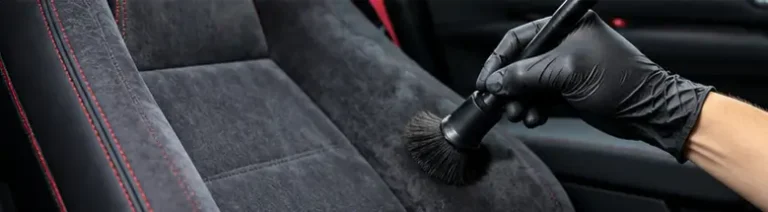
Odor molecules are microscopic. They don’t just sit on the surface of your seats or carpet — they penetrate deep into the fabric fibers, foam padding, carpet backing, and even the sound insulation underneath your floor. Standard detailing cleans what you can see and touch. Odor molecules live where cloths and steam wands can’t reach.
Now add heat. When your car sits in the sun, or you run the heater, temperature activates those trapped odor molecules — loosening them from the fibers and releasing them back into the cabin air. This is why your car smells perfectly fine right after detailing, then hits you with the full odor again on the first warm day.
Humidity does the same thing. Portland’s wet, humid winters create the perfect conditions for trapped odors to reactivate — especially mold and mildew smells that seem to appear out of nowhere every time it rains.
The second layer of the problem: most people — and even some detailers — confuse masking odors with eliminating them. Air fresheners, spray deodorizers, and scented cleaning products cover the smell temporarily. The moment the masking scent fades, the original odor returns in full force because its source was never touched.
True odor elimination requires finding and neutralizing the source. Not covering it.
Diagnose Your Smell First — What Each Odor Means
Before you can fix a persistent car smell, you need to know what you’re dealing with. Here’s how to identify your specific odor and what it’s telling you:
| Smell Type | What It Smells Like | Most Likely Cause |
| Sour/sharp | Wet cardboard, basement | Mold or mildew in carpet padding, HVAC, or trunk |
| Pet dander and oils are embedded in the seat fabric and carpet | Stale milk, fermented | Pet dander and oils embedded in the seat fabric and carpet |
| Smoky/acrid | Stale cigarette, campfire | Smoke molecules bonded to every interior surface and fabric |
| Animal / wet dog | Damp fur, musky | Musty/damp/earthy |
| Sweet/fruity | Chemical sweet smell | Coolant leak — this one needs a mechanic, not a detailer |
| Chemical/cleaning fluid | Harsh detergent, ammonia | Residual cleaning product from recent detailing — usually temporary |
| Burning / hot plastic | Electrical, hot rubber | Mechanical issue — requires immediate mechanic inspection |
Important: If your smell is sweet/fruity or burning/hot plastic, stop reading and see a mechanic. These are mechanical warning signs, not cleaning problems.
The 8 Hidden Odor Sources Most Detailers Miss
This is where car odors hide that standard detailing doesn’t address. Go through this checklist before assuming more cleaning is the answer.
1. Deep in Seat Foam and Padding
The fabric surface of your seats is just the outer layer. Below it sits thick foam padding that absorbs spills, pet moisture, body oils, and bacteria over the years of use. Surface cleaning lifts contamination from the fabric — but leaves the foam padding completely untouched. When the car heats, that saturated foam releases trapped odors straight into the cabin.
2. Carpet Backing and Floor Padding
Your carpet has three layers — the surface fibers you can see, the backing fabric underneath, and the sound-deadening foam pad beneath that. Liquid spills — coffee, milk, juice, pet accidents — flow straight through all three layers and pool at the bottom. Standard vacuuming and surface shampooing never reach the backing or padding. The smell comes right back because the source is still completely intact underneath.
3. Your HVAC System and Air Vents
This is the most overlooked odor source in almost every car. Your car’s air conditioning system collects moisture on its evaporator coil every time you run it. That moisture creates the perfect breeding ground for mold and mildew inside your dashboard — out of reach of any cleaning tool. When you turn on the AC or heater, it blows air directly through that mold colony and distributes the smell throughout the cabin.
If your car smells musty, specifically when you run the AC or heater, your HVAC system is almost certainly the culprit.
4. The Cabin Air Filter
Your cabin air filter traps dust, pollen, bacteria, and odor particles from the outside air before they enter your car. Over time — especially in Portland’s heavy pollen seasons — this filter becomes completely saturated. A clogged cabin air filter then recirculates the same contaminated, smelly air through your vents every time the system runs. Replacing it takes 10 minutes and costs under $30. It’s one of the first things we check on any odor complaint. Our car detailing service in Portland always inspects the cabin filter as part of any odor assessment.
5. Under and Behind the Seats
Food wrappers, spilled drinks, a forgotten gym bag, a leaking water bottle — car seats have a remarkable ability to hide things. Pull your seats all the way forward and all the way back, then shine a flashlight into every corner. You’d be surprised what turns up. We’ve found moldy food items that were the sole source of odors a car owner had been fighting for months.
6. The Headliner
Your car’s headliner — the fabric ceiling — absorbs smoke, cooking smells, and pet odors silently and invisibly. Smoke in particular bonds to the headliner with particular tenacity. Most surface cleaning never touches it. Yet when the car heats up, the headliner releases everything it has absorbed directly down into the cabin.
7. Seat Belts
Seat belts are among the sweatiest, most bacteria-laden surfaces in any car — and the last thing anyone cleans. They absorb body oil and sweat from thousands of buckle-ins over years of use. When warm, they release a distinctive musty body odor that’s very hard to place but immediately unpleasant. Pull each belt fully out, inspect, and clean the full length.
8. Sunroof Drains and Door Seals
If you have a sunroof, it has drainage channels running down the car’s A-pillars and into the door sills. These drains clog with debris over time — especially in Portland, where leaves and organic matter accumulate. A blocked sunroof drain causes water to back up and pool under your carpet and floor mats, creating hidden mold that no surface cleaning will ever fix. Check your door and window seals for cracks or gaps that let water in during rain.
Masking vs. Neutralizing vs. Eliminating — Know the Difference
Not all odor treatments work the same way. Understanding this distinction saves you time and money.
Masking — Air fresheners, scented sprays, and fragrance bombs. They add a new scent on top of the existing smell. The moment the masking scent fades — usually within days — the original odor returns completely unchanged. Masking does not remove a single odor molecule.
Neutralizing — Products containing chlorine dioxide or enzyme-based cleaners. These chemically react with odor-causing compounds and break them down. They work well on biological odors like pet urine, mold, and food — but only where they can physically reach. They can’t penetrate deep foam padding or HVAC systems.
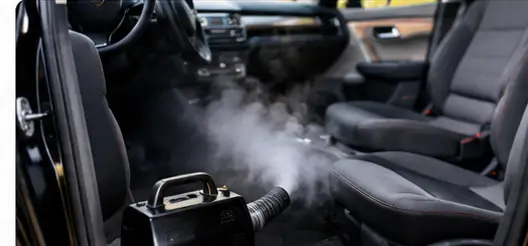
Eliminating — Professional ozone treatment. An ozone generator produces O3 gas that penetrates every surface, fiber, crack, and crevice in your car’s interior — including the HVAC system, seat foam, carpet backing, and headliner. Ozone breaks down odor molecules at a chemical level, destroying them permanently rather than masking or neutralizing them. This is the only method that reaches where surface cleaning cannot.
Oursmoke smell removal service uses professional ozone treatment for exactly this reason — it’s the only technology that reaches the deeply embedded smoke molecules that standard cleaning leaves behind. For biological odors like mold, our add-ons mold treatment combines enzyme treatment with ozone for complete elimination.
Odor-Specific Fix Guide
Smoke smell that won’t go away: Smoke bonds to every interior surface simultaneously — fabric, plastic, glass, metal, rubber. It penetrates the headliner, seat foam, carpet backing, and HVAC ductwork. Surface cleaning alone never fully removes it. You need professional ozone treatment to break down the nicotine and tar compounds that have bonded throughout the entire cabin.
Pet odor that comes back after cleaning: Pet dander and body oils soak deep into the seat fabric and carpet fibers. Pet urine is particularly aggressive — uric acid crystals reactivate with any moisture exposure and produce renewed odor for years after the original accident. Enzyme cleaners break down uric acid crystals at a molecular level — but only where they physically contact the contamination. Our pet hair removal service, combined with enzyme treatment, addresses both the physical and chemical causes of pet odor.
Musty smell worse after rain or AC: This is almost always mold in the HVAC system or moisture trapped under carpet from a blocked sunroof drain or leaking seal. The rain doesn’t create new mold — it raises humidity that reactivates existing mold growth and releases its spores into the cabin air. Fix the water source first, then treat the mold. Treating mold without fixing the moisture source guarantees it comes back.
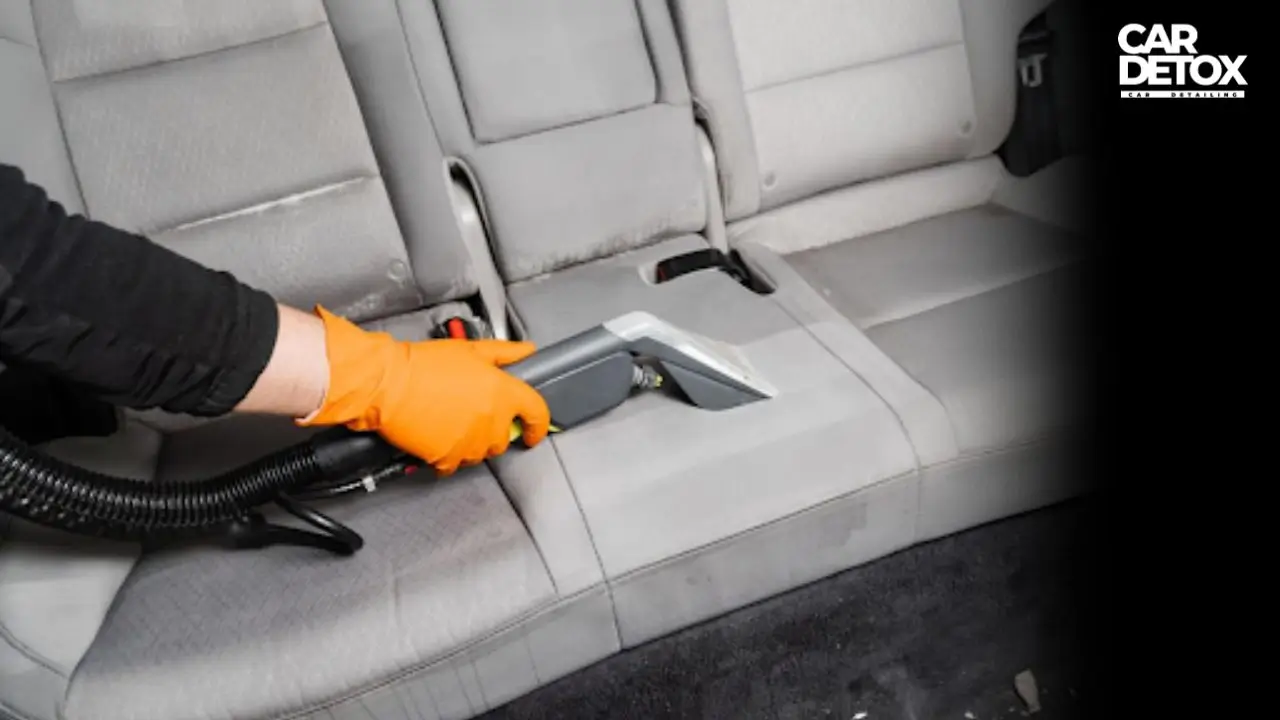
Sour food smell that keeps returning: A single spill of milk, juice, or any protein-containing liquid can ferment in carpet padding for years. Surface shampooing lifts the visible stain but leaves the protein compounds intact in the padding below. Hot water extraction — a professional-grade process that injects hot water deep into upholstery and extracts it along with dissolved contaminants — is the most effective tool for deeply embedded food odors.
Chemical smell after detailing: This is usually a residual cleaning product that wasn’t fully dried or extracted from the interior. Drive with the windows down for 24 to 48 hours and allow the car to fully air out. If the smell persists beyond 72 hours, the product may have soaked into the padding and requires professional extraction to remove.
What Professionals Use That You Don’t Have at Home
Here’s an honest breakdown of why professional odor treatment works where DIY doesn’t:
- Hot water extraction machines inject heated water under pressure deep into fabric and carpet, then extract it along with dissolved contaminants — reaching layers home carpet cleaners can’t approach
- Professional ozone generators produce ozone concentrations and run for treatment times that penetrate every surface in the car — including HVAC systems and seat foam.
- Enzyme treatments formulated for automotive use break down specific biological compounds — pet urine, mold, food proteins — at concentrations and contact times that consumer products don’t match.
- HVAC sanitization tools deliver disinfectant directly through the intake system, treating the evaporator coil and ductwork from the inside
Ready to eliminate the smell in your car once and for all? Book a professional odor removal appointment with CarDetox US, and our Portland-area team will diagnose the source, treat it properly, and leave your car smelling genuinely clean — not just freshly sprayed.
DIY Steps to Try Before Calling a Professional
If the smell is mild and relatively recent, work through these steps first:
- Remove everything from the car — check under seats, in seat pockets, the trunk, and behind the rear seats. Find and remove any food, damp clothing, or wet items
- Replace the cabin air filter — check your owner’s manual for location (usually behind the glove box). If it looks grey or brown, replace it.
- Check sunroof drains — pour a small amount of water into the sunroof channel and watch where it drains. If it backs up, the drain is blocked.
- Vacuum the full interior, including under seats — use a crevice tool in every seam and gap.
- Treat fabric with an enzyme cleaner — apply to seats, carpet, and floor mats; let it sit for the recommended contact time before blotting.
- Run the AC on max fan with windows open — this helps purge the HVAC system and dry moisture from the evaporator.
- Leave baking soda on carpet overnight — vacuum in the morning to absorb surface-level odors.
- Air the car out thoroughly — park in the sun with all doors open for 2 to 3 hours.
If the smell returns within a few days of completing all these steps, the source is beyond what DIY can reach. That’s when professional treatment becomes the right — and most cost-effective — next step.
Frequently Asked Questions
Standard detailing cleans surfaces but doesn’t reach odor molecules embedded in seat foam, carpet backing, and HVAC systems. Heat reactivates trapped molecules, releasing the smell back into the cabin.
Permanently eliminating car odor requires finding and treating the source — not masking it. Professional ozone treatment and hot water extraction reach where surface cleaning cannot.
Moisture from cleaning products can reactivate existing odors in carpet padding and seat foam, making them temporarily stronger. It can also spread contamination if the source wasn’t removed first.
The chemical cleaning product smell typically fades within 24 to 72 hours with proper ventilation. If a “clean” smell fades and the original odor returns, the source was never treated — only masked.