
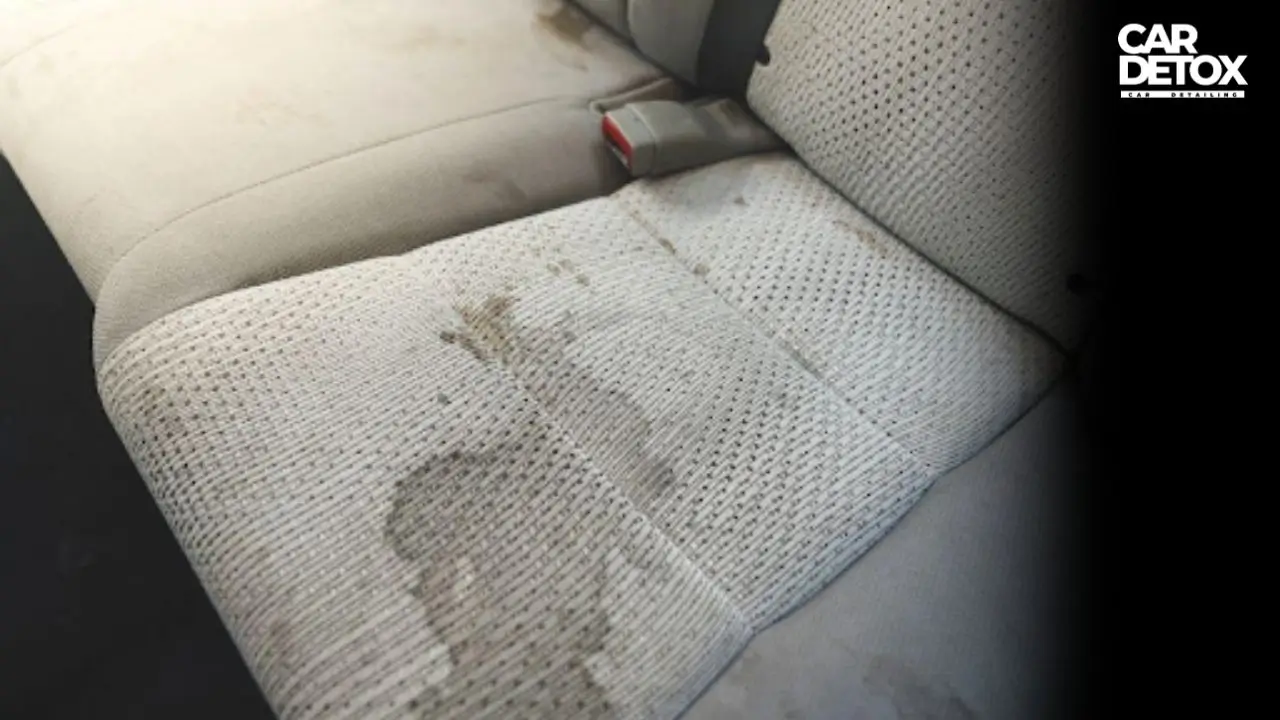
You’re running late. You grab your coffee, hop in the car, hit a bump, and — splash. Coffee, everywhere. On the seat. Maybe the carpet. Maybe even the door panel.
Sound familiar? You’re not alone. Coffee spills are one of the most common interior messes we see here in Portland, and they’re also one of the trickiest to deal with if you don’t act fast. This guide walks you through exactly how to remove coffee stains from car seats — whether the spill just happened or has been sitting for days.
Key Takeaways:
- Act within the first 60 seconds for the best results — time is everything with coffee stains
- Different seat materials (fabric, leather, vinyl) require different cleaning approaches.
- Old or creamy coffee spills often need professional steam cleaning to fully remove stains and odors.
Why Coffee Stains Are So Stubborn
Here’s the thing most people don’t know. Coffee contains tannins — a type of plant-based compound that chemically bonds to fabric fibers. The moment coffee touches your seat, those tannins start binding deep into the material.
It gets worse if your coffee has cream or milk. That adds a protein layer on top of the tannin stain, which is even harder to lift. Many DIY cleaners can actually set that protein layer permanently if you use the wrong product.
Heat makes it worse, too. Sitting in a hot car accelerates the bonding process. That’s why a stain you left “just for tonight” can feel like it’s cemented in the next morning.
Step 1: Act in the First 60 Seconds (For Fresh Spills)
Speed is everything. The moment coffee hits your seat, do this:
- Blot immediately with a clean microfiber cloth or paper towel — do NOT rub
- Work from the outside in to avoid spreading the stain wider
- Press firmly and lift straight up to absorb as much liquid as possible
- Repeat with a fresh cloth until no more coffee transfers
Pro Tip: Never rub a coffee stain. Rubbing pushes the tannins deeper into the fabric fibers and makes the stain nearly impossible to remove at home.
How to Remove Coffee Stains from Fabric Car Seats
Fabric seats are the most common — and the most absorbent. Here’s what works:
What you’ll need:
- Microfiber cloths
- Mild dish soap
- White vinegar
- Warm water
- Soft-bristle brush
Steps:
- Blot up as much coffee as possible first (see Step 1 above)
- Mix 1 part white vinegar with 2 parts warm water and a small drop of dish soap
- Spray or dab the solution onto the stain — don’t soak the seat
- Let it sit for 3 to 5 minutes
- Gently scrub with a soft-bristle brush in circular motions
- Blot with a clean dry cloth to lift the stain
- Repeat until the stain fades
- Air dry completely with windows open
One important warning: avoid using high-pH all-purpose cleaners on coffee stains. These can permanently set the stain rather than lifting it. Stick to mild, slightly acidic solutions like the vinegar mix above.
For a deeper clean on our interior detailing service page, you can see how professionals handle fabric seats with hot water extraction — which goes far beyond what DIY methods can achieve.
How to Remove Coffee Stains from Leather Car Seats
Leather needs special care. Harsh chemicals can crack or discolor it, so go gentle.
Steps:
- Blot the spill immediately with a dry microfiber cloth
- Use a leather-safe cleaner or a solution of mild dish soap and warm water
- Apply to a microfiber cloth first — never spray directly onto the leather
- Gently wipe in small circular motions
- Wipe away with a clean, damp cloth
- Dry thoroughly and apply a leather conditioner to restore moisture
If your coffee had cream or sugar, you’ll want to be extra thorough. The sugars can make leather sticky and attract dirt over time, leading to premature cracking.
How to Remove Coffee Stains from Vinyl Seats
Good news: vinyl is the most forgiving of all seat materials. It’s non-porous, which means coffee doesn’t sink in as deeply.
- Wipe up the spill quickly with a paper towel
- Apply a mild all-purpose cleaner to a cloth (not directly on the seat)
- Wipe gently — no scrubbing needed in most cases
- Follow with a clean, damp cloth to rinse
- Dry completely and apply a vinyl protectant to keep it supple
How to Get Rid of Old, Dried Coffee Stains
This is where most car owners get frustrated. You forgot about the spill; it dried, and now it looks set in. Here’s what to try:
- Baking soda paste: Mix 3 parts baking soda with 1 part water, apply to the stain, let sit for 20 minutes, then scrub gently and blot clean
- Enzyme cleaner: Especially useful if your coffee had dairy — enzyme cleaners break down the protein layer that regular cleaners miss
- Repeat treatments: Old stains rarely come out in one pass. Plan for 2 to 3 rounds.
Let’s be honest, though. If the stain has been sitting for more than 24 to 48 hours or covers a large area, home remedies often fall short. This is where professional steam cleaning makes a real difference. Our team at CarDetox US uses commercial-grade vapor steamers that heat to extreme temperatures, lifting embedded stains from the very top of the fiber — something no spray bottle can replicate.
Don’t Forget the Coffee Smell
Removing the stain doesn’t always remove the odor. Stale coffee — especially with milk — can leave a sour, musty smell that builds up over time.
Here’s what helps at home:
- Sprinkle baking soda over the cleaned area and let it sit overnight, then vacuum
- Leave the windows cracked open on dry Portland days to air out the interior
- Place an open box of baking soda or activated charcoal in the car for 24 to 48 hours
For stubborn odors that just won’t quit, our smoke smell removal and ozone treatment service eliminates odors at the molecular level — not just masking them. Ozone treatment is the most effective method available for deeply embedded car interior smells, including old dairy-based coffee odors.
Ready to get your car’s interior looking and smelling fresh again? Book a professional interior detailing session with CarDetox US and let our team handle even the toughest stains and odors in the Portland and Tualatin area.
Common Mistakes Car Owners Make With Coffee Stains
Most people don’t realize they’re making these mistakes until the damage is done:
- Rubbing instead of blotting — spreads the stain and pushes it deeper
- Using boiling water — heat sets the stain permanently
- Waiting too long — even a few hours dramatically reduces your chances of full removal
- Using the wrong cleaner — high-pH products can lock coffee into fabric fibers
- Over-wetting the seat — too much water leads to water stains and potential mold growth underneath the upholstery padding
- Skipping the conditioner on leather leads to drying and cracking after cleaning
When to Call a Professional Car Detailer in Portland
DIY methods work well for fresh, small spills. But you should seriously consider professional help when:
- The stain has been there for more than 48 hours
- Your coffee had cream, milk, or sugar (harder protein and sugar stains)
- The smell lingers even after cleaning
- The stain has spread to the carpet or door panels
- You have leather seats and don’t want to risk damaging them
CarDetox US serves the Portland metro area, including Tigard, Tualatin, Beaverton, and Lake Oswego. Our car detailing service in Tualatin and interior detailing service use professional-grade steam cleaning, hot water extraction, and ozone treatment to restore your car’s interior to like-new condition.
Frequently Asked Questions
Not always. Fresh spills can be removed fully if treated within minutes. Old or creamy coffee stains may cause permanent discoloration if left untreated.
Blot immediately with a microfiber cloth, then apply a mix of white vinegar, dish soap, and warm water. Blot again — don’t rub.
Yes. A paste of baking soda and water works well on fabric seats for both stain removal and odor absorption. Avoid using it on leather.
Yes. White vinegar mixed with water is mildly acidic, which helps break down the tannins in coffee without damaging most seat fabrics.
Use a baking soda paste or enzyme cleaner, let it sit for 20 to 30 minutes, scrub gently, and blot. Repeat multiple times. Professional steam cleaning works best for old stains.
Yes. If the seat stays damp after cleaning or the spill was large and soaked deep into the padding, mold can grow. Always dry thoroughly after treatment.
Absolutely, especially for old stains or spills with cream. Professionals use steam cleaners and hot water extractors that far outperform any DIY method.