
Car Sunroof Drain Clogged? Signs, Fixes & Prevention Tips

On This Page
A clogged sunroof drain is one of the most common reasons water ends up inside a car that shouldn’t leak. Your sunroof isn’t fully watertight by design. Instead, a channel around the glass catches rainwater and sends it through drain tubes that exit under the car.
When those tubes clog with leaves, pollen or grime, the water has nowhere to go but into your headliner, pillars and carpet. In the Portland area, where rain falls for months and fir needles pile up on parked cars, that can happen faster than most drivers expect.
This guide covers how sunroof drains work, the warning signs of a clog, how to clear one safely, and what to do if water has already reached your interior.
How Do Sunroof Drains Work?
A sunroof sits inside a tray with a raised lip and a gutter that runs around the opening. Water that slips past the rubber seal collects in that gutter and flows to drain holes, usually one in each corner of the tray.
Front drains typically run down through the A-pillars, the posts on either side of the windshield, and exit near the front wheels. Rear drains, where fitted, run down the rear pillars and exit near the back wheels. Routing varies by make and model, so your owner’s manual is the best reference.
The system only works if the tubes stay open. A single blocked tube can overflow the tray during heavy rain and send water straight into the cabin.
What Causes Sunroof Drains to Clog?
Most clogs build up slowly from everyday debris. Leaves, fir needles, seed pods and pollen wash into the tray and settle at the drain openings, where they mix with dirt into a thick sludge.
Parking under trees speeds this up, and so does skipping regular cleaning of the sunroof tray. Over time, mold, mildew and even insect nests can form inside damp tubes.
Drain tubes can also crack, kink or slip off their fittings with age. That causes leaks that look exactly like a clog, so a tube that won’t clear may need repair rather than cleaning.
Why Do Sunroof Drains Clog So Often in Portland?
The Pacific Northwest is close to a worst case for sunroof drains. Long rainy seasons keep debris wet and heavy, and the region’s firs, maples and cottonwoods drop needles, leaves and seed fluff for much of the year.
If you park on a tree-lined street or under a carport near trees, treat drain cleaning as routine maintenance rather than a one-time fix. Checking the drains in early fall, before the rainy season starts, catches most problems before they reach the interior.
What Are the Signs of a Clogged Sunroof Drain?
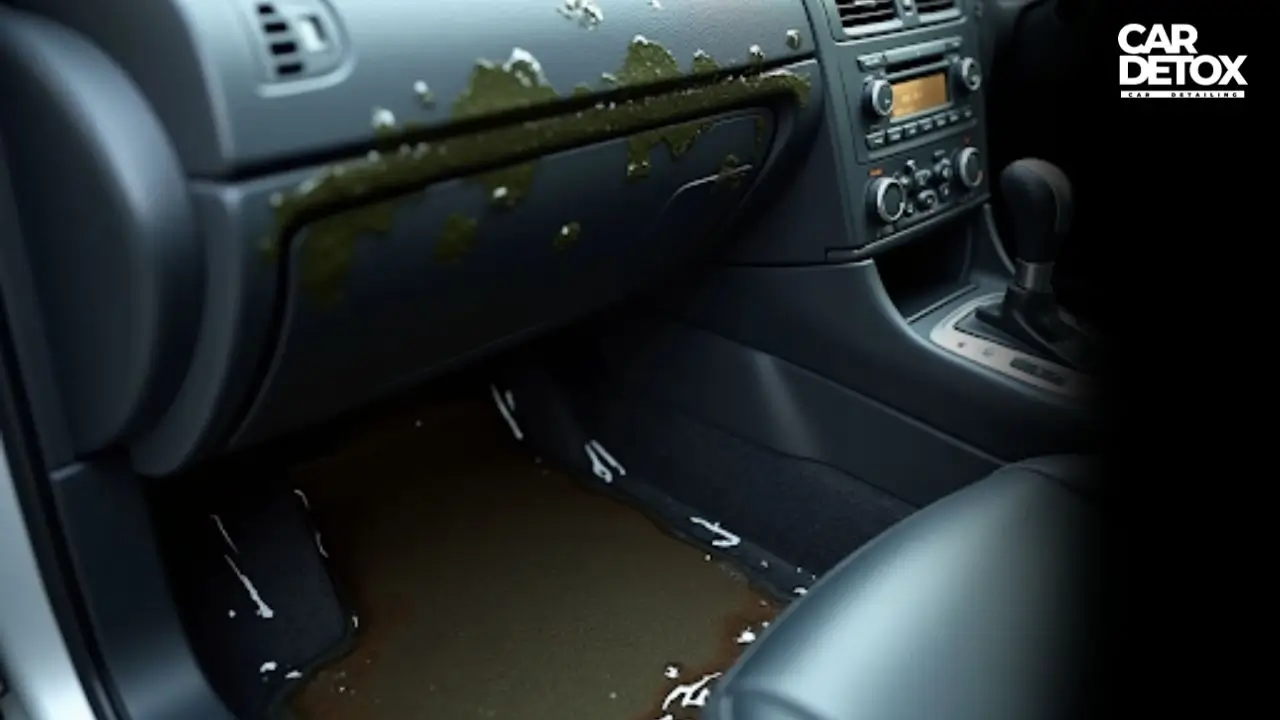
A clogged drain rarely announces itself all at once. Watch for these warning signs, especially after heavy rain or a car wash:
| Warning sign | What it usually means | What to do |
|---|---|---|
| Water dripping from the headliner or dome light | The sunroof tray is overflowing into the roof lining | Stop using the sunroof, clear the drains and dry the headliner |
| Damp or stained headliner near the pillars | A front drain tube is blocked or disconnected | Test each drain with water and check the tube connections |
| Wet carpet or footwells after rain | Water is running down the A-pillar into the cabin | Dry the carpet and padding fully, then clear the drain |
| Musty or moldy smell | Moisture is trapped in the carpet padding or headliner | Find the leak, then have the interior treated for mold |
| Foggy windows that won’t clear | Excess moisture is sitting inside the cabin | Check carpets and padding for hidden water |
| Electrical glitches near the roof or pillars | Water is reaching wiring, lights or sensors | Have the electrical system checked by a mechanic |
The quickest home check is to open the sunroof and slowly pour a small cup of water into one corner of the tray. It should drain within seconds and appear under the car near the wheel. If it pools in the tray or drains slowly, that tube is clogged.
How Do You Unclog a Sunroof Drain Step by Step?
Most clogs sit near the top of the tube, so you can often clear them yourself with simple tools. Work gently, since drain tubes are thin and their fittings can come loose. Here’s the process:
- Open the sunroof fully and locate the drain holes, usually one in each corner of the tray.
- Wipe loose leaves, needles and grime out of the tray with a microfiber towel.
- Feed a length of flexible plastic trimmer line or a sunroof drain brush slowly into the drain hole, twisting gently and never forcing it.
- Pull the line out, wipe it clean and repeat until it slides through without resistance.
- Pour a small amount of water into the tray and confirm it drains quickly and exits under the car.
- Repeat for every drain, even ones that seem fine, since clogs often form in more than one tube.
Avoid wire coat hangers, metal cables or anything sharp. They can puncture the tube, which turns a simple clog into a hidden leak inside the pillar.
Is Compressed Air Safe for Cleaning Sunroof Drains?
Compressed air can work, but only at low pressure and in short bursts. High pressure can blow the tube off its fitting inside the pillar, and you won’t know until water starts pouring into the cabin.
If you use air, set the compressor low and hold the nozzle near the drain opening rather than sealing it tight. The trimmer line method carries far less risk, which is why most technicians prefer it.
What Tools Do You Need to Clean Sunroof Drains?
You don’t need much. A roll of flexible trimmer line or a dedicated sunroof drain brush handles most clogs, along with a microfiber towel, a small cup of water and a flashlight to see into the tray.
Whatever you use, choose soft, flexible tools that follow the curve of the tube without damaging it. Skip anything rigid or metal.
When Should You See a Professional About a Sunroof Leak?
If water still drains slowly after cleaning, or appears inside the car during your test, the tube may be cracked, kinked or disconnected. Reaching it usually means removing interior trim, which is a job for a mechanic or dealership service department.
The same goes for electrical problems, a sunroof that won’t close fully or a damaged seal. Fix the drain or seal first, since cleaning the interior won’t help if water keeps getting in.
What Happens If Water Gets Into Your Car’s Interior?
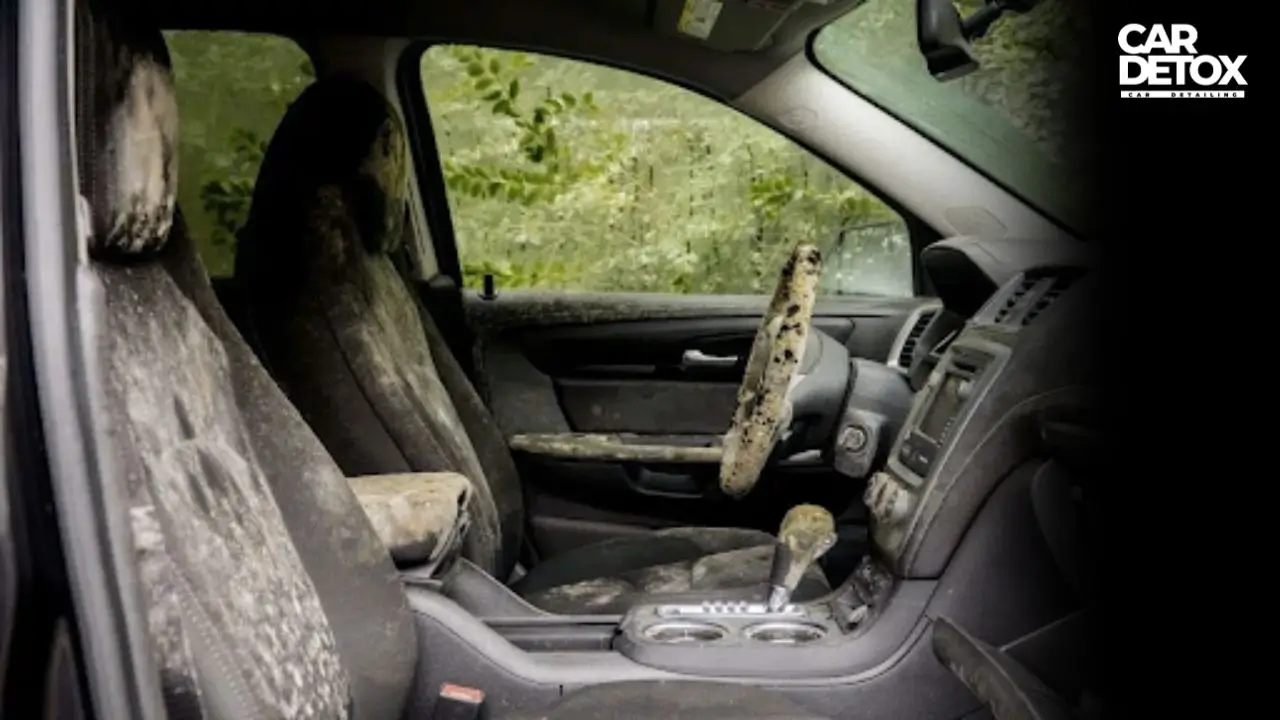
Water from a clogged drain soaks into the headliner, carpet padding and seat foam, where it can stay damp for weeks. Trapped moisture is the main cause of mold and mildew in cars, and the musty smell often lingers long after the surface looks dry.
Once the leak is fixed, the interior needs to dry completely and be cleaned properly. Our mold treatment targets mold and mildew in carpets, upholstery and hard-to-reach areas, while our interior detailing service removes water stains and odors.
Dealing with a lingering smell? Our guides on how to get mold smell out of a car and the hidden dangers of water leaks in your car explain what’s happening and why fast action matters.
How Often Should You Clean Your Sunroof Drains?
For most cars, checking and clearing the drains twice a year works well, ideally once in early fall and again in spring. Cars parked under trees in the Portland area may need a check every few months during the rainy season.
Between cleanings, keep the sunroof tray free of leaves and wipe the seal with a damp microfiber towel. A quick water test after each wash tells you right away if a drain is starting to slow down.
How Can You Prevent Sunroof Drain Clogs and Leaks?
Prevention mostly comes down to habits. Park away from trees when you can, clear leaves and needles off the roof before opening the sunroof, and use a car cover if your car sits outside for long periods.
Keep an eye on the rubber seals around the glass, too. Cracked or shrunken seals let more water into the tray, and worn door and window seals cause similar leaks elsewhere, as our guide on damaged door and window seals explains.
Is Water in Your Car Already Causing Mold or Odors?
A clogged sunroof drain is a small problem that becomes an expensive one when it’s ignored. Clear the drains, test them regularly and fix any damaged tubes or seals before the rainy season hits.
If water has already reached your headliner, carpets or seats, book an interior mold treatment at our Sherwood shop. Our team will deep clean and treat the affected areas so your car smells fresh again.
Frequently Asked Questions About Clogged Sunroof Drains
Common signs include water dripping from the headliner, damp spots near the windshield pillars, wet carpets after rain, a musty smell and foggy windows. Pouring a small cup of water into the sunroof tray is a quick way to confirm a clog.
Open the sunroof, clear debris from the tray and gently feed flexible trimmer line or a drain brush into each drain hole. Test with a little water afterward. Avoid metal wire and high-pressure air, which can damage or disconnect the tubes.
Twice a year is a good baseline for most cars. In rainy, tree-heavy areas like the Portland metro, checking the drains every few months during fall and winter helps prevent leaks.
Yes. Water from an overflowing sunroof tray soaks into the headliner, carpet padding and seats. If it isn’t dried and treated quickly, mold and mildew can grow and cause lasting odors.
Car Detox doesn’t offer sunroof drain cleaning or repair. We treat the results of a leak, including mold, mildew, water stains and odors inside your car. For drain tube repairs, see a mechanic or dealership first.

Jeannette Lee
Recent Blogs

How to Clean Alcantara and Suede Car Seats the Right Way
Alcantara and suede give a car interior a premium, grippy feel, which is why you find them on…
Read More ›
How Much Does Fleet Detailing Cost? A Portland Business Owner’s Guide
A clean fleet does more than look good on the road. It protects your vehicles, reinforces your brand…
Read More ›
How to Get Gasoline Smell Out of a Car: An Oregon Detailer’s Complete Guide
Few smells are as stubborn or as unsettling as gasoline inside your car. It clings to carpet and…
Read More ›Ready to get started?
Book your detail today and give your car the care it deserves.
Book Now