
How to Polish and Buff Out Car Scratches: A DIY Guide
On This Page
Most light car scratches can be polished or buffed out at home, as long as they haven’t gone deeper than the clear coat. Swirl marks, car wash scratches and fine lines from bags or keys usually respond well to the right compound and a careful technique.
Deeper scratches are a different story, and polishing too hard can make things worse. This guide shows you how to judge a scratch’s depth, how to polish it out by hand or machine, and when a professional polish is the smarter choice.
Can You Polish Out Scratches on a Car?
Yes, if the scratch sits in the clear coat. Polishing compound contains fine abrasives that level a thin layer of clear coat around the scratch, so its edges stop catching light and the mark fades or disappears.
Polishing can’t fill a scratch that has cut through to the color coat, primer or metal. For those, you’ll need touch-up paint first, and polishing becomes the final step that blends the repair into the surrounding paint.
How Do You Tell How Deep a Car Scratch Is?
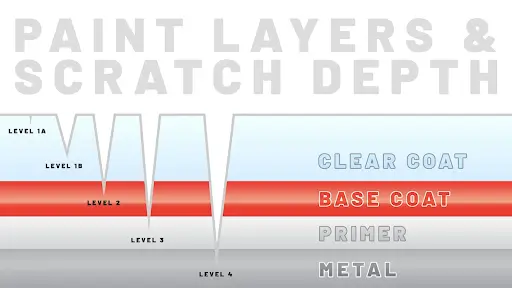
The fingernail test is the quickest check. Clean the area, then run your fingernail gently across the scratch. If it glides over without catching, the scratch is likely in the clear coat and can usually be polished out.
Wetting the area helps too. If a scratch nearly disappears when wet, it’s shallow. Use this table to match what you see to the right fix:
| Scratch type | Fingernail test | What you’ll see | DIY fix | Professional fix |
|---|---|---|---|---|
| Swirl marks and hairline scratches | Nail glides over it | Fine circular or straight lines visible in sunlight | Hand polish or machine polish | One-step polish |
| Light clear coat scratch | Nail barely catches | A thin, light-colored line | Polish, then a second pass if needed | One-step or two-step polish |
| Deep clear coat scratch | Nail catches slightly | A clear line that stays visible when wet | Careful machine polishing | Multi-step paint correction |
| Color coat scratch | Nail catches clearly | Different color showing in the scratch | Touch-up paint, then polish | Touch-up and correction, or body shop |
| Primer or bare metal scratch | Nail sinks into it | White, gray or silver showing | Touch-up paint and primer | Body shop repair |
What’s the Difference Between Polishing and Buffing Out Scratches?
The terms are often used interchangeably. Polishing refers to the abrasive compound that levels the clear coat, while buffing describes the motion, by hand or machine, that works that compound into the paint.
In practice, “buffing out a scratch” almost always means machine polishing. A machine applies even pressure and speed, which is why it removes scratches faster and more evenly than hand polishing.
What Do You Need to Polish Out Car Scratches at Home?
For light scratches, you need car shampoo, a clay bar kit, a scratch-removing polishing compound, a finishing polish, foam applicator pads, painter’s tape and several clean microfiber towels. A wax or sealant finishes the job.
For more stubborn scratches, a dual-action polisher with cutting and finishing pads makes a big difference. Dual-action machines are far safer for beginners than rotary buffers, which can burn through clear coat in seconds.
How Do You Polish Out Car Scratches by Hand?
Hand polishing works well for small areas and light scratches. Work in the shade on a cool panel, since heat makes compound dry too fast and harder to work. Follow these steps:
- Wash and dry the panel thoroughly so no grit gets dragged across the paint.
- Use a clay bar on the area to remove bonded contamination that polishing would otherwise grind in.
- Mask off nearby trim, badges and plastic edges with painter’s tape.
- Apply a small amount of polishing compound to a foam or microfiber applicator pad.
- Work the polish into the scratch with firm, overlapping strokes, moving along the scratch and then across it.
- Wipe the area clean with a fresh microfiber towel and check it in good light.
- Repeat two or three times if needed, then finish with a fine polish to restore gloss.
- Protect the area with wax, sealant or ceramic coating.
Patience matters more than pressure. Several light passes remove scratches more safely than one aggressive pass, and you can always do more but can’t put clear coat back.
Should You Use a Machine Polisher to Buff Out Scratches?
A machine polisher is the better tool for larger areas, swirl marks across a whole panel, or scratches that don’t respond to hand polishing. A dual-action polisher oscillates as it spins, which spreads heat and makes it hard to damage the paint.
Start with the least aggressive pad and polish combination, test a small section, and only step up if needed. Keep the pad flat, move slowly in overlapping passes and avoid sharp body lines and edges, where clear coat is thinnest.
How Do You Remove Deeper Scratches From Car Paint?
If your fingernail catches, polishing alone won’t remove the scratch. Professionals sometimes level deep clear coat scratches with careful wet sanding followed by multi-step polishing, but this removes a lot of clear coat and is easy to overdo.
For scratches that reach the color coat or primer, touch-up paint comes first. Our guide on how to repair chipped paint walks through applying touch-up paint in thin layers before polishing it smooth.
Do Toothpaste and WD-40 Really Remove Car Scratches?
Not reliably. Toothpaste contains mild abrasives, so it can soften a very fine scratch, but its abrasiveness varies by brand and it can leave hazy marks on clear coat. A proper polishing compound does the same job far more predictably.
WD-40 doesn’t remove scratches at all. It fills them temporarily so they reflect less light, then washes away. Both are quick fixes at best, so stick with products made for automotive paint.
What Mistakes Make Car Scratches Worse?
The most common mistake is polishing a dirty panel. Any grit left on the surface gets dragged around by the pad, adding new scratches as you remove old ones.
Other mistakes include using too much pressure, working in direct sun, using the same towel to remove polish and wipe the car, and going straight to the most aggressive compound. Polishing over sharp edges and body lines can also burn through the paint quickly.
How Long Does It Take to Polish Out Car Scratches?
A single light scratch takes 15 to 30 minutes to polish out by hand, including prep. Treating swirl marks across a whole panel with a machine polisher can take an hour or more once you include washing, claying and taping off trim.
A full professional polish takes much longer because every panel is corrected. At Car Detox, the Classic Polish takes about 4 to 6 hours for a sedan and 6 to 7 hours for an SUV or truck.
Can You Polish Out Scratches on Plastic Bumpers and Trim?
Painted plastic bumpers polish the same way as metal panels, since they have the same clear coat on top. Use light pressure, though, because bumper edges and corners have thin paint that wears through quickly.
Unpainted black or textured trim is different. Polishing compound can leave white residue in the texture and won’t remove scratches from raw plastic. Mask textured trim before you start, and use a trim restorer if it looks faded or scuffed.
Why Do Portland Cars Pick Up So Many Light Scratches?
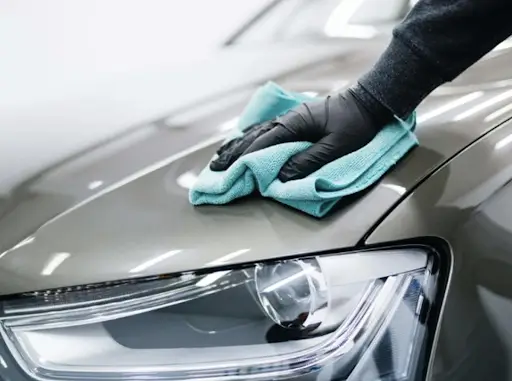
Rain leaves a film of road grime and dust on cars across the Portland metro, and wiping that film off with a dry towel or brush drags grit across the paint. Automatic brush washes do the same on a larger scale, which is why so many cars show fine circular swirls in the sun.
Using the two-bucket wash method, clean microfiber towels and touchless or hand washes cuts down on new scratches. Our article on whether car washes scratch your car explains what to avoid.
When Should You Get Scratches Polished Out by a Professional?
If scratches cover large areas, you’re not comfortable using a machine polisher, or DIY passes haven’t made a difference, a professional polish is usually the safer and faster option. It’s also worth it before selling a car, since clean, glossy paint makes a strong first impression.
Our Classic Polish includes a hand wash, clay bar decontamination, a Stage 1 polish and a Stage 2 buff. It costs $400 for a sedan or coupe and $500 for an SUV or truck, and our guide on how much it costs to polish a car compares it with other options.
How Do You Keep Scratches From Coming Back?
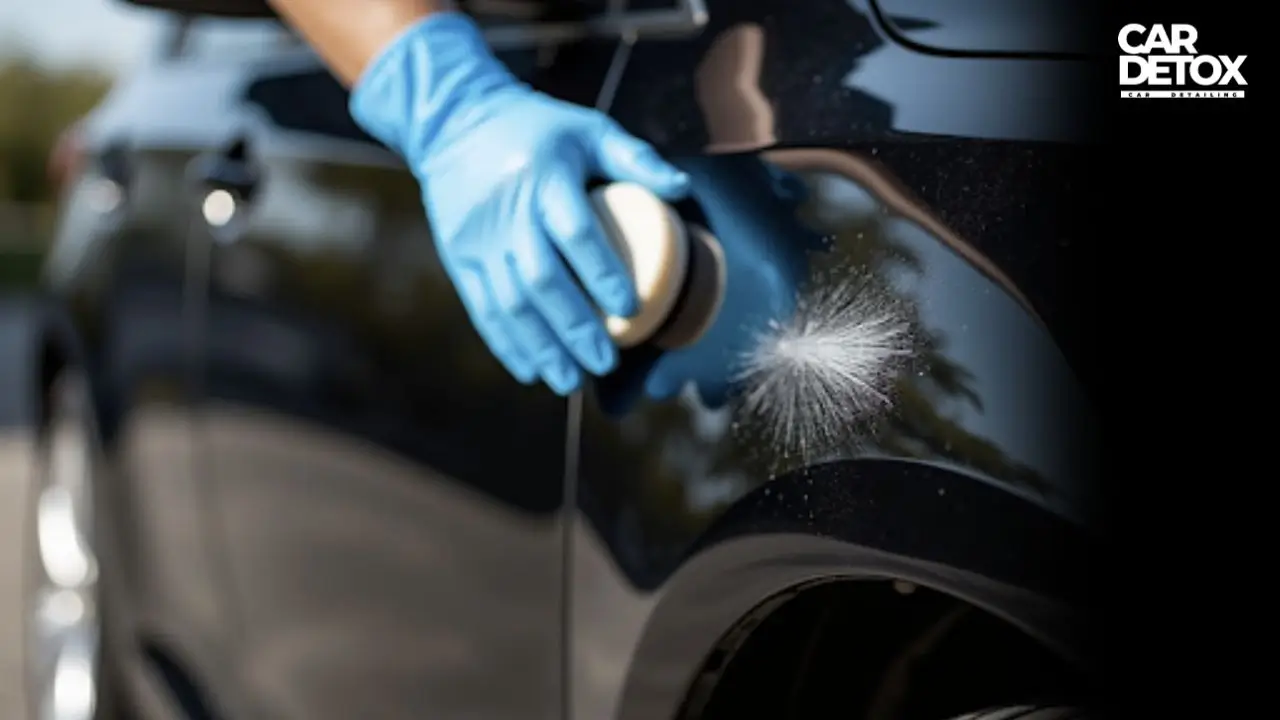
Protection is what keeps freshly polished paint looking good. Wax and sealants add a sacrificial layer that takes minor contact before your clear coat does, while careful washing prevents most new swirls.
For longer-lasting protection, a ceramic coating adds a harder, slicker layer that resists light wash marring and makes the car easier to clean. If your car is already coated, our guide on removing scratches from ceramic coating covers how to treat it. You can also learn whether car wax can remove scratches.
Ready to Get Rid of Scratches for Good?
Light scratches and swirls usually polish out with the right compound, a clean surface and patient technique. Deeper damage needs touch-up paint or professional correction to look right.
If you’re in the Portland metro, book a Classic Polish at our Sherwood shop. Our team will inspect your paint, remove as many scratches and swirls as safely possible, and protect the finish.
Frequently Asked Questions About Polishing Out Car Scratches
No. Polishing removes scratches that sit in the clear coat, like swirl marks and light scuffs. Scratches that reach the color coat, primer or metal need touch-up paint or body shop repair.
Wash and clay the area, apply a scratch-removing compound with a pad or dual-action polisher, and work it in with overlapping passes. Wipe clean, check the result, repeat if needed and finish with polish and wax.
Toothpaste can soften very fine scratches because it contains mild abrasives, but results are inconsistent and it can haze the clear coat. A polishing compound made for car paint works better and more safely.
Run your fingernail across it. If your nail catches clearly, or you can see a different color, primer or metal in the scratch, it’s too deep for polishing alone.
At Car Detox, the Classic Polish costs $400 for a sedan or coupe and $500 for an SUV or truck. It includes a hand wash, clay bar, Stage 1 polish and Stage 2 buff.

Jeannette Lee
Recent Blogs
How to Clean Alcantara and Suede Car Seats the Right Way
Alcantara and suede give a car interior a premium, grippy feel, which is why you find them on…
Read More ›
How Much Does Fleet Detailing Cost? A Portland Business Owner’s Guide
A clean fleet does more than look good on the road. It protects your vehicles, reinforces your brand…
Read More ›
How to Get Gasoline Smell Out of a Car: An Oregon Detailer’s Complete Guide
Few smells are as stubborn or as unsettling as gasoline inside your car. It clings to carpet and…
Read More ›Ready to get started?
Book your detail today and give your car the care it deserves.
Book Now