
How to Remove White Mold in a Car: Carpet, Seats and More
On This Page
White mold in a car usually shows up as fuzzy or powdery patches on the carpet, seats or seat belts, often with a musty smell you notice the moment you open the door. It’s one of the most common types of mold detailers see, especially in cars that sat closed and damp for a while.
Left alone, white mold spreads through carpet fibers and into the padding underneath. This guide explains how to tell white mold from other white residue, how to remove it safely from carpet and other surfaces, and when it’s time for professional treatment.
What Is White Mold in a Car?
White mold is a general term for several mold species that look white, gray or pale in their early stages. It often appears as soft, fuzzy growth on fabric and carpet or as a powdery film on harder surfaces.
Some white mold turns green, gray or black as it matures, so early-stage white growth is a warning sign worth taking seriously. Catching it while it’s still white and on the surface makes cleanup far easier.
What Causes White Mold to Grow in Your Car?
Mold needs moisture, warmth and organic material, and a closed car can supply all three. Wet floor mats, damp clothes, spilled drinks and rain tracked in on shoes add moisture, while food crumbs, skin oils and dust give mold something to feed on.
Leaks are another major cause. Worn door and window seals, clogged sunroof drains and failed weather stripping let water soak into carpet padding, where it can stay damp for weeks without you noticing.
Cars that sit unused for long periods are especially vulnerable. Without airflow or the heater running, humidity builds up inside the cabin and settles into fabric surfaces.
Why Is White Mold So Common in Portland Cars?
The Portland area spends much of the year cool and wet, which keeps car interiors damp from fall through spring. Drivers in Tigard, Tualatin, Beaverton and across the metro bring rain into the car every day on shoes, umbrellas and jackets.
That moisture rarely dries completely in winter, especially in cars parked outside or in unheated garages. A musty smell after a few rainy weeks is often the first sign that white mold has started growing in the carpet.
How Do You Know If White Spots in Your Car Are Mold?
Not every white mark in a car is mold. Road de-icer residue, leather bloom and dried cleaning products can look similar at first glance. The table below shows how to tell them apart:
| White substance | How it looks and feels | Smell | Likely cause | What to do |
|---|---|---|---|---|
| White mold | Fuzzy or powdery patches that spread and return | Musty, earthy | Trapped moisture plus organic material | Clean, dry and treat the area, or book a mold treatment |
| Mildew | Flat, powdery white or gray film on the surface | Mildly musty | Early surface growth in damp spots | Clean and dry quickly before it becomes mold |
| Road de-icer or salt residue | Crusty white lines or rings on carpet and mats | None | Winter road treatments tracked in on shoes | Vacuum, then clean with warm water or a carpet cleaner |
| Leather bloom | Hazy white film on leather that wipes off but comes back | None | Natural oils and waxes rising to the surface | Wipe with a leather cleaner and condition |
| Cleaner or soap residue | Chalky white marks on plastics or fabric | Chemical or none | Product left to dry without rinsing | Wipe with a damp microfiber towel |
Smell is usually the quickest test. Mold and mildew almost always come with a musty odor, while salt residue, leather bloom and product residue have little or no smell. If you’re unsure, a closer look with a flashlight helps, since mold has a fuzzy or spreading texture that residue doesn’t.
How Do You Remove White Mold From Car Carpet?
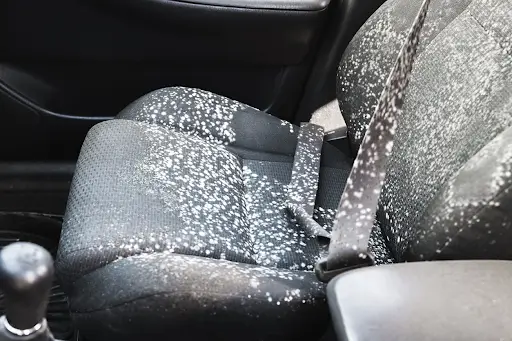
Carpet is where white mold shows up most often, because moisture soaks through the fibers into the padding below. Surface growth caught early can usually be removed at home. Follow these steps:
- Park in a shaded, ventilated spot, open every door and put on gloves, a mask and eye protection.
- Remove floor mats, trash and anything damp, and set the mats outside to dry.
- Vacuum the affected areas slowly with a HEPA vacuum, then empty it outdoors.
- Lightly mist the mold with a diluted white vinegar solution and let it sit for 10 to 15 minutes.
- Scrub gently with a soft brush, working from the edges of each patch toward the center.
- Extract the moisture and residue with a wet/dry vacuum or carpet extractor.
- Dry the interior completely with fans, a dehumidifier or warm sun through open doors.
- Check the area again after a few days and repeat if any growth returns.
Always test any cleaner on a hidden spot first, and never soak the carpet. Too much liquid pushes moisture into the padding, which is exactly where mold grows back. Never mix vinegar or ammonia with bleach, since the combination releases toxic fumes.
Does Vinegar Kill White Mold in a Car?
Diluted white vinegar is a common first step for light surface mold on carpet and fabric. It’s inexpensive, easy to use and gentler on fabrics than bleach.
Vinegar works best on small, fresh patches. It can’t reach mold that has grown into carpet padding or seat foam, and it isn’t a good choice for leather. If white mold returns within a few weeks of cleaning, the growth is deeper than surface treatment can reach.
How Do You Get White Mold Off Car Seats?
White mold on seats follows the same basic process as carpet, but the right cleaner depends on the seat material. Fabric seats can usually handle a diluted vinegar solution and extraction, while leather needs a pH-balanced leather cleaner and conditioning afterward.
Our full guide on how to get mold out of car seats walks through fabric and leather step by step, including which cleaners to avoid. For mold that has spread through the upholstery, see our guide to getting mold out of car upholstery.
Where Else Does White Mold Hide in a Car?
Carpet and seats are the obvious spots, but white mold often grows where you don’t look. Check under the floor mats, along the seat rails, on seat belts, in the trunk and around the spare tire well, where water collects after a leak.
The headliner and door panels can also hold moisture, especially near the sunroof or a worn seal. If you find mold in one area, inspect the whole interior before you start cleaning, since treating one patch while missing another lets the spores spread right back.
Can White Mold Grow in Car Air Vents?
Yes. The air conditioning system pulls moisture out of the cabin air, and that moisture collects on the evaporator behind the dashboard. In a damp climate, that dark, wet space is an easy place for mold to grow.
A musty blast of air when you first turn on the fan is the classic sign. Replacing the cabin air filter is a good first step, but mold deep in the ventilation system usually needs professional cleaning and an ozone treatment to fully clear the smell.
Is White Mold in a Car Dangerous?
White mold releases spores into the air you breathe while driving. Many people notice a musty smell, irritated eyes, sneezing or a stuffy nose in a moldy car, and people with allergies or asthma are often more sensitive.
A few small spots aren’t a reason to panic, but they shouldn’t be ignored either. Wear gloves and a mask while cleaning, keep the windows open, and talk to a doctor if you feel unwell after spending time in the car.
When Should You Call a Professional for White Mold?
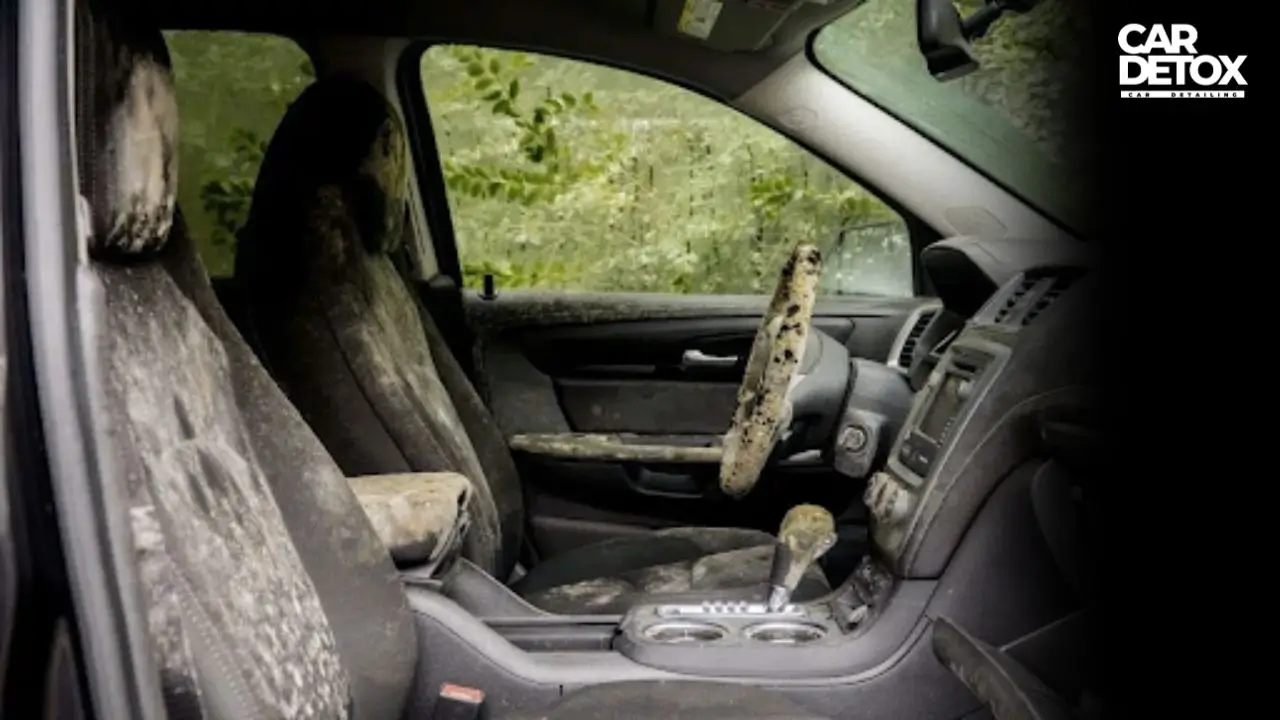
DIY cleaning works for small, recent patches on the surface. It’s time to call a professional when white mold covers large areas, keeps coming back, or leaves a smell that won’t go away after cleaning.
The same goes for cars that flooded, sat wet for days, or show mold on the carpet, seats and headliner at once. At that point, the mold has almost certainly reached the padding and ventilation system.
Car Detox’s mold treatment deep cleans affected surfaces and includes an ozone treatment that targets airborne spores and lingering odor. Learn how it works in our guide to ozone treatment for cars.
How Do You Stop White Mold From Coming Back?
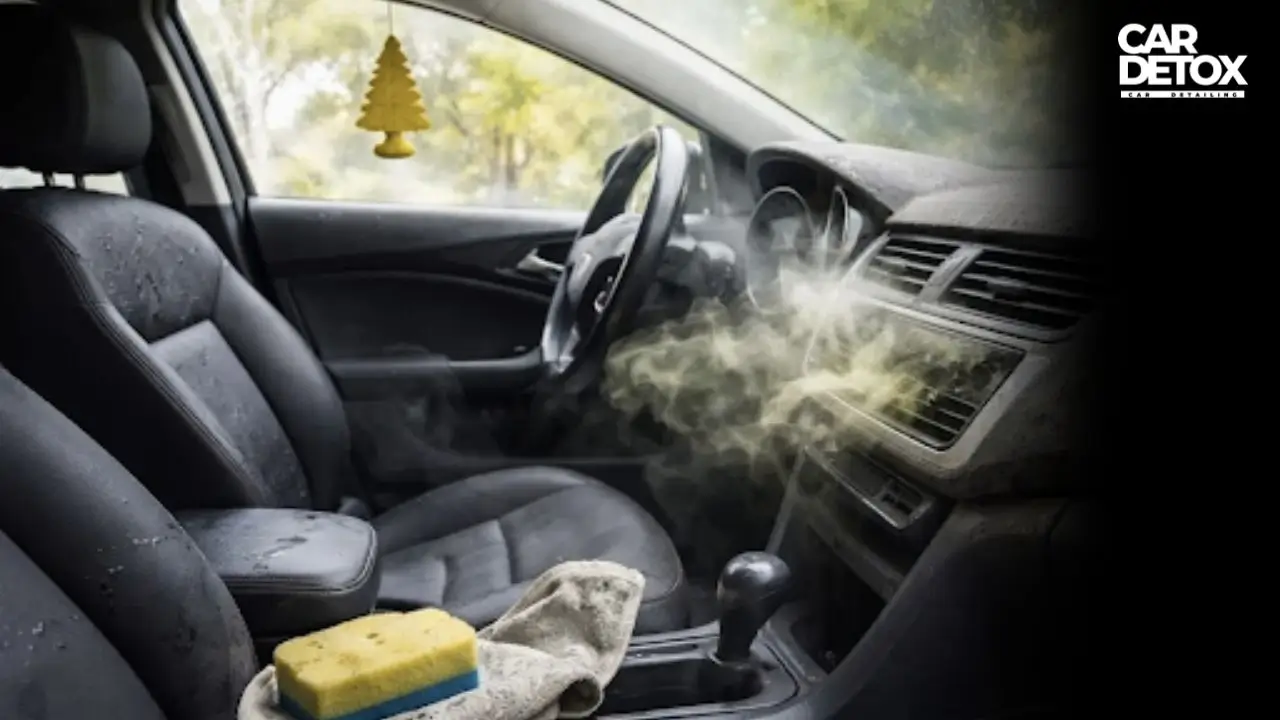
Moisture control is everything. Take wet items out of the car as soon as you get home, dry spills right away and switch to rubber floor mats during the rainy season.
Run the heater or air conditioning regularly, since both pull moisture out of the cabin air. Moisture absorbers help in cars that sit for long periods, and checking door seals and sunroof drains each fall stops leaks before they reach the carpet.
If a musty smell lingers after cleaning, our guide on getting mold smell out of a car covers the next steps. A regular interior detail also removes the crumbs, oils and grime that mold feeds on.
Need Help Getting Rid of White Mold in Your Car?
White mold is easiest to remove when you catch it early, clean it carefully and dry the interior completely. Larger outbreaks, repeat growth and stubborn odors need a deeper treatment.
If you’re in the Portland metro, book a mold treatment at our Sherwood shop. Our team will clean and treat the affected areas so your car smells fresh and stays mold-free.
Frequently Asked Questions About White Mold in Cars
White mold usually looks like fuzzy or powdery white patches on carpet, seats or seat belts. It spreads over time, often comes with a musty smell, and may turn gray, green or black as it matures.
Vacuum the area with a HEPA vacuum, treat it with a diluted white vinegar solution, scrub gently, extract the moisture with a wet/dry vacuum and dry the interior completely. Widespread or recurring mold needs professional treatment.
White mold releases spores that can irritate your eyes, nose and throat, especially if you have allergies or asthma. Clean small patches promptly and have widespread mold professionally treated.
White mold on car carpet usually means moisture has soaked into the fibers or padding from a leak, wet shoes or damp floor mats. Find and fix the moisture source, then clean and dry the carpet thoroughly.
Mold is fuzzy or powdery, spreads and smells musty. Road de-icer residue forms crusty white lines or rings, has no smell and usually appears after winter driving. A quick vacuum and warm water clean removes salt residue but not mold.

Jeannette Lee
Recent Blogs

How to Clean Alcantara and Suede Car Seats the Right Way
Alcantara and suede give a car interior a premium, grippy feel, which is why you find them on…
Read More ›
How Much Does Fleet Detailing Cost? A Portland Business Owner’s Guide
A clean fleet does more than look good on the road. It protects your vehicles, reinforces your brand…
Read More ›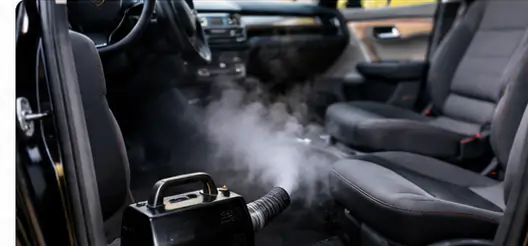
How to Get Gasoline Smell Out of a Car: An Oregon Detailer’s Complete Guide
Few smells are as stubborn or as unsettling as gasoline inside your car. It clings to carpet and…
Read More ›Ready to get started?
Book your detail today and give your car the care it deserves.
Book Now