
The Tesla owner discovers the same thing within the first year of ownership: the vegan leather seats look incredible, right up until denim indigo transfers onto the driver’s bolster or coffee spills onto the cream-colored surface. Tesla’s synthetic seating material is durable and elegant, but it plays by different rules than traditional leather. The wrong cleaning approach can damage the topcoat, cause dryness and cracking, or make stains worse instead of removing them.
How to clean Tesla vegan leather seats correctly comes down to understanding the material’s chemistry, choosing safe products, and treating stains within the right window before they become permanent. Tesla itself recommends water and non-detergent soap for routine cleaning, which handles most everyday contamination if you address spills quickly.
In our Tualatin shop, we handle Tesla interior work as part of specialized interior detailing service for Model 3, Model Y, Model S, Model X, and Cybertruck owners across Portland metro. This guide walks through exactly how to clean Tesla vegan leather safely at home, how to tackle the famous denim indigo problem, and when to bring the vehicle in for professional treatment.
What Is Tesla Vegan Leather Actually Made Of?
Tesla vegan leather is a synthetic upholstery material made from polyurethane over a woven backing, with a protective topcoat that provides stain and UV resistance. Tesla started using vegan leather in 2015 as part of its sustainability commitment, and it’s now the standard interior across every current Tesla model. The material is durable, easier to clean than genuine leather, and doesn’t require the oils and conditioners real leather needs. However, it’s also prone to specific problems: the polyurethane surface absorbs dyes into microscopic pores, particularly from indigo denim, and the protective topcoat can be damaged by harsh chemicals or aggressive scrubbing.
The material construction matters because it directly determines what cleaning products and techniques will work. Real leather is animal hide with pores that absorb conditioners and repel water somewhat naturally. Tesla vegan leather is a synthetic polymer with a chemically engineered topcoat, meaning it responds to cleaning products the way plastics do, not the way natural leather does.
Newer Tesla models (2023 and later) use an improved “Cream” interior topcoat that’s noticeably more stain-resistant than the earlier white interior formulation. Owners of pre-2023 white interior Teslas will notice more aggressive dye transfer and stain absorption than newer models, though the same cleaning principles apply.
The premium light-colored interior options remain the most challenging to maintain because contamination shows immediately and stains stand out against the light background. Black interiors hide contamination longer but still benefit from regular cleaning to preserve the material’s flexibility and appearance.
Why Does Tesla Vegan Leather Stain So Easily?
Understanding why the material stains helps explain both prevention and cleaning approaches. The chemistry is more interesting than most owners realize.
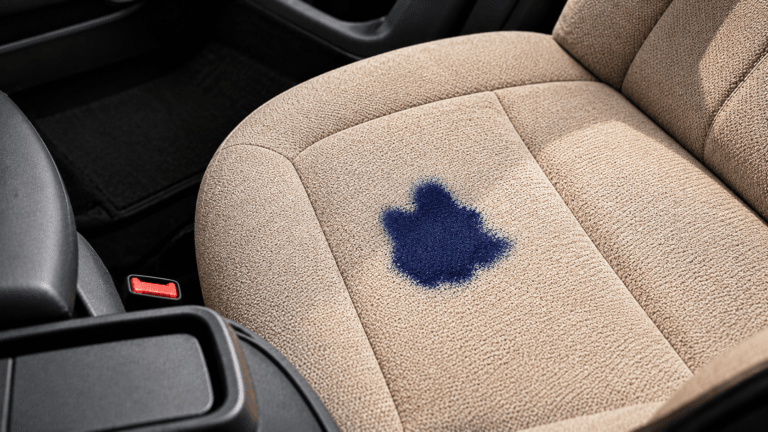
Tesla’s polyurethane surface has microscopic pores in the topcoat that allow the material to breathe and flex during normal use. These same micropores absorb liquids and dyes over time, particularly water-soluble compounds like the indigo dye used in most denim jeans. When you slide into the driver’s seat wearing new jeans, friction transfers indigo from the fabric to the seat, and the topcoat’s micropores gradually absorb the pigment.
The driver’s lateral bolster (the raised side edge of the seat where you slide in and out) shows dye transfer first and worst because that’s where friction is highest. Passenger seats show less because they see less friction contact. Rear seats accumulate transfer more slowly because passengers typically slide in feet-first rather than dragging across the bolster.
Beyond denim, the same micropore chemistry absorbs: Food and drink spills (coffee, wine, soda, juice) Body oils and sunscreen residue Makeup products, particularly foundation and lipstick Ink from pens, receipts, and printed materials Newsprint and magazine dye transfer
The window for easy removal is roughly 30 days. Within that period, most stains lift with pH-neutral cleaner and gentle wiping. Beyond 30 days, the dye has penetrated deeper into the topcoat and requires more aggressive treatment or professional service to fully remove.
What Products Are Safe to Use on Tesla Vegan Leather?
Tesla’s official recommendation is water and non-detergent soap. This works for routine cleaning and light contamination, but real-world owners often need a broader product toolkit for the full range of stains and situations.
Non-detergent mild soap mixed with warm distilled water handles daily cleaning safely. The soap should be free of enzymes, brighteners, and additives. Look for options specifically labeled as pH-neutral or safe for delicate surfaces.
pH-neutral leather cleaners specifically formulated for synthetic and vegan leather work well for tougher contamination. Products from Chemical Guys, 303, Meguiar’s, and other automotive brands offer safe options tested on synthetic upholstery. Avoid anything labeled specifically as “leather conditioner” because vegan leather doesn’t need conditioning the way real leather does, and conditioners can leave a greasy film on the topcoat.
Baby wipes work for quick touch-ups if used sparingly. Alcohol-free, fragrance-free baby wipes are the safest option. Limit use to once a week or less because the mild surfactants in baby wipes can dry out the topcoat with heavy use.
Distilled water works better than tap water because Portland’s tap water has enough mineral content to leave visible spots on light-colored vegan leather, especially with repeated cleaning.
Microfiber towels are essential. Have four or five clean microfibers ready: one damp for applying cleaner, one damp for rinsing, and multiple dry towels for buffing. Never use paper towels because they leave lint and micro-scratches on the surface.
Horsehair or soft-bristle detail brushes help with textured areas and seam cleaning. The bristles should be soft enough to bend easily against your palm without pressure. Any brush that feels stiff or scratchy will damage the topcoat.
Isopropyl alcohol (70% or higher) is a limited-use option for stubborn stains. Some sources recommend it, others warn against it. The safe approach is to spot-test on a hidden area, use very sparingly with heavy dilution, and always follow with a damp microfiber to remove residue and a clean microfiber to dry the area completely.
What Should You Never Use on Tesla Vegan Leather Seats?
Certain products cause real damage to Tesla’s topcoat that can be permanent and expensive to address. Avoiding these products protects your investment.
Never use bleach or bleach-based cleaners. Bleach destroys the polyurethane structure and causes permanent discoloration.
Never use ammonia-based cleaners including most window cleaners like Windex. Ammonia degrades the topcoat and causes yellowing over time.
Never use acetone or nail polish remover. Both dissolve the polyurethane surface directly.
Never use Magic Erasers or melamine sponges. These are abrasive at a microscopic level and gradually wear away the protective topcoat, exposing the underlying polyurethane to accelerated damage.
Never use standard leather conditioners designed for real leather. These oil-based products leave a greasy film on vegan leather because the material can’t absorb them the way real leather can.
Never use household detergents like dish soap for cleaning. The enzymes and brighteners in these products can damage the topcoat with repeated use.
Never use bathroom cleaners, tile cleaners, or any product designed for hard surfaces. These are far too aggressive for automotive interiors.
Never scrub aggressively with brushes or towels. Aggressive scrubbing pushes dye deeper into the micropores and damages the topcoat surface simultaneously.
Never spray cleaner directly onto the seat. Always apply the cleaner to your microfiber towel first, then work the towel across the seat surface. Direct spraying causes oversaturation that can damage the topcoat and force liquids into seams where they cause additional problems.
Never leave standing moisture on the seat. Always dry thoroughly with a clean microfiber after any wet cleaning to prevent water spots and moisture damage.
How Do You Clean Tesla Vegan Leather Seats Step-by-Step?
The routine cleaning process works for weekly maintenance and general contamination. For specific stains like denim indigo, additional steps apply.
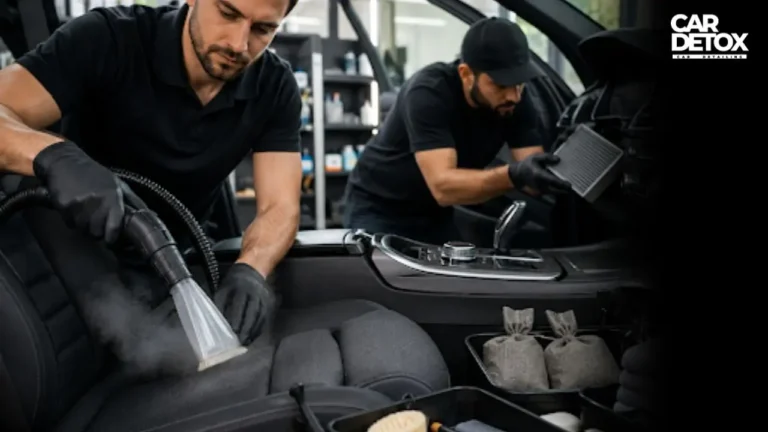
Start with a thorough vacuum of the seat and surrounding area. Remove any loose debris, crumbs, or particles that could scratch the surface during wet cleaning. Use the crevice tool for seams and edges where dirt accumulates.
Prepare your cleaning solution by mixing a small amount of mild non-detergent soap with warm distilled water. The ratio should be very dilute, essentially just soapy water rather than concentrated cleaner.
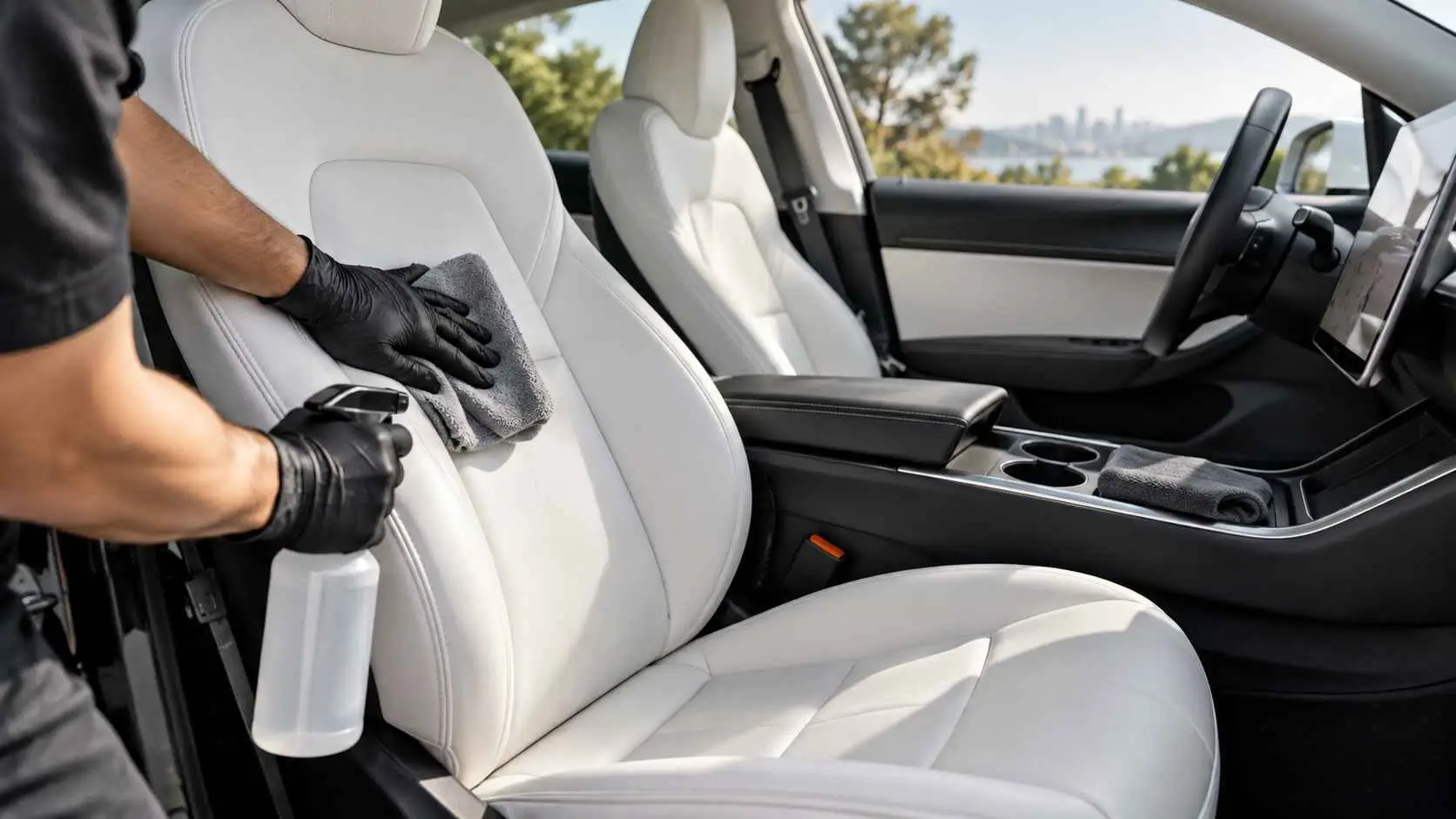
Dampen a clean microfiber towel with the solution. The towel should be damp, not wet. If you can wring water out of it, it’s too saturated.
Wipe the seat surface in the direction of the material grain, using gentle back-and-forth motions rather than circles. Circular motions can push dye deeper into micropores and create swirl marks visible under certain lighting.
Focus on the areas that see the most contact and contamination first: seat cushion top, lower back, lateral bolsters, and headrest edges. These are the zones where cleaning effort delivers the most visible improvement.
For textured areas or seams, use a soft horsehair brush with light pressure. Work in the direction of the texture pattern rather than against it.
Follow with a clean damp microfiber to remove any soap residue. Even mild soap can attract dirt if left on the surface, so the rinse step matters.
Dry the entire cleaned area with a fresh dry microfiber. Buff gently to remove all moisture. Any standing water or dampness increases the risk of water spots and moisture damage.
Allow the seat to air-dry completely for at least 30 minutes before covering it or letting anyone sit on it. This ensures the topcoat has fully dried and any remaining moisture has evaporated.
For heavily stained Tesla seats or vehicles overdue for deep cleaning? Book Tesla interior detailing at Car Detox and our team will handle it professionally.
How Do You Remove Denim Stains From Tesla White Seats?
Denim indigo transfer is the single most common cleaning question from Tesla owners with white or cream interiors. The fix depends on how long the stain has been present.
Fresh denim stains (under 30 days) typically remove with the standard cleaning process using pH-neutral cleaner or non-detergent soap. Apply the cleaner to a damp microfiber, wipe the stained area gently in the direction of the seat grain, and repeat 2-3 times if needed. Blot dry with a clean microfiber between passes.
Moderate denim stains (30-90 days) require slightly more effort. After the standard cleaning pass fails to fully remove the stain, apply a small amount of pH-neutral leather cleaner specifically designed for synthetic surfaces. Use a soft horsehair brush with very light pressure to work the cleaner into the affected area. Blot with clean microfiber, then rinse with a damp microfiber. Repeat up to 3 times over several days if needed. Aggressive scrubbing makes things worse, not better.
Set-in denim stains (90 days and older) are the hardest to remove because the indigo has penetrated deep into the topcoat. Isopropyl alcohol at 70% strength can lift stubborn indigo when applied sparingly to a microfiber corner and dabbed on the stain. Test on a hidden area first. If the alcohol removes the stain successfully, immediately follow with a damp microfiber to remove any residue and a clean microfiber to dry. Apply a protectant afterward to restore the topcoat surface.
Severe or long-set denim stains often require professional treatment. Our shop uses specialized products and techniques that can address staining that home methods can’t fully lift.
Prevention is dramatically easier than removal. Consider seat covers for the driver’s seat if you frequently wear raw or dark denim. Alternatively, avoid dark or raw denim jeans during long drives, or apply a monthly protectant specifically formulated for Tesla vegan leather to reduce dye absorption.
How Do You Remove Other Common Stains From Tesla Seats?
Different stain types respond to different treatment approaches. Fresh spills always clean easier than set-in contamination.
Coffee and tea spills lift with the standard non-detergent soap and water approach if addressed within an hour. Blot the spill immediately with a dry microfiber before it soaks into the topcoat, then follow with the standard cleaning process.
Body oils and sunscreen residue accumulate on frequently-touched areas like the driver’s seat and steering wheel side of the seat cushion. Regular weekly cleaning prevents oil buildup from becoming permanent staining. For established oil residue, a pH-neutral cleaner with a soft brush works best.
Makeup stains including foundation and lipstick respond to isopropyl alcohol at low concentration. Apply sparingly to a microfiber, dab (don’t scrub) the stain, then follow with damp and dry microfibers.
Ink from pens, receipts, and printed materials can be one of the more difficult stains. Isopropyl alcohol works best but requires careful application and prompt follow-up cleaning to prevent alcohol damage to the topcoat.
Food stains including grease, sauce, or sugary residue need immediate attention. Blot to remove excess, then clean with pH-neutral soap and water. Sugar stains especially need thorough rinsing because dried sugar leaves a sticky residue that attracts more dirt.
Water spots from Portland’s tap water clean easily with distilled water on a microfiber. This is why using distilled water for the initial cleaning matters.
For any stain older than a few weeks or resistant to home treatment, professional interior detailing service delivers better results than continuing aggressive DIY attempts that risk damaging the topcoat.
How Do You Protect Tesla Vegan Leather From Future Damage?
Prevention beats cleaning every time. A few habits and products significantly extend the life and appearance of Tesla vegan leather.
Regular light cleaning (weekly or bi-weekly) prevents contamination buildup and keeps the topcoat in optimal condition. Ten minutes with a damp microfiber prevents hours of stain removal work later.
Immediate spill response is the single most effective prevention practice. Fresh spills clean easily; set-in stains require aggressive treatment. Keep microfiber towels in the vehicle for quick response.
Monthly application of a vegan leather protectant creates a sacrificial layer that resists dye transfer, blocks UV degradation, and makes routine cleaning easier. Look for products specifically formulated for synthetic upholstery.
Consider seat covers if you regularly wear raw denim or work in conditions that transfer significant dirt and contamination. Aftermarket covers designed specifically for Tesla models provide protection without interfering with seat heaters, seat sensors, or airbag deployment.
Park in shade or garage when possible. Direct UV exposure ages vegan leather faster than any other environmental factor. Portland’s summer sun (June through September) is more intense than most owners realize.
Address seams and stitching areas carefully during cleaning. Debris that accumulates in seams eventually works into the surrounding topcoat and creates staining.
For long-term paint and interior protection across your Tesla, Tesla ceramic coating applied by Tesla-experienced technicians extends the protective benefits to exterior paint while keeping the whole vehicle looking factory-new longer.
When Should You Book Professional Tesla Interior Detailing?
DIY cleaning handles routine maintenance well, but several situations call for professional service that goes beyond what home methods can safely address.
Set-in stains that resist home treatment should be handled professionally before they become permanent. Professional shops have access to specialized products and techniques that home cleaning kits don’t include.
Post-purchase deep cleaning on used Teslas often benefits from professional treatment. Previous owner contamination, cleaning residue from improper products, and general wear can all be reset by professional service.
Pre-sale preparation before trading or selling a Tesla should include professional interior detailing. Used-Tesla buyers specifically inspect the vegan leather condition, and professional detailing can add significant value to your final sale price.
Water damage or moisture problems from spills, leaks, or improper cleaning require professional assessment. Improper drying leads to mold growth in the seat foam, which is far more expensive to address than the original spill.
Preparation for a special event, road trip, or family visit is a legitimate reason to book professional service. Getting the vehicle to a genuine like-new state before an important use case makes sense.
Annual maintenance detailing keeps Teslas in optimal condition longer. Professional service catches contamination and wear patterns before they become visible damage that requires more aggressive intervention.
For all these scenarios, Car Detox interior detailing handles Tesla vegan leather with the appropriate products and techniques.
What Mistakes Should Tesla Owners Avoid?
- Using leather conditioners meant for real leather. They leave a greasy film that attracts dirt and can’t absorb into synthetic material
- Scrubbing hard on stains, especially denim indigo. Aggressive scrubbing pushes dye deeper into micropores
- Spraying cleaner directly on the seat. Oversaturation damages the topcoat and forces liquids into seams
- Using Magic Erasers or melamine sponges. These wear away the protective topcoat at a microscopic level
- Waiting weeks to address denim stains. The 30-day removal window matters
- Using household cleaners including Windex, bleach, or dish soap. All damage the topcoat with repeated use
- Skipping the dry step after cleaning. Standing moisture causes water spots and can lead to mold in seat foam
- Cleaning with paper towels instead of microfiber. Paper leaves lint and micro-scratches on the surface
Frequently Asked Questions
What is Tesla vegan leather made of? Polyurethane over a woven backing with a protective topcoat. It’s a synthetic material, not real leather.
Can you use regular leather cleaner on Tesla seats? Only if it’s specifically labeled safe for synthetic or vegan leather. Standard leather conditioners for real leather leave a greasy film.
How do I remove denim stains from my white Tesla seats? Use pH-neutral cleaner on a damp microfiber, wipe in the direction of the grain, and repeat 2-3 times. Address within 30 days for easiest removal.
Can I use baby wipes on Tesla vegan leather? Yes, but sparingly. Alcohol-free, fragrance-free baby wipes work for quick touch-ups. Limit to once a week to avoid drying the topcoat.
Is isopropyl alcohol safe on Tesla seats? In limited use, yes. Apply sparingly at 70% strength for stubborn stains, test on a hidden area first, and always follow with damp and dry microfibers.
Should I use a leather conditioner on Tesla vegan leather? No. Vegan leather doesn’t need conditioning like real leather. Use a protectant specifically formulated for synthetic upholstery instead.
How often should I clean my Tesla seats? Weekly light cleaning for maintenance, monthly deeper cleaning, and annual professional detailing keep Tesla seats in optimal condition.
Can you fix a badly stained Tesla seat professionally? Yes. Professional detailing with specialized products can address staining that home cleaning cannot fully remove.
Does Tesla ceramic coating protect the seats? Ceramic coating is applied to exterior paint, not interior seats. For seat protection, use a vegan-leather-safe protectant product.
How do I prevent denim stains on my white Tesla seats? Avoid dark or raw denim during long drives, apply monthly protectant, or use aftermarket seat covers designed specifically for Tesla models.
Final Thoughts
How to clean Tesla vegan leather seats correctly comes down to understanding what the material is and treating it accordingly. Tesla’s synthetic upholstery isn’t real leather and doesn’t respond to real-leather products. Water, non-detergent soap, pH-neutral cleaners designed for synthetics, and microfiber towels handle the vast majority of everyday cleaning needs safely.
For Portland Tesla owners, the denim indigo problem is the most common cleaning frustration, and it’s genuinely solvable if you address it early. Fresh stains lift with standard cleaning. Set-in stains require more effort and sometimes professional treatment. Prevention through regular protectant application and thoughtful jean choice extends the life and appearance of your seats significantly.
To book professional Tesla interior detailing that handles vegan leather correctly, visit Car Detox interior detailing at our Tualatin shop. We serve Tesla Model 3, Model Y, Model S, MoLinn, and the broader Portland metro.