
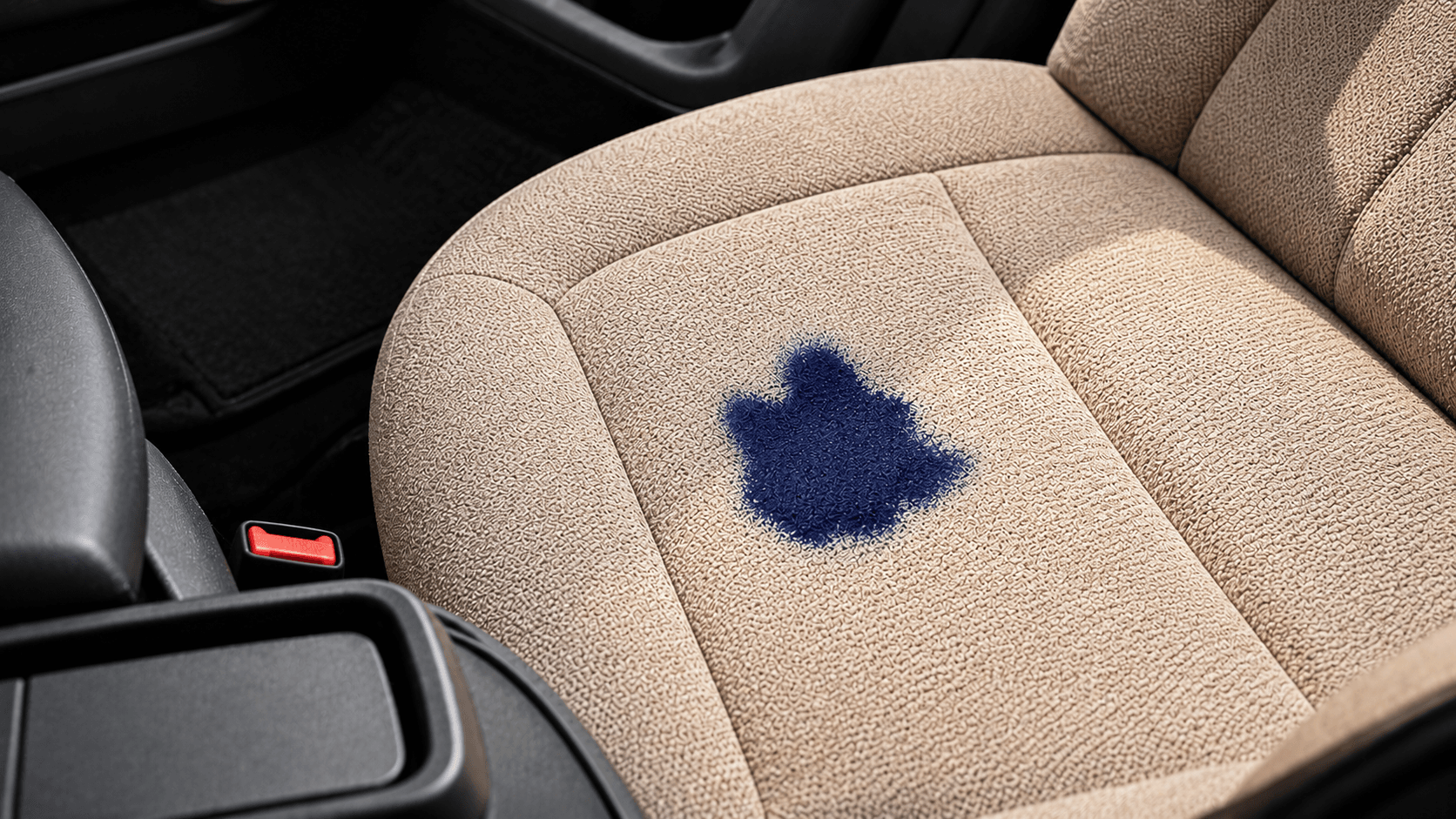
A pen leaked in your pocket. A marker rolled off the center console. A child got hold of a felt tip in the backseat. However it happened, you’re now staring at an ink stain on your car seat and wondering how bad this really is.
Here’s the good news: most ink stains can be removed from car seats if you act quickly and use the right method for your seat material. Here’s the not-so-good news: using the wrong product or the wrong technique can permanently set the stain, strip the leather’s protective coating, or create a secondary water ring that’s just as noticeable as the original mark.
This guide covers exactly how to get ink stains out of car seats by seat type, ink type, and stain age, so you know exactly what to do and what to avoid.
Step 1 — Assess Before You Act
Before you reach for any product, take 60 seconds to assess your situation. This step saves more cars than any cleaning product.
What type of seat material do you have?
• Fabric/cloth — most common, most forgiving
• Leather — durable but absorbs ink quickly through pores
• Vinyl — non-porous, easiest to clean
• Suede or Alcantara — the most delicate — requires specialist treatment
What type of ink is it?
• Ballpoint pen — oil-based ink that sits on the surface initially before penetrating
• Gel pen — thicker, water-based ink that can spread easily if wet
• Permanent marker — highly pigmented, very difficult to remove once dry
• Felt-tip or washable marker — water-based, easiest to remove when fresh
How old is the stain?
• Fresh (under 1 hour) — high removal success with DIY methods
• Set (1 to 24 hours) — moderate success, may need multiple treatments
• Dried and old (over 24 hours) — difficult, may require professional steam cleaning
Quick spot test rule: Whatever product you use, always test it on a hidden area first, such as under the seat or on the back lower edge, and wait 60 seconds before proceeding. This 60-second check helps prevent permanent damage.
How to Remove Ink Stains from Fabric Car Seats
Fabric is the most common car seat material and the most forgiving for ink removal — if you act before the ink dries.
What you’ll need:
• Clean white microfiber cloths or cotton balls
• 70% isopropyl rubbing alcohol
• Mild dish soap and warm water
• Distilled water
• Upholstery cleaner (optional for stubborn stains)
Step-by-step:
1. Blot immediately with a dry white cloth. Press firmly and lift straight up. Do not rub. Switch to a clean section of cloth with every blot so you’re not transferring ink back onto the seat.
2. Apply rubbing alcohol to a cotton ball or folded microfiber cloth. Never pour directly on the fabric. Dab the stain gently, working from the outside edge inward to prevent spreading.
3. Continue blotting with a fresh dry cloth after each alcohol application. You should see ink transferring to the cloth. Keep switching to clean sections.
4. Repeat until no more ink transfers. For fresh ballpoint ink, this may take 3 to 5 rounds. Gel ink may need more patience.
5. Rinse with distilled water. Dampen a clean cloth with distilled water and blot the area to remove alcohol residue.
6. Dry thoroughly. Press a dry cloth firmly into the seat and allow it to air dry completely with the windows open. Do not use a hair dryer. Heat can set any remaining ink permanently.
The water ring warning: One of the most common secondary problems after cleaning a fabric seat is a water ring. This is a tide mark left as cleaning moisture dries and concentrates at the edges. Prevent this by lightly dampening the entire seat panel with distilled water after cleaning, then blotting it dry evenly. This redistributes any mineral residue so no ring forms.
How to Remove Ink Stains from Leather Car Seats
Leather requires a gentler, more careful approach. Harsh solvents or too much moisture can strip the leather’s protective coating, cause discoloration, or lead to cracking.
What you’ll need:
• Cotton swabs and white microfiber cloths
• 70% isopropyl rubbing alcohol
• pH-neutral leather cleaner
• Leather conditioner (essential after cleaning)
Step-by-step:
1. Blot fresh ink immediately with a dry white microfiber cloth. Never rub. Leather’s surface coating can smear ink wider quickly.
2. Spot test first. Apply a tiny amount of rubbing alcohol to a cotton swab and test it on the underside of the seat or a hidden seam. Wait 60 seconds. If there is no discoloration, proceed.
3. Apply alcohol to a cotton swab, not a cloth, for precise application. Dab gently directly on the ink mark only. A cotton swab lets you target the stain without spreading product across a wider area.
4. Work from the outside in. Dab at the edges of the stain first, then work toward the center. This prevents the ink from spreading outward as it lifts.
5. Wipe away with a clean, damp microfiber cloth to remove alcohol residue.
6. Apply leather cleaner if any stain remains. Use a pH-neutral cleaner applied to a cloth, never directly to the seat. Gently work it into the stain using small circular motions.
7. Condition immediately after. This is the step most people skip, and it is the most important one for leather. Cleaning with alcohol removes moisture from leather. Conditioning restores that moisture and helps prevent drying, cracking, and future stain absorption.
Portland drivers note: Portland’s damp climate means leather seats are exposed to higher humidity year-round. Leather that isn’t conditioned regularly can absorb contaminants, including ink, more readily through dried-out pores. Regular conditioning every 2 to 3 months is your best prevention. Our interior detailing service includes leather cleaning and conditioning in every session.
How to Remove Ink Stains from Vinyl Car Seats
Good news — vinyl is the easiest car seat material to clean. It’s non-porous, which means ink sits on the surface rather than penetrating into fibers.
1. Blot away any excess wet ink with a dry cloth
2. Apply rubbing alcohol to a microfiber cloth — not directly on the vinyl
3. Wipe gently in small circular motions
4. Follow with a damp cloth to rinse away residue
5. Dry with a clean cloth
6. Apply a vinyl protectant to restore surface protection
Most fresh ink stains on vinyl come off in a single treatment. Even dried ink on vinyl responds well to rubbing alcohol given its non-porous surface.
How to Remove Ink from Suede or Alcantara Car Seats
Stop. This is the one material where DIY removal is genuinely risky. Suede and alcantara are ultra-delicate. Rubbing alcohol can bleach or mat the fibers permanently. Excess moisture causes water staining that can be worse than the original ink mark.
If you have suede or alcantara seats with an ink stain, the safest action is:
1. Blot gently with a dry white cloth to absorb any wet ink — that’s it
2. Do not apply any liquid product
3. Contact a professional detailer immediately
Our team at CarDetox handles suede and alcantara stain removal using specialist dry-cleaning techniques that won’t damage these delicate materials.
What About Dried Ink Stains?
Dried ink is harder — but not impossible. The challenge is that dried ink has fully bonded to the material’s fibers or surface coating. You need to soften and re-activate the ink before it can be lifted.
For dried ink on fabric:
• Apply rubbing alcohol generously to a cloth and hold it against the dried stain for 30 to 60 seconds before blotting. This reactivates the ink and makes it liftable again.
• Follow with upholstery cleaner for any remaining shadow.
• Expect multiple treatment rounds. Three to five rounds are normal for old fabric stains.
For dried ink on leather:
• Use a dedicated leather ink remover product rather than plain rubbing alcohol. These products are formulated to penetrate dried ink without damaging the leather’s finish.
• Apply with a cotton swab, let it sit for the product’s recommended dwell time, then blot.
• Condition thoroughly after.
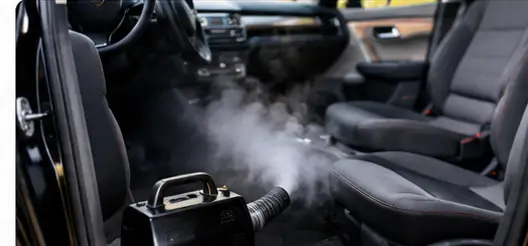
When dried ink won’t budge: Professional steam cleaning is the most effective treatment for dried, set-in ink that resists DIY methods. Our Interior Deep Clean service, starting from $325, uses commercial-grade steam cleaning that heats to temperatures that reactivate and lift dried stain molecules from deep within fabric and carpet fibers. This is something no home cleaning method can replicate. Learn more about our Interior Detailing Service.
Ink Stain Quick Reference Guide
| Seat Type | Best DIY Product | Technique | Professional Needed? |
| Fabric | 70% rubbing alcohol | Blot outside-in, air dry | If over 24 hours old |
| Leather | Alcohol + leather cleaner | Cotton swab, blot, condition | If stain spreads or old |
| Vinyl | 70% rubbing alcohol | Wipe gently, rinse, protect | Rarely needed |
| Suede/Alcantara | Dry blot only | Do not apply liquid | Always recommended |
| Permanent marker | 70% rubbing alcohol (multiple rounds) | Blot and repeat patiently | Usually recommended |
Common Mistakes That Make Ink Stains Worse
These are the errors we see most often, and all of them make the stain significantly harder to remove:
• Rubbing instead of blotting. This spreads the ink wider and pushes it deeper with every stroke.
• Pouring liquid directly on the stain. This floods the area and carries ink into a wider zone.
• Using bleach. This can permanently discolor fabric and damage leather.
• Using Magic Eraser on leather. The abrasive foam can strip the protective coating from leather surfaces.
• Skipping the spot test. Some materials react badly to rubbing alcohol, and finding out on the stain is too late.
• Using a hairdryer to speed drying. Heat can permanently set any remaining ink.
• Applying too much product to suede. This can create water staining that is worse than the ink.
• Skipping leather conditioner. This leaves leather dry and more vulnerable to future stains.
When to Call a Professional
DIY methods work well for fresh, small ink stains on fabric, leather, and vinyl. Call a professional when:
• The ink has been there more than 24 hours and DIY has not worked
• The stain covers a large area
• Your seats are suede or alcantara
• The ink is from a permanent marker
• You have already tried one product and the stain has spread
• Denim transfer (blue jean dye) is present — this behaves like ink and requires professional extraction
Ready to let the professionals handle it? Book your CarDetox interior detailing appointment and our Sherwood-based team serving Portland, Tigard, Tualatin, and Beaverton will assess and treat your ink stain using the right tools for your specific seat material. Our Interior Deep Clean starts at $325 and includes professional stain treatment, steam cleaning, and leather conditioning all in one session.
Frequently Asked Questions
1. Does rubbing alcohol remove ink from car seats?
Yes — 70% isopropyl rubbing alcohol is one of the most effective DIY ink removers for fabric and leather seats. Always apply to a cloth first, never directly to the seat, and spot test before treating.
2. How do you get dried ink out of car seats?
Hold a rubbing alcohol-dampened cloth against the dried stain for 30 to 60 seconds to reactivate it before blotting. Expect multiple treatment rounds. Professional steam cleaning is the most effective option for old set-in ink stains.
3. Does WD-40 remove ink from car seats?
WD-40 can loosen some ink stains on fabric but may leave behind a greasy residue that attracts dirt and can be difficult to remove. It is not recommended. Rubbing alcohol or a dedicated upholstery cleaner is a safer and more effective option.
4. What removes ballpoint pen ink from car seats?
70% isopropyl rubbing alcohol applied with a cotton ball or microfiber cloth is the most effective DIY solution for ballpoint ink. Blot from the outside in and switch to clean cloth sections frequently.
5. Can permanent marker be removed from car seats?
Fresh permanent marker can sometimes be partially removed with rubbing alcohol and repeated treatment. Old permanent marker stains are very difficult to fully remove at home and typically require professional steam cleaning.
6. How do I remove ink without rubbing alcohol?
For fabric seats, a mild dish soap and warm water solution can work on fresh water-based ink. For leather, a dedicated leather cleaner is a safer alternative. Neither works as effectively as rubbing alcohol for oil-based ink.
7. Will ink stains come out of leather car seats?
Yes — most ink stains on leather can be removed if treated quickly with rubbing alcohol or a leather ink remover, followed by conditioning. Old stains may require professional treatment.
8. How much does professional ink stain removal cost?
At CarDetox, our Interior Deep Clean starting from $325 includes professional stain treatment for ink and all other interior stains. There is no separate per-stain fee — the service covers the full interior.
9. Can steam cleaning remove ink from car seats?
Yes, professional steam cleaning is one of the most effective methods for dried, set-in ink stains. The high-temperature steam reactivates dried ink molecules and allows them to be extracted from the fibers.
10. What is the fastest way to get ink out of car seats?
For fresh stains: blot immediately with a dry cloth to absorb as much ink as possible, then apply 70% rubbing alcohol with a cotton ball and blot gently. Act within the first 15 minutes for the best results.