
There are few discoveries worse than finding a wad of chewing gum stuck to your car carpet. Usually it’s a kid’s shoe that brought it in from a parking lot. Sometimes it’s a piece a passenger spit out. Occasionally it’s gum that fell out of a cup holder during a hot summer drive. However it got there, the question is the same.
How to get gum out of car carpet comes down to two main approaches: freeze it solid or heat it loose. The method you choose depends on whether the gum is fresh or has been sitting for days, where it is in the vehicle, and what tools you have on hand. In our Tualatin shop, we handle gum removal as part of interior detailing several times per week, especially in family vehicles and rideshare cars.
This guide breaks down every working method, the mistakes to avoid, and when to skip DIY and book a pro.
What’s the Best Way to Get Gum Out of Car Carpet?
The best way to get gum out of car carpet is to freeze it with ice cubes in a plastic bag, then break it off in chunks once it’s solid. For fresh, sticky gum, this works in 10 to 15 minutes. For dried-on gum, apply heat from a hair dryer to soften it, then scrape with a plastic tool. Either method requires patience and the right follow-up to remove sticky residue afterward.
The freezing approach works because gum is a polymer that loses elasticity when cold. Once frozen, it shatters and lifts off the carpet fibers rather than stretching and embedding deeper. The heat approach works because warm gum becomes pliable enough to peel off in one piece without leaving stringy pieces behind.
The wrong approach is to pull at sticky gum with your fingers or a cloth. That stretches the gum, drives it deeper into the carpet fibers, and turns a 5-minute job into a 30-minute job with worse results. The same applies to scrubbing with brushes before treating the gum chemically or thermally.
Patience matters more than product choice. Most DIY gum removal failures come from rushing the freeze or heat step. Give the temperature change 3 to 5 minutes to do its work before you start scraping.
Why Is Car Carpet Harder Than House Carpet?
Most online gum-removal advice was written for home carpet. Car carpet has different problems that change which techniques actually work.
Automotive carpet has a glued backing rather than a separate padding underneath. That means you can’t lift the carpet to access gum from beneath, and you can’t soak the carpet with cleaning solution because the trapped moisture has nowhere to go. Mold inside the carpet padding is one of the most common consequences of over-wetting during DIY cleaning attempts.
The fiber structure is also different. Most automotive carpets use tightly looped, low-pile synthetic fibers (typically nylon or polyester) bonded to a rubber or vinyl base layer. This construction is more durable than home carpet but also harder to clean because the tight loops grip gum tenaciously. Fresh gum sinks into the fiber gaps and bonds at multiple points along each individual fiber.
The third challenge is access. Car carpet sits in tight footwells with seat tracks, console edges, and door sills boxing you in. You can’t approach the gum from multiple angles the way you would with a house carpet. This is why methods that work fine on a living room rug often fail or take much longer on a car footwell.
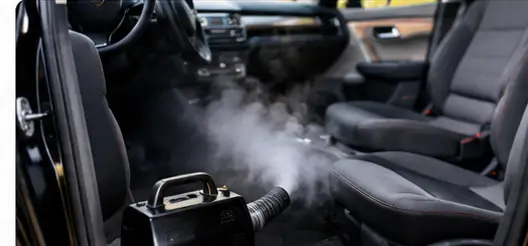
Steam cleaning is the professional answer to most of these challenges because it provides controlled heat without saturating moisture. Most DIY tools can’t replicate that combination.
How Do You Remove Fresh Chewing Gum from Car Carpet?
For gum that’s been in the carpet less than 24 hours, the ice method is the cleanest and most reliable approach.
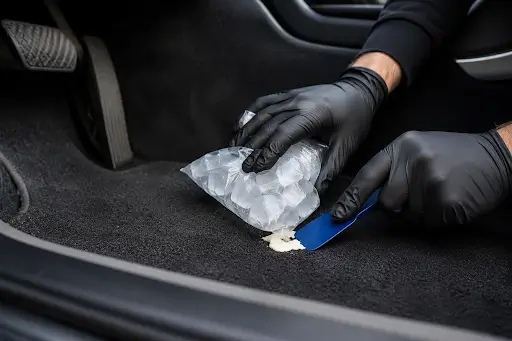
Start by gathering supplies: ice cubes, a small plastic sandwich bag, a plastic scraper or old credit card, a microfiber towel, and a small bottle of isopropyl alcohol (70 to 91 percent concentration). Place 4 to 6 ice cubes in the plastic bag, seal it, and press it directly onto the gum. Hold for 3 to 5 minutes or until the gum is rock solid to the touch.
While the gum is still frozen, use the plastic scraper at a low angle (around 30 degrees) to lift one edge. The frozen gum should crack and lift in chunks rather than stretch. Continue scraping methodically across the gum spot, picking up pieces with a paper towel as they come loose. Work quickly because gum warms back to room temperature in about 60 seconds once the ice is removed.
For the remaining residue, apply isopropyl alcohol to a microfiber corner and press it onto the area for 30 seconds. The alcohol dissolves the sticky polymer residue without damaging carpet fibers or the underlying adhesive backing. Wipe with the microfiber in straight strokes, not circles, then dry with a fresh towel.
If any sticky feel remains, repeat the alcohol step rather than escalating to stronger products. Most fresh gum cases resolve completely with ice plus alcohol.
How Do You Remove Old or Dried Gum from Car Carpet?
Dried gum that has been on the carpet for days or weeks requires a different approach. The polymer has cured and bonded more aggressively, making the simple freeze method less effective.
Start with a hair dryer set to medium heat. Hold it 6 to 8 inches from the gum and move it back and forth for 60 to 90 seconds. The goal is to soften the gum to a tacky, pliable state without overheating the carpet itself. If you smell a chemical or burning odor at any point, stop immediately and let the area cool.
Once the gum is warm and tacky, work the edge with a plastic scraper at a low angle. Try to peel rather than scrape because peeling leaves less residue. Use a fresh paper towel to grab the lifted gum as it comes off.
For gum that’s deeply embedded after the initial peel, apply a small amount of WD-40 or Goo Gone Automotive directly to the remaining residue. Let it sit for 5 to 10 minutes (the manufacturer’s directions matter). The solvent dissolves the adhesive bond between gum and fiber. Then scrub gently with a soft brush or toothbrush in the direction of the carpet fibers.
After the chemical step, the most important thing is to wash the area with a small amount of automotive carpet cleaner mixed with water. WD-40 and Goo Gone both leave oily residue that attracts dirt if not cleaned off. Use a damp microfiber to wipe away the cleaner, then a dry microfiber to lift the moisture before it soaks the carpet backing.
For older gum that resists both methods, consider booking a professional interior detail rather than continuing DIY attempts that could damage carpet fibers.
What Products Actually Work for Gum Removal?
Five products handle 99 percent of automotive gum cases. Each has a specific use case.
Plain ice cubes are the foundation of the freeze method and the safest tool for fresh gum. They work on every car interior surface without leaving residue or damage risk. Combined with a plastic scraper and microfiber, ice handles most casual gum incidents.
A hair dryer is the standard tool for the heat method. Most homes already have one, and it gives you adjustable heat for delicate carpets. Avoid heat guns (the higher-temperature alternative) because they get too hot for automotive synthetic fibers and can melt or scorch carpet permanently.
WD-40 works as an adhesive softener but leaves an oily residue. Use sparingly and always clean the area thoroughly afterward with automotive carpet cleaner. WD-40 is the workshop default but isn’t ideal for car interiors.
Goo Gone Automotive is the citrus-based commercial option that breaks down gum and adhesive without leaving as much residue as WD-40. It’s specifically formulated for automotive surfaces and is a better choice than the WD-40 approach for most owners.
Isopropyl alcohol (70 to 91 percent) handles the final residue cleanup after the bulk of the gum is removed. It dissolves the sticky polymer film without damaging fibers or backing material. It’s also the cleanest finishing step because alcohol evaporates rather than leaving residue behind.
What you should avoid: lighter fluid, acetone, brake cleaner, nail polish remover, and household solvents. All of these can damage carpet fibers, dissolve the rubber backing, or leave permanent stains worse than the gum itself.
How Do You Remove Sticky Gum Residue After the Gum Is Gone?
The gum chunk is the visible problem. The sticky polymer residue underneath is the harder problem and the one most DIY guides skip.
Even after a clean freeze-and-scrape, micro-amounts of gum polymer remain bonded to individual carpet fibers. You can feel this as a tacky or sticky spot under your fingers, and over time it attracts dirt that creates a darker patch on the carpet. This is why some DIY gum removals look fine for a week then develop a visible stain.
The fix is alcohol-based residue removal. Soak a clean microfiber corner in 70 to 91 percent isopropyl alcohol. Press it onto the residue spot for 30 to 60 seconds, then wipe in straight strokes (not circles, which spread the residue). Repeat 2 to 3 times. Each pass removes more polymer, and the spot should feel progressively less tacky.
For stubborn residue, switch to Goo Gone Automotive. Apply a small amount, let it dwell 2 to 3 minutes, then wipe with a clean microfiber. Follow with an alcohol pass to remove any oily film from the Goo Gone.
After the residue is gone, run a damp microfiber with diluted automotive carpet cleaner across the area to lift any final film. Dry thoroughly. Most spots that look completely cleaned without this step develop a visible mark within a few weeks.
If a permanent stain remains after the gum and residue are gone, the carpet fibers themselves may need professional extraction. Our interior detailing service uses commercial-grade steam and extraction equipment that lifts stains DIY can’t reach.
Can You Use Ice to Remove Gum from Car Carpet?
Yes, and ice is one of the most effective methods for fresh gum. The science behind it is simple: chewing gum is a polymer that becomes brittle when cold. Once frozen, it shatters cleanly instead of stretching when scraped.
The technique matters. Use ice cubes in a plastic bag (never apply ice directly to the carpet, which can leave water marks). Press the bag onto the gum for 3 to 5 minutes minimum. Test the gum with a fingernail or plastic scraper. If it dents instead of cracking, give it another 2 minutes.
Once the gum is fully frozen, work fast. You have about 60 seconds before room-temperature gum returns to its sticky state. Use a plastic scraper at a low angle to lift the frozen gum in chunks. Pick up loose pieces with paper towel as you go to prevent them from re-bonding to the carpet.
Ice works best on: Fresh gum (under 48 hours old) Small to medium gum spots (smaller than a quarter) Loose-pile carpet where the gum sits on top rather than embedded Cool ambient temperatures (the method is harder in a hot car interior)
Ice works less well on dried gum, gum mixed with mud or dirt, or gum on rubber floor mats (which don’t transfer cold efficiently to the gum). For these cases, switch to the heat method or commercial adhesive remover.
How Do You Get Gum Out of Floor Mats vs Glued-Down Carpet?
The right approach depends on which surface you’re dealing with. Cars have three distinct flooring types, and each responds differently to gum.
Rubber or all-weather floor mats are the easiest case. Take the mat out of the car, rinse with warm water, and scrub directly with a stiff brush and dish soap. For stubborn gum, freeze with ice or apply Goo Gone. Rubber surfaces tolerate cleaning chemicals far better than carpet fibers, so you have more product options.
Fabric floor mats are the middle case. They can be removed from the car for easier access, but they’re made of carpet-like material that requires gentler treatment. Use the ice method first, then alcohol for residue. If the gum has soaked through the fabric, the back side may have residue that requires a second treatment.
Glued-down factory carpet is the hardest case because you can’t remove the carpet for cleaning. Work in place using the methods described above, but be especially careful with moisture. Saturating the carpet means water gets trapped against the rubber backing with nowhere to evaporate, leading to mold growth within 2 to 4 weeks. The fix when mold develops is professional mold treatment, which costs significantly more than the original gum removal.
For glued-down carpet, the safest approach is conservative product use, immediate moisture extraction, and thorough drying with microfiber before any cleaning solution has time to penetrate to the backing.
When Should You Call a Professional for Gum Removal?
Five situations make professional service the smarter call than continued DIY.
The first is when the gum patch is larger than a quarter. Large gum incidents require longer treatment time and often involve mixed contamination (gum plus dirt, gum plus food debris) that’s harder to clean than gum alone.
The second is when the gum is older than a few weeks. Cured gum bonds chemically to carpet fibers at a level DIY products struggle to dissolve. Professional steam cleaning combined with commercial-grade adhesive removers handles old gum dramatically better.
The third is when the gum is on upholstery rather than carpet. Seat fabric, headliner, and door panel cloth are far harder to treat than carpet because they can’t be soaked or scraped aggressively. Professional interior detailing uses extraction tools specifically designed for upholstery.
The fourth is when DIY has already failed. Continued attempts on damaged carpet fibers cause more harm than the original gum. Stop and book a pro.
The fifth is when the vehicle is a high-value lease return, pre-sale prep, or rideshare car where appearance directly affects financial outcomes. Spending $50 to $150 on professional gum removal beats $500 in wear-and-tear charges or lost resale value.
Standalone gum removal at Car Detox typically runs $50 to $150 depending on quantity and condition. Most cases are included in a full interior detail or a Car Detox membership visit without additional charge.
What Mistakes Should You Avoid?
Using a metal razor blade or sharp tool on carpet fibers. Cuts loops, creates permanent fuzzy spots, and shows worse than the original gum
Pulling sticky gum with your fingers. Stretches the gum, drives it deeper into fibers, and turns a 5-minute fix into a 30-minute job
Over-saturating the carpet with a cleaning solution. Water trapped against the rubber backing causes mold within 2 to 4 weeks
Skipping the residue removal step. Even after the gum is gone, sticky polymer film attracts dirt and creates a visible stain within weeks
Using lighter fluid, acetone, or nail polish remover. All damage carpet fibers and can dissolve rubber backing
Scrubbing aggressively before chemical or thermal treatment. Drives gum further into fibers instead of lifting it out
Forgetting to clean off WD-40 or Goo Gone residue. Oily film attracts dirt and creates a darker patch over time
Frequently Asked Questions
Can you remove gum from car carpet without damaging it? Yes, with the right method. Ice for fresh gum, heat for dried gum, plastic tools only.
Does WD-40 remove gum from car carpet? Yes, but it leaves an oily residue. Always clean the area with carpet cleaner after WD-40 treatment.
Will ice damage my car carpet? No, when used in a plastic bag. Direct ice contact can leave water marks if the carpet soaks moisture.
How do you get old, dried gum out of car carpet? Soften with a hair dryer, peel with a plastic scraper, then remove residue with isopropyl alcohol or Goo Gone Automotive.
Can I use a metal razor blade to remove gum from carpet? No. Metal blades cut carpet fibers and create permanent damage. Plastic scrapers only.
How long does it take to remove gum professionally? Most cases take 15 to 30 minutes during a full interior detail. Severe cases may take longer.
How much does professional gum removal cost in Portland? $50 to $150 standalone, or included in most full interior details and Car Detox membership visits.
What if the gum left a stain after removal? Professional steam cleaning and extraction can usually lift the residual stain that DIY tools can’t reach.
Can peanut butter actually remove car gum? It works on hair but is messy and leaves oil residue on carpet. Stick to ice or commercial removers.
Will gum damage my car’s resale value? Yes if visible. A small gum removal investment prevents larger detailing or repair charges at sale time.
Final Thoughts
How to get gum out of car carpet comes down to choosing the right method for the situation. Fresh gum responds to ice and patience. Dried gum needs heat plus an adhesive remover. Either approach requires plastic tools, not metal, and a thorough residue cleanup that most DIY guides skip.
For Portland drivers dealing with the occasional gum incident, the methods in this guide handle 90 percent of cases at home. For larger gum patches, older gum, gum on upholstery, or gum that’s already taken multiple DIY attempts, professional removal is the smarter call. The $50 to $150 investment beats the alternative of damaged carpet fibers or a permanent residue stain.
If you’ve got a stubborn gum problem or your interior needs a full reset, book an interior detail with Car Detox at our Tualatin shop. We serve Beaverton, Tigard, Lake Oswego, Sherwood, West Linn, and the broader Portland metro.