
How to Remove Water Spots From Ceramic Coated Cars
On This Page
Ceramic coating makes water bead and roll off your paint, but it doesn’t make your car immune to water spots. When droplets dry on the surface, the minerals inside them stay behind, and over time they can bond to or even etch into the coating.
Most water spots on a coated car are easy to remove if you catch them early and use the right method. This guide explains how to identify the type of spot, how to remove it without damaging your coating, and how to stop spots from coming back.
What Causes Water Spots on Ceramic Coated Cars?
Water spots form when water evaporates and leaves its dissolved minerals behind. Tap water, sprinkler water and well water are high in calcium and magnesium, and rain picks up dust and pollutants on the way down.
Heat speeds everything up. A car washed in direct sun or parked in a hot spot after rain dries quickly, leaving concentrated rings of minerals before you have a chance to wipe them away.
Because a ceramic coating sheds water into tight beads, each bead can leave a small, crisp ring as it dries. That’s why spots can look more noticeable on coated cars, even though the coating protects the paint underneath.
Does Ceramic Coating Prevent Water Spots?

Ceramic coating doesn’t prevent water spots, but it makes them far easier to deal with. Its slick surface helps water roll off before it dries, and it gives minerals a harder, more chemical-resistant layer to sit on instead of bare clear coat.
Without regular washing and drying, though, minerals can still bond to the coating and eventually etch it. Think of the coating as a protective barrier that needs basic care, not a force field.
How Do You Tell Mineral Spots From Etched Spots?
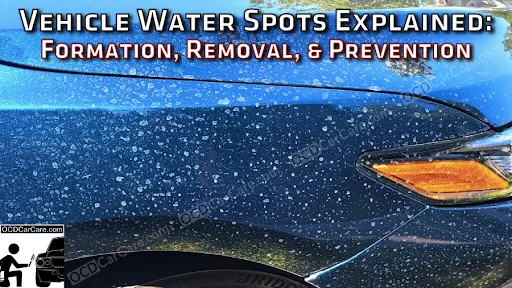
The type of spot decides how you remove it. Clean the area first, then look and feel carefully. Use this table as a guide:
| Spot type | How it looks and feels | Common cause | Safe removal method | When to see a pro |
|---|---|---|---|---|
| Fresh water spots | Light rings that wipe away with a quick detailer | Rain or rinse water left to dry | Rinse, then dry with a clean microfiber towel | Rarely needed |
| Mineral deposits | Chalky rings that feel slightly rough | Hard water, sprinklers, drying in the sun | Dedicated water spot remover made for coatings | If spots don’t lift after two careful attempts |
| Bonded mineral spots | Rings that stay after washing and feel gritty | Minerals left baking on the surface for days | Coating-safe spot remover, then a decontamination wash | If spots cover large areas |
| Etched spots | Faint craters you can see but not feel | Minerals or acid rain eating into the coating | Polishing, then topping up or reapplying the coating | Usually, since polishing removes coating |
| Spots on a new coating | Rings within the first week | Water exposure before the coating fully cured | Gentle drying; ask your installer before using any remover | Always check with your installer first |
A simple test helps. If a spot disappears after a coating-safe spot remover, it was a mineral deposit. If you can still see a faint outline after cleaning, the spot has likely etched into the coating and needs polishing.
How Do You Remove Water Spots From Ceramic Coating?
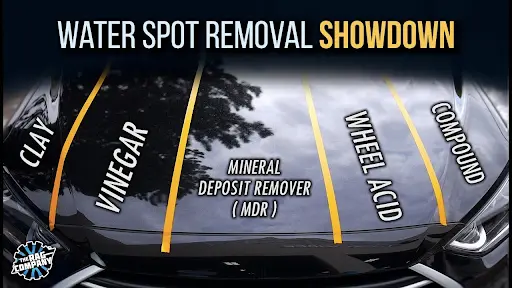
Most mineral spots come off with a dedicated water spot remover made for coated cars. These use mild acids that dissolve minerals without stripping the coating when used as directed. Follow these steps:
- Wash the car with a pH-neutral shampoo so you’re not grinding dirt into the coating.
- Work in the shade on a cool panel, since heat makes products dry too quickly and can cause new spots.
- Apply a water spot remover made for ceramic coatings to a microfiber applicator, not directly to the paint.
- Work it gently over one small section at a time, following the product’s dwell time.
- Wipe the area clean with a fresh microfiber towel and rinse the panel with clean water.
- Dry the panel completely and check it in good light.
- Repeat once if needed, then apply a coating-safe topper or booster to restore water beading.
Always test any product on a small, hidden area first, and avoid aggressive compounds unless the spots are etched. Using a harsh cleaner or polish on simple mineral spots removes coating you don’t need to lose.
Is Vinegar Safe to Use on Ceramic Coating?
A diluted white vinegar solution can dissolve light mineral spots, and some owners use it as a quick fix. It’s acidic, though, so leaving it on too long or using it often can weaken a coating over time.
If you try vinegar, dilute it with distilled water, keep it on the surface for only a short time, rinse thoroughly and dry the panel. A water spot remover made for ceramic coatings is the safer, more predictable choice.
What Should You Do About Water Spots on a New Ceramic Coating?
Spots in the first week usually mean water landed on the coating before it fully cured. Dry the car gently with a clean microfiber towel, and don’t reach for chemicals or polishes yet.
Contact your installer before trying any remover on a fresh coating, since some products can affect it while it’s still hardening. Our guide on driving and washing after ceramic coating covers what to avoid in the first week, and our article on ceramic coating cure time explains why the timing matters.
When Do Etched Water Spots Need Polishing?
Etched spots have eaten into the coating, and sometimes into the clear coat underneath. No spot remover can fill that in, so the surface needs to be polished smooth.
Polishing removes some of the coating along with the etching, so the area usually needs a coating top-up or reapplication afterward. Our Classic Polish includes a Stage 1 polish and a Stage 2 buff, and our team can advise whether your coating needs to be refreshed.
How Do You Remove Water Spots From Glass on a Coated Car?
Glass picks up mineral spots just like paint, especially on side windows and the windshield. Use a glass-safe water spot remover or a dedicated glass polish, then clean the glass with a streak-free cleaner.
If your glass is coated too, use products that are labeled safe for coated glass. Aggressive glass polishes can remove the coating and reduce how well water sheets off in the rain.
Why Are Water Spots So Common on Portland Cars?
Rain in the Portland area isn’t perfectly clean. It collects dust, pollen and pollutants on the way down, and when it dries on a parked car, it leaves a film of residue and faint rings behind.
Sprinklers, hard tap water at home and rinsing a car in the sun on the rare dry days all add mineral-heavy water. Cars that sit outside through months of rain and dry spells are the most likely to build up bonded spots.
How Do You Prevent Water Spots on a Ceramic Coated Car?
Drying is the most important habit. After every wash or heavy rain, dry the car with a clean, plush microfiber towel or a forced-air dryer so minerals never get the chance to set.
Wash in the shade, use a pH-neutral shampoo and avoid parking near sprinklers. Our guides on how to wash a ceramic coated car and caring for a ceramic coated car cover the full routine.
A coating-safe topper or booster every few months also helps. It refreshes the slick top layer so water beads and rolls off before it can dry.
Can a Decontamination Wash Remove Water Spots From Ceramic Coating?
Often, yes. A decontamination wash uses products that break down bonded minerals, iron particles and road film that a regular shampoo leaves behind. It’s a gentle way to restore a coating that looks dull or spotty without polishing.
Many owners schedule a decontamination wash every few months, especially after winter. If your coating has stopped beading water the way it used to, buildup on the surface is usually the reason, and a decon wash brings much of that performance back.
How Often Should You Check a Coated Car for Water Spots?
Take a close look every time you wash the car, ideally in daylight or under a bright light. Fresh spots are easiest to remove within a day or two, before minerals have time to bond.
Check more often after a run of dry, sunny days following rain, or if your car parks near sprinklers. Catching spots early keeps a five-minute fix from turning into a polishing job.
How Is This Different From Removing Water Spots on Uncoated Paint?
On uncoated paint, minerals sit directly on the clear coat, so stronger cleaners and polishes are often used more freely. On a coated car, the goal is to remove spots while preserving as much of the coating as possible.
If your car isn’t coated, our guide on removing water spots from a car covers the right approach. If you’re dealing with scratches as well as spots, see our guide on removing scratches from ceramic coating.
Need Help Restoring Your Ceramic Coating?
Fresh and mineral water spots usually come off with gentle washing, a coating-safe spot remover and thorough drying. Etched spots need polishing, and often a coating top-up, to look right again.
If you’re in the Portland metro, our ceramic coating service starts at $800, and our team can inspect your existing coating and recommend the right fix. Book an appointment at our Sherwood shop.
Frequently Asked Questions About Water Spots on Ceramic Coating
Yes, if they’re left too long. Minerals can bond to the coating and, over time, etch into it. Removing spots promptly and drying the car after washing or rain prevents most damage.
Wash the car, then use a water spot remover made for ceramic coatings with a microfiber applicator, working one section at a time. Rinse, dry and apply a coating-safe topper. Etched spots need polishing instead.
Diluted vinegar can remove light mineral spots, but it’s acidic and can weaken a coating with frequent or prolonged use. A coating-safe water spot remover is the safer choice.
Coatings make water bead and roll off, but beads that dry on the surface still leave minerals behind. Hard water, sprinklers and drying in the sun make spots more likely.
Yes, but polishing removes some of the coating along with the etching. The area usually needs a coating top-up or reapplication afterward, which is why polishing is reserved for etched spots.

Jeannette Lee
Recent Blogs
How to Clean Alcantara and Suede Car Seats the Right Way
Alcantara and suede give a car interior a premium, grippy feel, which is why you find them on…
Read More ›
How Much Does Fleet Detailing Cost? A Portland Business Owner’s Guide
A clean fleet does more than look good on the road. It protects your vehicles, reinforces your brand…
Read More ›
How to Get Gasoline Smell Out of a Car: An Oregon Detailer’s Complete Guide
Few smells are as stubborn or as unsettling as gasoline inside your car. It clings to carpet and…
Read More ›Ready to get started?
Book your detail today and give your car the care it deserves.
Book Now