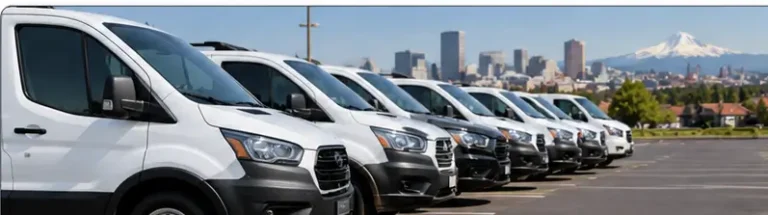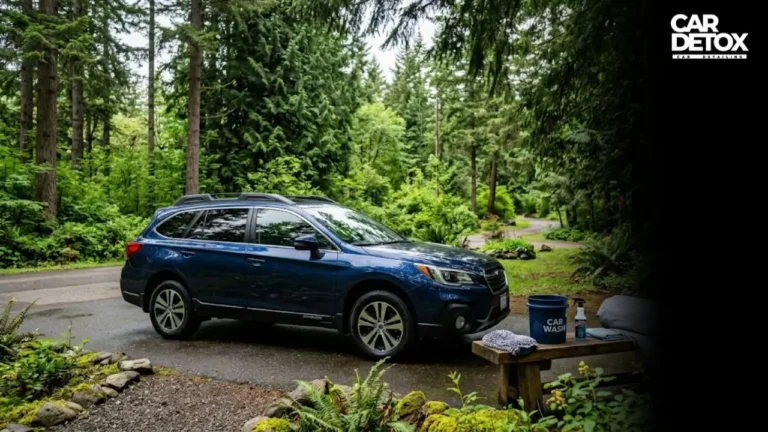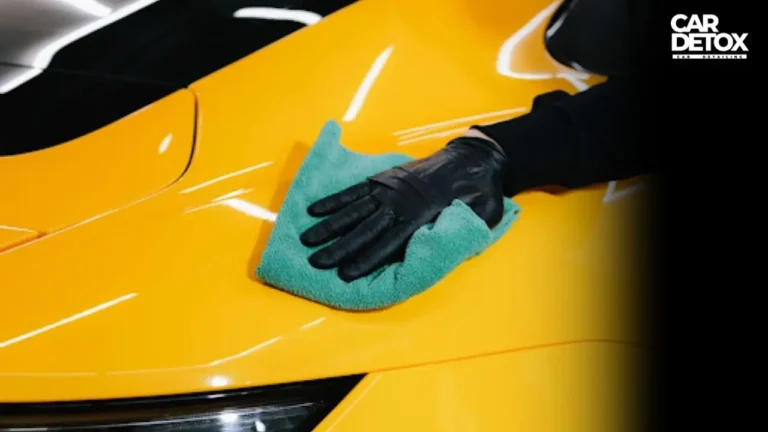

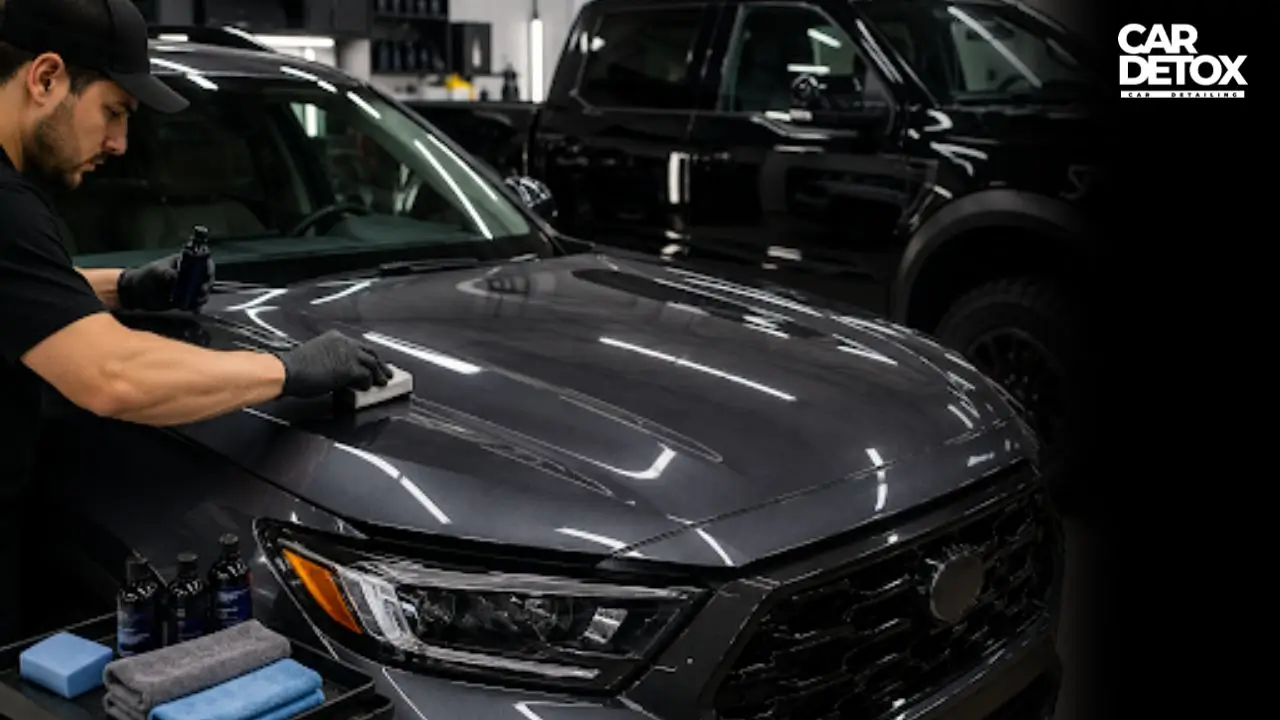
If you drive a truck or SUV in Portland, your paint takes more abuse than a sedan’s. Bigger panels, more time on gravel roads, more parking under Doug firs, more miles on I-5 and Highway 26. Ceramic coating for trucks and SUVs is the single most effective way to protect that investment without paying for paint correction every two years.
A properly applied nano-ceramic coating creates a hydrophobic, UV-resistant barrier that shrugs off tree sap, brake dust, road salt from Mt. Hood passes, and the mineral-heavy rain that turns every flat panel into a water-spot magnet. In our Tualatin shop we coat dozens of mid-size SUVs and full-size trucks every year, and the two-year mark is when owners realize what they actually paid for.
This is the complete guide: what it costs, what it protects against, how to choose between 2-year and 7-year tiers, and the mistakes that quietly waste the investment.
Key Takeaways
- Ceramic coating for trucks and SUVs in Portland starts at $1,000 for the 2-year tier and runs up to $2,500 for full-size XL vehicles on the 7-year tier
- The real protection benefits are salt resistance, faster washes, UV defense, and resale value retention, not just gloss
- Paint correction before coating is non-negotiable. Skipping it locks in swirl marks permanently
- Most Portland truck and SUV owners get the best per-year value from the 7-year tier
Why Do Trucks and SUVs Need Ceramic Coating More Than Sedans?
Trucks and SUVs need ceramic coating more than sedans because they have 30 to 45 percent more exposed paint surface, see harsher driving conditions, and spend more time parked under trees and outdoors. That adds up to more chips, water spots, sap damage, and UV fade per year than a coupe or sedan would experience.
Three structural problems drive this difference, and Portland’s climate amplifies all three.
Surface area: A full-size SUV like a Suburban, Tahoe, or Expedition exposes roughly 30 to 45 percent more paint to weather than a Camry or Civic. Same rainstorm, same parking lot, same sun exposure, but significantly more square footage absorbing damage every day. Over five years, that compounds into noticeably faster fade, more visible swirls, and a duller finish.
Lifestyle and use case: Truck owners haul gear, hit gravel roads, tow trailers, and drive in conditions sedans avoid. SUV owners head to Mt. Hood for skiing, the Oregon Coast for hiking, and Eastern Oregon trailheads. Both vehicles return covered in road film, mud, sap, and bug residue that bonds chemically to clear coat overnight if not removed quickly.
Height and parking habits: Larger vehicles often won’t fit in suburban garages and park in driveways under Doug firs, maples, and oaks. Sap and bird droppings sit longer on truck and SUV paint than on garaged sedans, etching deeper into the clear coat. By the time most owners notice, paint correction is required just to restore the surface to coatable condition.
Portland averages over 150 days of measurable precipitation per year, according to NOAA’s National Weather Service Portland office. That’s 150 chances for mineral-heavy water to evaporate on your hood every year without protection.
How Much Does Ceramic Coating Cost for Trucks and SUVs in Portland?
Vehicle size, paint condition, and coating tier are the three factors that move pricing. Here is how it breaks down at our ceramic coating service in Tualatin.
| Vehicle Size | 2-Year Coating | 7-Year Coating |
| Sedan / Coupe (baseline) | From $800 | From $1,200 |
| Mid-Size SUV or Truck (Tacoma, RAV4, F-150 SuperCab, Highlander) | From $1,000 | From $1,500 |
| XL or Full-Size (Suburban, F-250, Sprinter Van, 3-row SUV) | From $1,200 | From $1,800 to $2,500 |
These figures cover the full process: hand wash, iron decontamination, clay bar treatment, light paint correction, surface prep with isopropyl alcohol, and the actual nano-ceramic application using CQUARTZ UK with 70 percent SiO2 at 99.9 percent purity, one of the harder, glossier consumer-available coatings on the market.
What adds to the quote: heavy paint correction for oxidation, swirl marks, or hard water spots ($200 to $600), wheel coating add-ons ($150 to $300), glass and windshield coating ($100 to $200), and trim restoration if your plastic trim has faded.
Compared to the regional Portland market where ceramic for trucks and SUVs commonly runs $1,500 to $3,500, our pricing sits in the value-to-mid range, with the same professional-grade product as shops charging significantly more.
What Does Ceramic Coating Actually Protect Against?
The marketing focus is gloss. Gloss is real, but most truck and SUV owners book for the practical benefits underneath the shine. Here is what a nano-ceramic coating genuinely defends against:
- Salt and brine resistance for vehicles that cross Mt. Hood passes, drive Hwy 26 in winter, or take coastal trips
- Hydrophobic surface so rain sheets off without leaving mineral water spots
- UV protection that stops the dreaded faded hood on dark-colored trucks parked outdoors
- Bird dropping and tree sap defense against acidic deposits etching clear coat
- Brake dust release on wheels with optional wheel coating add-on
- Faster, easier washing since coated paint releases dirt with a rinse instead of scrubbing
- Color depth and gloss enhancement that survives years of weather
What ceramic coating does not do: it will not prevent rock chips, it will not heal scratches, and it will not eliminate the need for occasional washing. It reduces damage and dramatically extends the time between corrections.
Should You Choose 2-Year or 7-Year Ceramic Coating?
The right answer depends on how long you plan to keep the vehicle. Here is the per-year math that matters.
The 2-year coating typically costs around $1,000 for a Mid-Size SUV. Over its 24-month lifespan, that works out to about $500 per year of protection. This tier suits leased vehicles, daily commuters trading in within three years, and budget-conscious buyers. It still dramatically outperforms wax, which lasts 4 to 8 weeks in Portland’s climate.
The 7-year coating runs around $1,500 for the same Mid-Size SUV. Over 84 months, the per-year cost drops to about $215, less than half. This tier suits long-term owners, adventure trucks, family SUVs, and work fleet vehicles that benefit from the harder, thicker formula. Application also tends to be more thorough because the higher tier justifies a multi-step paint correction process.
For Tesla owners, the soft factory paint makes the 7-year tier almost essential. See our dedicated Tesla ceramic coating service page for model-specific pricing and process. Rivian R1T and R1S owners should review our Rivian ceramic coating service for similar reasons.
How Long Does Ceramic Coating Last on a Truck or SUV?
The 2-year coating lasts 24 to 30 months with proper aftercare. The 7-year coating lasts 7 to 9 years for most owners. A few factors shorten either tier.
Tunnel car washes with brushes are the fastest way to ruin a coating. The brushes physically wear down the ceramic layer and can void most product warranties. Touchless tunnel washes are acceptable. Two-bucket hand washing is ideal.
Heavy outdoor parking in unshaded driveways accelerates UV degradation. Garaged vehicles retain coating performance significantly longer. Aggressive cleaners such as degreasers, dish soap, and harsh wheel cleaners strip the coating over time. Use pH-neutral car shampoo.
Skipped boosters. Most professional ceramic coatings benefit from a ceramic boost top-up every 6 to 12 months. It’s a 15-minute service that extends life and restores hydrophobic behavior.
Ready to protect your truck or SUV? Book a free ceramic coating consultation and we’ll quote your exact vehicle.
What’s the Ceramic Coating Process Like?
Plan for a two-day appointment at our Tualatin shop. Here is what actually happens during those 48 hours.
Day 1: Preparation and application (6 to 10 hours). We start with a thorough inspection and photo documentation of any existing damage. The vehicle is hand-washed using the two-bucket method to prevent micro-scratches during cleaning. Next is iron decontamination, where we apply an iron-dissolving spray that lifts embedded brake dust and rail dust particles from the paint. After that, a clay bar pulls bonded contamination such as sap, tar, and overspray off the surface.
If your vehicle needs paint correction, we run a single or multi-stage polish to remove swirl marks, light scratches, and oxidation. This step is critical: ceramic coating seals in whatever’s on the paint, so any defects left in place become permanent. After correction, the paint is wiped down with isopropyl alcohol to remove polishing residue, and the actual ceramic coating is applied in 1 or 2 layers depending on tier.
Day 2: Curing (24 hours). The coating must cure in our climate-controlled bay before the vehicle leaves the shop. Temperature, humidity, and airflow all affect the cure quality. After curing, we do a final inspection and walk you through aftercare instructions before pickup.
For larger XL vehicles or trucks with heavy paint correction needs, plan for a 2.5 to 3-day window.
Can I Ceramic Coat a Lifted, Off-Road, or Work Truck?
Yes, and these are some of our best candidates for coating because off-road grime releases dramatically faster from coated paint. A few considerations apply.
Document existing damage first. Lifted trucks and trail vehicles often have minor rock chips, paint transfer marks, or scratches from gear. We photograph everything before coating so there’s no ambiguity about pre-existing condition.
Consider wheel and trim coating. Off-road wheels collect heavy brake dust and trail residue. Wheel ceramic at $150 to $300 add-on dramatically reduces cleaning time.
Plan for periodic correction. Trail trucks see more abuse than highway-only vehicles. A light correction every 12 to 18 months keeps the underlying paint pristine even with the coating in place.
Work trucks for HVAC and plumbing fleets benefit from coating as well, especially branded vehicles where logo legibility and overall appearance affect customer impressions.
Does Ceramic Coating Prevent Rock Chips?
No. This is the most common misconception we hear at our shop. Ceramic coating is chemical and UV protection. Paint protection film (PPF) is physical impact protection.
Ceramic coating adds surface hardness, but it’s measured in microns. Highway gravel hitting your hood at 65 mph delivers far more impact energy than ceramic can absorb. The chip will still happen. Ceramic does help by making the chip area slightly more resistant to corrosion spreading from the damaged spot.
For owners who drive highways frequently or want full front-end protection, paint protection film on the hood, front bumper, and headlights is the right addition. Most trucks and SUVs we work with combine PPF on high-impact areas with ceramic on the rest of the vehicle.
How Do You Maintain a Ceramic Coated Truck or SUV?
The maintenance routine is simpler than uncoated paint, but it’s not zero-effort.
Wash every 2 to 4 weeks with pH-neutral car shampoo using the two-bucket method or a touchless wash. Coated paint releases dirt with a rinse, so washing is faster than uncoated maintenance.
Avoid brush tunnel washes. These are the fastest way to wear out the coating prematurely.
Use a microfiber drying towel instead of letting water air-dry on the paint, even though the coating is hydrophobic. Water still leaves trace mineral deposits over time.
Apply a ceramic boost top-up every 6 to 12 months. This 10-minute product application restores beading behavior and extends the underlying coating’s lifespan.
Address bird droppings and tree sap within 24 hours. Even coated paint can be etched by acidic deposits if left long enough.
Don’t apply wax over ceramic. Wax doesn’t bond to ceramic-coated paint and creates a haze that you’ll then have to remove.
What Mistakes Do Truck and SUV Owners Make With Ceramic Coating?
Skipping paint correction. The most expensive mistake. Ceramic seals in whatever’s on the surface, including swirl marks and water spots. If your truck has been through tunnel washes, plan for at least a one-step polish before coating.
Choosing the cheapest installer. Ceramic coating is only as good as the prep work. A $500 ceramic coating on a $50,000 truck rarely delivers the durability or appearance owners expect.
Using brush tunnel washes after coating. Voids most warranties and significantly shortens the coating’s life. Stick to touchless or the two-bucket hand method.
Coating in winter. Most ceramic coatings need 12 to 24 hours of dry cure in stable conditions. December and January in Oregon often mean scheduling delays. April through September is ideal.
Ignoring aftercare. A coated truck still needs washing. Owners who assume “ceramic means I never wash again” find their coating degrades faster than expected.
Combining incompatible products. Spray waxes, gloss enhancers, and quick detailers often don’t play well with ceramic surfaces. Use products labeled coating-safe.
Frequently Asked Questions
For owners keeping the vehicle 2 or more years, yes. Per-year cost is lower than annual waxing and the protection is dramatically better.
Two to seven years depending on tier, application quality, and aftercare.
Yes. Trail and off-road trucks benefit because mud and grime rinse off coated paint significantly faster.
No. Ceramic protects against chemical and UV damage. Paint protection film handles rock chips.
Two days for most vehicles. One for prep and application, one for curing.
No. Wait at least seven days for full cure before any contact wash.
Yes, especially on dark colors. Most owners notice deeper gloss and richer color depth.
Ceramic is a thin liquid coating that protects against chemicals, UV, and water spots. PPF is a thicker film that protects against rock chips and physical impacts.
Only by machine polishing. It can’t be peeled off like a film.
No. Ceramic coating requires controlled indoor conditions for proper curing. All coatings are done at our Tualatin shop.
Final Thoughts
Ceramic coating for trucks and SUVs in Portland is one of the smartest paint protection investments you can make if you plan to keep the vehicle for two years or longer. It protects against salt, sap, rain spots, UV damage, and brake dust. It makes washing dramatically faster. And it helps maintain resale value for owners ready to upgrade.
Most truck and SUV owners land in the $1,000 to $2,500 range for a complete professional ceramic coating package, with the 7-year tier delivering the best per-year value for long-term owners.
To get a custom quote for your specific vehicle, book a free ceramic coating consultation at Car Detox. We serve Beaverton, Tigard, Lake Oswego, Sherwood, West Linn, Bull Mountain, and the broader Portland metro.